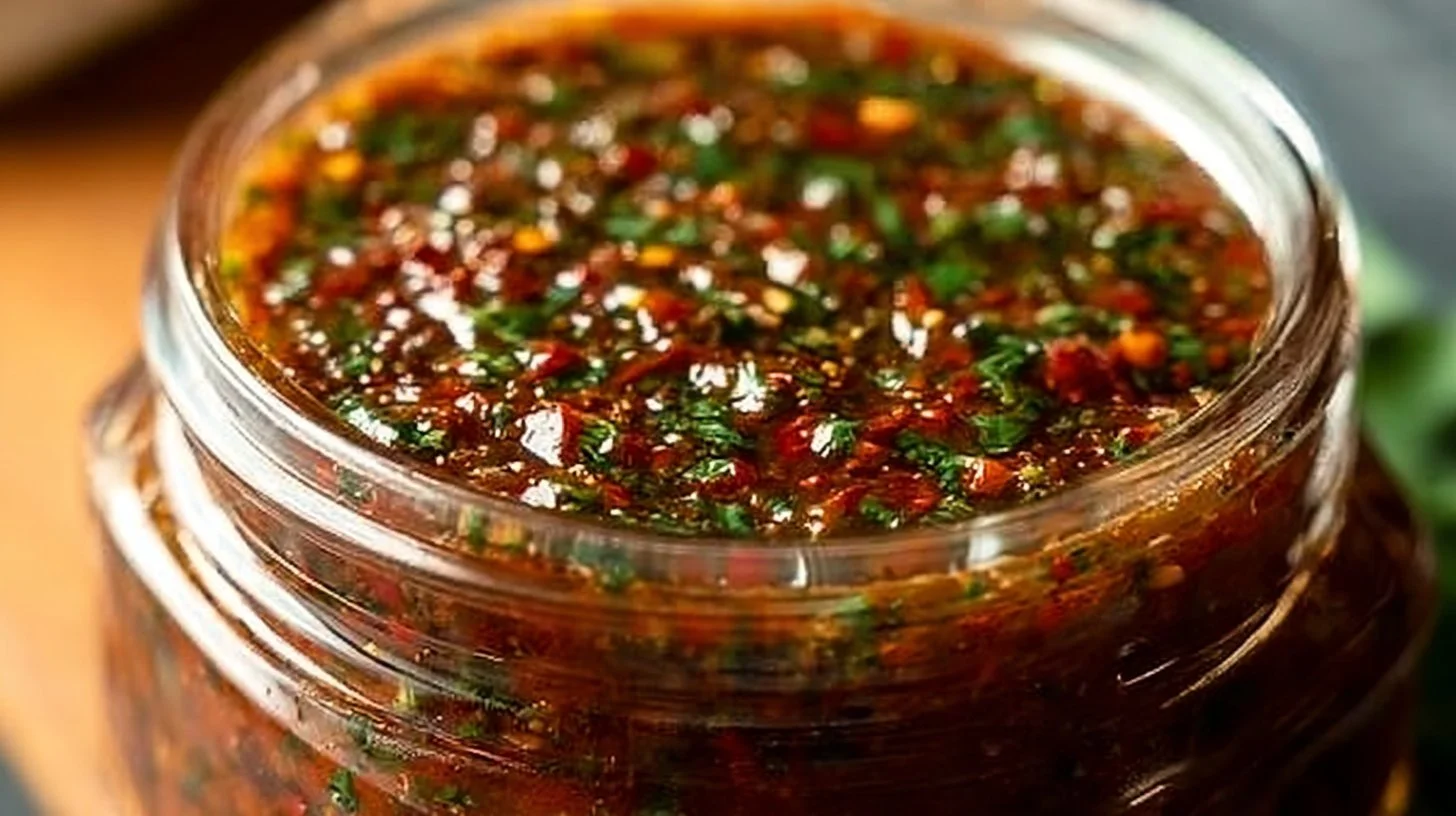
Fresh, herby chimichurri is already a powerhouse condiment—but this zesty, smoky red version takes things a step further with smoked paprika, a little heat, and a punch of vinegar. It’s the kind of sauce that makes a simple steak feel like a restaurant plate, turns roasted veggies into something you actually crave, and rescues leftover chicken from being boring.
Why you’ll love this dish
Bold flavor with minimal effort. You’re basically chopping, stirring, and letting it sit—no cooking required.
Versatile on nearly everything. Spoon it over grilled meats, stir into rice bowls, or use it as a marinade.
Budget-friendly, big payoff. Fresh herbs and pantry spices create an “expensive-tasting” condiment for a few dollars.
Great for meal prep. The flavor improves after it rests, so it’s perfect to make ahead for the week.
“I made this on a Sunday and used it all week—steak night, eggs the next morning, and even mixed into mayo for sandwiches. The smoky kick is unreal.”
How to make Zesty Smoky Red Chimichurri to Elevate Your Dishes
Step-by-step overview
- Chop the herbs and aromatics (parsley, cilantro, red onion, garlic) as evenly as you can so the texture is balanced.
- Bloom the smoky spices by mixing smoked paprika and red pepper flakes into the vinegar first (quick trick for more even flavor).
- Stir in the olive oil to create a loose, spoonable sauce.
- Season and rest for at least 15–30 minutes so the garlic mellows and the flavors meld.
- Use now or store in the fridge—or freeze in cubes for quick portions later.
Ingredients
What you’ll need
- 1 bunch fresh parsley (finely chopped)
- 1 bunch fresh cilantro (finely chopped) (optional swap: more parsley if you’re cilantro-averse)
- 4 cloves garlic (minced)
- 0.5 cup red onion (finely chopped) (shallot works too for a sweeter bite)
- 0.5 cup olive oil (as base) (use good-quality extra virgin for best flavor)
- 2 tablespoons red wine vinegar (sub: sherry vinegar or white wine vinegar)
- 1 tablespoon smoked paprika
- 1 teaspoon red pepper flakes (adjustable)
- To taste salt
- To taste pepper
- 1 container airtight container (for storing in the fridge)
- Ice cube trays (for freezing portions)
Directions
Step-by-step instructions
- Finely chop the herbs. Remove thick parsley/cilantro stems, then chop the leaves until small and fluffy (not paste-like).
- Prep the aromatics. Mince the garlic and finely chop the red onion. Smaller pieces = better texture and a more even bite.
- Mix the vinegar and spices first. In a bowl, stir together red wine vinegar, smoked paprika, and red pepper flakes. This helps the paprika disperse evenly instead of clumping in oil.
- Add herbs and aromatics. Stir in parsley, cilantro, garlic, and onion until well combined.
- Pour in the olive oil. Mix until the sauce looks loose and glossy. Chimichurri shouldn’t be thick like pesto—it should spoon and drizzle easily.
- Season. Add salt and pepper, then taste. Want more zing? Add a splash more vinegar. Want it richer? Add a drizzle more oil.
- Rest before serving (recommended). Let it sit 15–30 minutes at room temperature for the flavors to blend.
How to serve Zesty Smoky Red Chimichurri to Elevate Your Dishes
Serving suggestions
- Steak or grilled chicken: Spoon on right before serving so the herbs stay bright.
- Roasted potatoes: Toss warm potatoes with chimichurri for an instant side upgrade.
- Fish and shrimp: Especially good with grilled salmon or shrimp skewers—smoke + acid balances rich seafood.
- Eggs: Drizzle over fried eggs, omelets, or breakfast burritos.
- Sandwich spread: Mix 1–2 tablespoons into mayo or Greek yogurt for a smoky-herby spread.
- Grain bowls: Add to rice, quinoa, or lentils with roasted veggies and a protein.
Plating idea: smear a spoonful on the plate first, set your sliced meat or veggies on top, then finish with another drizzle for a layered look.
How to store
Keeping leftovers fresh
- Refrigerator: Store in an airtight container for up to 4–5 days. Flavor often improves after the first day.
- Food safety note: Because this contains fresh garlic and herbs in oil, keep it refrigerated and don’t leave it out for long periods.
- Freezing: Spoon into ice cube trays, freeze until solid, then transfer cubes to a freezer bag. Freeze for up to 2–3 months.
- Thawing: Thaw a cube in the fridge overnight or at room temperature for a short time, then stir to recombine.
No reheating needed—chimichurri is meant to be served cold or at cool room temperature.
Tips to make it
Pro chef tips
- Chop by hand for best texture. A food processor can turn it murky or too fine; hand-chopped stays bright and spoonable.
- Soak harsh onion bite (optional): If your red onion is strong, rinse chopped onion under cold water, then pat dry before mixing.
- Rest time matters. Even 20 minutes makes the garlic less sharp and the whole sauce taste more cohesive.
- Balance to taste:Too acidic? Add a bit more oil.
- Too flat? Add salt first, then a small splash of vinegar.
- Not smoky enough? Add a pinch more smoked paprika.
Variations
Different ways to try it
- Citrus chimichurri: Add 1–2 teaspoons lemon zest + a squeeze of lemon juice for extra brightness.
- Deeper red version: Add 1–2 tablespoons finely chopped roasted red peppers for sweetness and color.
- Spicier: Swap red pepper flakes for a minced fresh chili (like Fresno or jalapeño).
- Herb swap: Try adding a little fresh oregano or mint for a twist that’s great with lamb.
- Lower-oil option: Replace a few tablespoons of oil with extra vinegar or a splash of water (it’ll be less rich but still flavorful).
FAQs
Common questions
1) How long should chimichurri rest before using?
At least 15–30 minutes is ideal. If you have time, making it a few hours ahead (or the day before) gives the flavors even more time to meld.
2) Can I make this without cilantro?
Yes. Use all parsley, or replace cilantro with a smaller amount of another herb like fresh oregano or basil (the flavor will shift, but it’ll still be delicious).
3) Why is my chimichurri bitter?
Common causes:
- Using too many herb stems (especially thicker ones).
- Over-processing in a blender/food processor, which can bruise herbs and turn them bitter.
- Very strong extra virgin olive oil can read bitter—try a milder oil if needed.
4) Is it safe to store garlic-and-oil sauces like chimichurri?
Keep it refrigerated and use within 4–5 days for best quality. For longer storage, freeze in portions. Avoid leaving it at room temperature for extended periods.
5) Can I use dried herbs instead of fresh?
Fresh is strongly recommended for chimichurri’s signature flavor and texture. In a pinch, you can try dried parsley/oregano, but the result will taste more like a vinaigrette than true chimichurri.
If you want, I can also add exact prep time/total time and yield (cups/servings) based on how you plan to use it.