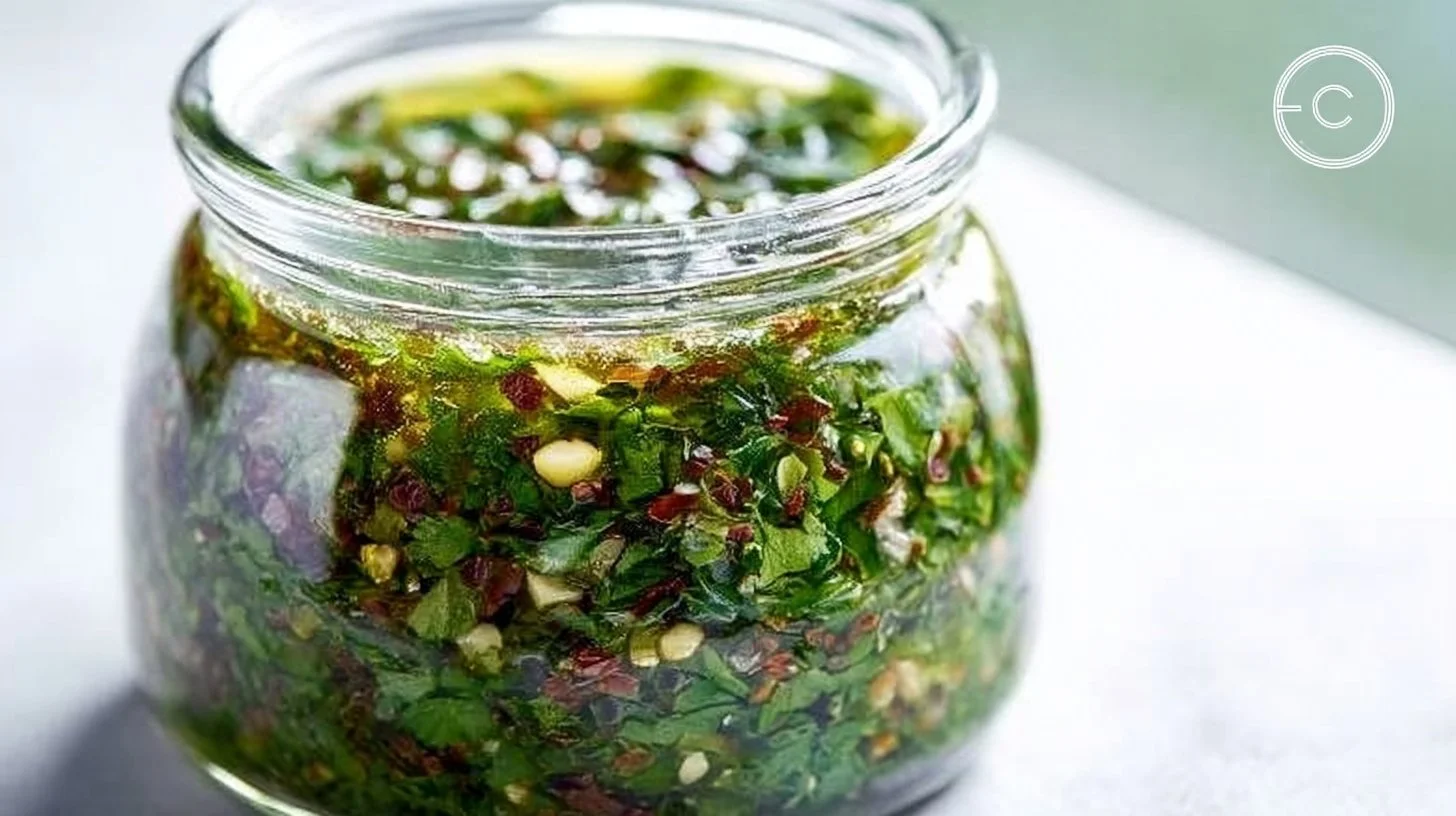
Fresh, punchy, and wildly versatile, Argentinian chimichurri sauce is the kind of condiment that instantly makes a simple meal feel like something you’d order at a steakhouse. It’s especially loved alongside grilled meats (asado-style), but it’s just as useful as a quick marinade, a sandwich spread, or a drizzle over roasted vegetables when dinner needs a boost.
Why you’ll love this dish
Chimichurri is one of those “small effort, big payoff” recipes. You chop, stir, and wait a few minutes—then suddenly you have a sauce that tastes bright, garlicky, and balanced.
- Fast and no-cook: Ready in minutes, no stove needed.
- Budget-friendly: Simple herbs, pantry vinegar, and olive oil.
- Meal-prep hero: Flavors get better after resting.
- Works on almost everything: Steak, chicken, shrimp, potatoes, eggs, sandwiches.
- Adjustable heat and tang: Easy to tweak to your preference.
“I made this for grilled flank steak and everyone asked for the recipe. The leftovers didn’t last two days—someone kept ‘taste-testing’ it with bread.”
Preparing Argentinian Chimichurri Sauce (step-by-step overview)
Before you start, here’s the flow so you know exactly what to expect:
- Chop the herbs (parsley and cilantro) fairly fine so the sauce clings well to food.
- Mince the garlic so it disperses evenly and doesn’t bite in big chunks.
- Stir everything together with olive oil and red wine vinegar to create that classic loose, spoonable texture.
- Rest the sauce for at least 30 minutes—this is where the flavor “clicks” into place.
What you’ll need (Ingredients)
- 1 cup fresh parsley, chopped (flat-leaf is classic; curly works in a pinch)
- 1/2 cup fresh cilantro, chopped (optional in some traditional versions, but adds freshness)
- 4 cloves garlic, minced
- 1/2 teaspoon red pepper flakes (increase for more heat)
- 1/2 cup olive oil (use a good-tasting one—chimichurri showcases it)
- 1/4 cup red wine vinegar (white wine vinegar can substitute)
- 1 teaspoon salt
- 1 teaspoon black pepper
Step-by-step instructions (Directions)
- Combine the herbs. Add chopped parsley and cilantro to a medium mixing bowl.
- Add the aromatics and seasoning. Stir in minced garlic, red pepper flakes, salt, and black pepper.
- Pour in the liquids. Add the olive oil and red wine vinegar.
- Mix thoroughly. Stir until everything looks evenly coated and the sauce is loose and spoonable.
- Let it rest. Set aside for at least 30 minutes at room temperature so the flavors meld.
- Use and enjoy. Spoon over grilled meats, use as a marinade, or drizzle on vegetables and potatoes.
Best ways to enjoy it (Serving suggestions)
- Classic pairing: Spoon chimichurri over grilled steak (skirt, flank, ribeye) right before serving.
- Chicken or pork: Brush on grilled chicken thighs or pork chops after cooking.
- Seafood twist: Drizzle over shrimp or seared fish (especially swordfish or salmon).
- Vegetable upgrade: Toss with roasted potatoes, grilled zucchini, mushrooms, or bell peppers.
- Sandwich spread: Use it like a bright herb sauce in steak sandwiches or wraps.
- Plating idea: Serve in a small bowl with a spoon and a pinch of extra herbs on top; it looks rustic and appetizing.
Storage and reheating tips (Keeping leftovers fresh)
- Refrigerate: Store in an airtight container for up to 4–5 days.
- Food safety note: Because this contains fresh herbs and garlic, keep it refrigerated promptly and don’t leave it out for extended periods.
- Bring to room temp before serving: Olive oil can firm up in the fridge. Let it sit 15–20 minutes, then stir to re-emulsify.
- Freezing: You can freeze chimichurri, but the herbs may dull slightly. Freeze in ice cube trays, then transfer cubes to a freezer bag for up to 2 months. Thaw in the fridge and stir well.
Helpful cooking tips (Tricks for success)
- Chop, don’t pulverize. A food processor can turn chimichurri murky and pasty. Hand-chopping gives the best texture and brighter flavor.
- Resting matters. The 30-minute rest softens the raw garlic edge and helps the herbs infuse the oil.
- Taste after resting. Vinegar and salt can feel sharper at first; adjust after it sits.
- Use good oil. If your olive oil tastes bitter or stale on its own, it will show in the final sauce.
- Don’t over-salt early if using as a marinade. Salt can cure meat slightly; if marinating, consider a lighter hand and season the meat separately.
Recipe variations (Different ways to try it)
- More traditional “parsley-only” version: Skip cilantro and use all parsley.
- Lemon chimichurri: Replace half the vinegar with fresh lemon juice for extra brightness.
- Smoky chimichurri: Add 1/2 teaspoon smoked paprika or a pinch of ground cumin.
- Milder, kid-friendly: Reduce red pepper flakes or omit them entirely.
- Extra tang: Increase vinegar by 1–2 tablespoons for a sharper finish.
- Herb swaps: Try a small amount of fresh oregano (or a pinch dried) for a more classic Argentine vibe.
FAQ (Your questions answered)
Can I make chimichurri ahead of time?
Yes—and it’s often better that way. Make it a few hours ahead (or even the day before), then stir and taste again before serving.
Is chimichurri supposed to be thick or runny?
Classic chimichurri is loose and spoonable, not creamy. It should cling to food but still pour easily. If it feels too thick, add a bit more olive oil.
Can I use dried herbs instead of fresh?
Fresh herbs are strongly recommended for authentic flavor and texture. If you must use dried, use much less (dried is more concentrated) and let the sauce rest longer to rehydrate—expect a different, less vibrant result.
How long can chimichurri sit out?
For best quality and safety, don’t leave it out for more than about 2 hours. If it’s a hot day or outdoors, keep it chilled and bring out small portions as needed.
What proteins work best with chimichurri?
Steak is the classic, but it’s also excellent with chicken thighs, pork tenderloin, lamb chops, shrimp, and even tofu when grilled or pan-seared.