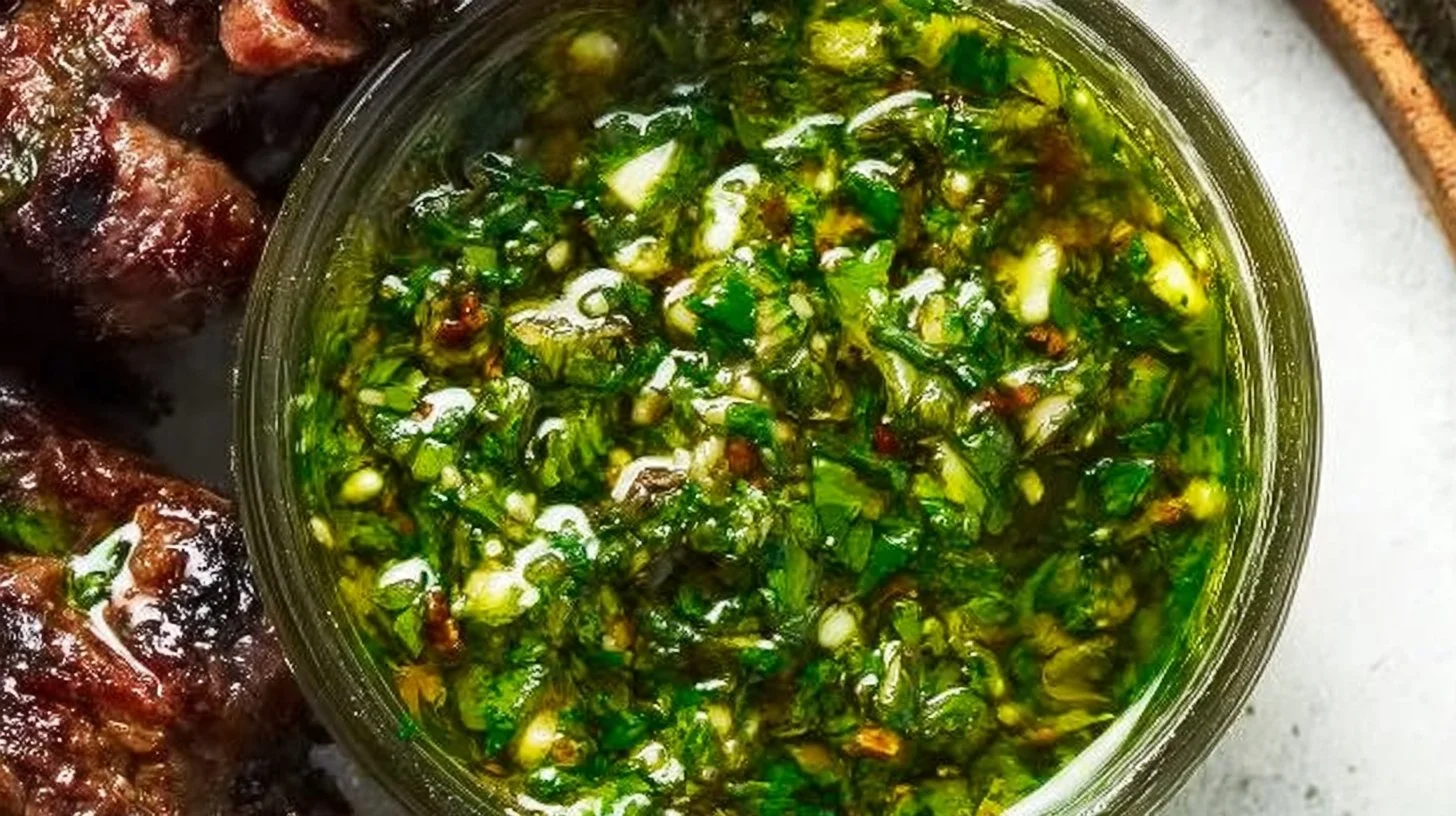
I first tasted chimichurri on a windy evening in Buenos Aires, poured over a charred skirt steak and eaten with crusty bread. Bright, garlicky, and herb-forward, this uncooked sauce is a small thing that transforms simple grilled meats and vegetables into something memorable. Here’s my go-to for The Best Authentic Chimichurri Recipe—easy to make, fast to finish, and reliably vibrant.
Why you’ll love this dish
Chimichurri is a no-cook, herb-based sauce from Argentina and Uruguay. It livens up weeknight protein, doubles as a salad dressing, and stores well enough to make a big batch ahead. It’s also naturally dairy-free, gluten-free, and ready in minutes once the herbs are prepped.
"A spoonful of this chimichurri turned my simple grilled chicken into the best meal I’d had all week—bright, balanced, and addictive." — a home cook’s note
Reasons to try it:
- Quick assembly: once herbs are chopped, you whisk and go.
- Versatile: use it as a sauce, marinade, or condiment.
- Budget-friendly: parsley and pantry staples make a lot of flavor for not much money.
- Great for make-ahead entertaining: flavors improve after resting.
How to make The Best Authentic Chimichurri Recipe
Step-by-step overview:
- Finely chop fresh parsley and mince garlic (or use a short pulse in a food processor for a finer texture).
- Combine herbs with dried oregano, red pepper flakes, red wine vinegar, and olive oil.
- Season with salt and black pepper, taste, and adjust acidity or heat.
- Let the mixture rest at least 30 minutes for the flavors to meld before serving; refrigerate for longer storage.
This recipe emphasizes a bright parsley base with red wine vinegar and a touch of heat. Keep your herbs fresh and the oil cold until you mix to preserve the green color and freshness.
What you’ll need (Ingredients)
- 1 cup fresh flat-leaf parsley, finely chopped (packed) — stems removed for a smoother texture
- 1/2 cup extra-virgin olive oil
- 1/4 cup red wine vinegar
- 4 cloves garlic, minced (about 1–1.5 tbsp)
- 1 teaspoon dried oregano (or 1 tbsp fresh, chopped)
- 1/2 teaspoon red pepper flakes (adjust to taste)
- Salt and freshly ground black pepper, to taste (start with 1/2 tsp salt)
Optional/substitutions:
- Swap part of the parsley for 1/4 to 1/2 cup fresh cilantro for a different herb note.
- Use lemon juice (1–2 tbsp) in place of some vinegar for a brighter finish.
- If you prefer a smoother sauce, pulse in a food processor briefly—don’t over-blend or it will turn into a green purée.
- Add a small shallot (minced) for a sweeter, oniony lift.
Directions (Step-by-step instructions)
- Remove large stems from parsley and finely chop the leaves. Place in a medium bowl.
- Mince garlic and add to the parsley. Stir in dried oregano and red pepper flakes.
- Pour in the red wine vinegar and mix briefly to coat the herbs.
- Slowly whisk in the olive oil until the mixture is well combined and slightly emulsified.
- Season with salt and freshly ground black pepper. Taste and adjust acidity, salt, or heat.
- Let the chimichurri sit at room temperature for at least 30 minutes to let flavors meld before serving. If storing, cool and refrigerate within 2 hours.
Pro tip: taste as you go—if it tastes flat, add a splash more vinegar; if too sharp, add a teaspoon of olive oil or a pinch of sugar.
Best ways to enjoy it (How to serve The Best Authentic Chimichurri Recipe)
- Classic: spoon over grilled steak, skirt steak, flank steak, or chimichurri-marinated flank steak.
- Seafood: drizzle on grilled shrimp, fish fillets, or seared scallops.
- Vegetables: toss with roasted potatoes, grilled asparagus, or charred eggplant.
- Breakfast: serve over fried eggs or spoon into avocado toast.
- Sandwiches & bowls: spread on sandwiches, rice bowls, or grain salads for an herbaceous lift.
Plating idea: serve in a small ramekin alongside sliced steak and roasted potatoes; add lemon wedges for extra brightness.
How to store & freeze (Storage and reheating tips)
- Refrigerate: transfer chimichurri to an airtight container and press a thin layer of olive oil on top to limit air exposure. Keep refrigerated and use within 7 days.
- Food safety: because chimichurri contains garlic in oil, never store it at room temperature for extended periods. Refrigerate within 2 hours of preparation.
- Freeze: pour into ice cube trays or a small freezer-safe container and freeze for up to 3 months. Thaw in the fridge and stir before using. Note that texture may change slightly after freezing; flavor remains good.
Do not attempt to can chimichurri using a traditional hot-water bath pressure method—acid and oil balance and raw garlic create safety concerns for shelf-stable canning.
Tips to make (Helpful cooking tips)
- Use flat-leaf parsley for more robust flavor than curly parsley.
- Chop by hand for better texture; a food processor is fast, but pulse only briefly.
- Let it rest: a 30-minute wait helps flavors marry; making it the day before deepens taste.
- Adjust the oil-to-vinegar ratio to suit your taste. Classic chimichurri is bright, not oily—start with the recipe ratio and tweak.
- If you want a looser sauce for drizzling, add extra olive oil or a tablespoon of warm water.
- If garlic is too harsh, let the sauce sit overnight in the fridge—the sharp edge mellows.
Variations (Creative twists)
- Chimichurri Rojo (red): add 1/2 cup roasted red bell pepper (finely chopped) + 1 tsp smoked paprika for a smoky, sweet red version.
- Cilantro chimichurri: replace half the parsley with cilantro for a cilantro-forward Latin twist.
- Anchovy boost: mash in 1–2 anchovy fillets for umami (not vegetarian).
- Shallot & lemon: add 1 tbsp minced shallot and 1 tbsp lemon juice for a brighter, slightly sweeter profile.
- Spicy: increase red pepper flakes or add 1 small minced fresh chili (like jalapeño or serrano).
FAQs (Your questions answered)
Q: How long does chimichurri keep in the fridge?
A: Stored in an airtight container with a thin oil layer on top, chimichurri stays good for about 5–7 days. Always refrigerate within 2 hours of making.
Q: Can I make chimichurri ahead of time?
A: Yes—flavors often improve after a few hours or overnight in the fridge. Bring to room temperature before serving for best aroma and flavor.
Q: Is it safe to store garlic in oil?
A: Garlic in oil should not be kept at room temperature because of botulism risk. Keep the sauce refrigerated and use within 7 days, or freeze for longer storage.
Q: Can I use dried parsley instead of fresh?
A: Fresh parsley is essential for the bright, herbaceous character of chimichurri. Dried parsley will be flat—only use dried as a last resort, and expect a different result.
Q: Can chimichurri be used as a marinade?
A: Yes. Use chimichurri as a marinade for up to 2 hours for delicate proteins and up to 8 hours for sturdier cuts. When using it as a marinade, reserve a separate portion for serving rather than re-using the used marinade.
If you want, I can scale this recipe to feed a crowd, convert it to metric, or provide a quick substitution list for common pantry limits. Which would help you most?
Print
The Best Authentic Chimichurri Recipe
- Total Time: 40 minutes
- Yield: 8 servings
- Diet: Vegan
Description
A bright, garlicky, and herb-forward no-cook sauce that transforms grilled meats and vegetables into something memorable.
Ingredients
- 1 cup fresh flat-leaf parsley, finely chopped (packed)
- 1/2 cup extra-virgin olive oil
- 1/4 cup red wine vinegar
- 4 cloves garlic, minced
- 1 teaspoon dried oregano
- 1/2 teaspoon red pepper flakes
- Salt and freshly ground black pepper, to taste
Instructions
- Remove large stems from parsley and finely chop the leaves.
- Place in a medium bowl.
- Mince garlic and add to the parsley.
- Stir in dried oregano and red pepper flakes.
- Pour in the red wine vinegar and mix briefly to coat the herbs.
- Slowly whisk in the olive oil until well combined.
- Season with salt and black pepper, then taste and adjust as necessary.
- Let sit for at least 30 minutes for flavors to meld before serving.
Notes
Use flat-leaf parsley for a robust flavor. Adjust the oil-to-vinegar ratio to your liking.
- Prep Time: 10 minutes
- Cook Time: 0 minutes
- Category: Condiment
- Method: No-Cook
- Cuisine: Argentinian