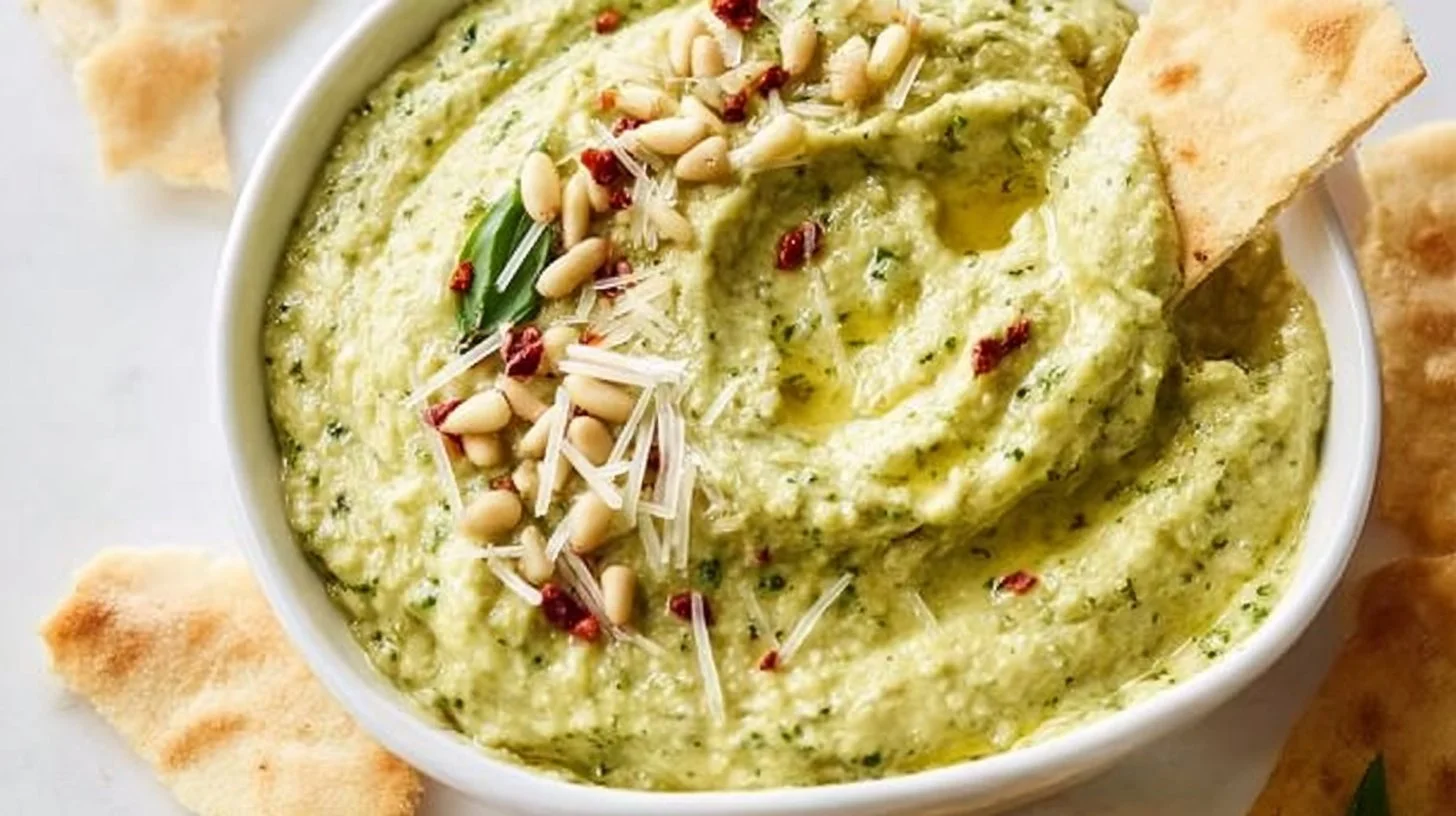
I’ve been spooning this basil pesto hummus straight from the bowl since summer basil first showed up at the farmer’s market. It’s a bright, herb-forward riff on classic hummus that comes together in minutes and livens up snacks, sandwiches, and party platters.
Why you’ll love this dish
This basil pesto hummus blends the creamy, nutty comfort of tahini and chickpeas with the fresh, aromatic punch of basil. It’s a quick, make-ahead dip for weeknight snacks, a colorful addition to a picnic, and an easy way to use up an overabundance of basil. It’s also naturally vegetarian, easily vegan, and very adaptable to dietary needs.
“Incredibly fresh tasting — like a summer garden in a bowl. My kids loved it with carrot sticks.” — home cook review
Reasons to try it:
- Ready in about 10 minutes with a food processor.
- Budget-friendly: pantry staples plus a small handful of basil.
- Versatile: works as a dip, spread, or pasta toss.
How to make Basil Pesto Hummus
Step-by-step overview
- Prep and measure ingredients.
- Combine chickpeas, basil, tahini, oil, lemon juice, garlic, and salt in a food processor.
- Pulse and then blend until smooth, scraping down the bowl as needed.
- Adjust texture with water and flavors with lemon, salt, or olive oil.
- Serve garnished and enjoy.
This short roadmap helps you anticipate the process: nothing complicated, just a few pulses, a smooth blend, and a quick taste-test.
Ingredients
- 1 cup canned chickpeas, drained and rinsed (reserve a tablespoon of the liquid if you like)
- 1/4 cup fresh basil leaves, loosely packed (stems removed)
- 1/4 cup tahini
- 2 tablespoons olive oil, plus extra for drizzling
- 2 tablespoons lemon juice (about 1 small lemon)
- 2 cloves garlic, minced (or 1 clove roasted garlic for mellower flavor)
- Salt, to taste (start with 1/2 teaspoon)
- Water, as needed (1–3 tablespoons) to thin
Notes on ingredients and substitutions:
- Swap spinach or arugula for half the basil if you want a milder herb flavor.
- Use homemade cooked chickpeas (about 3/4 cup cooked) if you prefer; they can give a creamier texture.
- For a nutty pesto twist, add 1 tablespoon toasted pine nuts or walnuts.
Directions
- Add the chickpeas, basil, tahini, olive oil, lemon juice, garlic, and salt to a food processor.
- Pulse 4–6 times to break up the ingredients, then blend continuously for 30–60 seconds.
- Stop and scrape the sides with a spatula. Continue to blend until mostly smooth.
- If the hummus is too thick or grainy, add water 1 tablespoon at a time and blend until you reach a creamy consistency. (Ice-cold water helps produce a lighter texture.)
- Taste and adjust: add more salt, lemon juice, or garlic as needed. For a silkier finish, drizzle in another teaspoon of olive oil while the processor runs.
- Transfer to a bowl, drizzle with olive oil, and garnish as desired before serving.
Keep steps short and deliberate: pulse, scrape, blend, taste, adjust.
How to serve Basil Pesto Hummus
Best ways to enjoy it:
- Serve with warm pita, pita chips, or crusty bread.
- Offer a platter of raw veggies: cucumber, carrot, bell pepper, and snap peas are excellent.
- Spoon onto grain bowls, use as a sandwich spread, or toss with hot pasta and a splash of pasta water for an instant pesto-like sauce.
- Garnish ideas: extra chopped basil, toasted pine nuts, a drizzle of olive oil, lemon zest, or a sprinkle of smoked paprika.
Plating tip: create a shallow well in the center when spreading the hummus and fill it with olive oil and herbs for a restaurant-style presentation.
How to store
- Refrigerator: Store in an airtight container for 4–7 days. Use a clean spoon each time to avoid contamination.
- Freezer: Freeze in a shallow, airtight container for up to 3 months. Thaw overnight in the fridge and stir well before serving—texture may be slightly grainier after freezing.
- Safety: Cool the hummus to room temperature before refrigerating, then chill within two hours of making. Discard if it develops an off smell, visible mold, or an unusual slimy texture.
Tips to make
- For the creamiest hummus, peel the chickpeas: pinch each between thumb and forefinger to slip off the skin. It’s labor-intensive but yields a silkier result.
- Use cold water or an ice cube while blending to make the hummus lighter and fluffier.
- Pulse first to break down basil and garlic so they integrate faster and avoid overheating the motor.
- If your food processor struggles, blend the basil, garlic, and lemon with the oil first to make a loose pesto base, then add chickpeas and tahini.
- Taste as you go. Basil intensity and garlic bite vary by season and variety, so adjust lemon and salt to balance.
Variations
- Lemon-Basil Hummus: Add extra lemon zest for a brighter tang.
- Sun-Dried Tomato Basil Hummus: Fold in 2 tablespoons chopped sun-dried tomatoes for color and umami.
- Spicy Basil Hummus: Add 1/2 teaspoon red pepper flakes or 1 small jalapeño (seeded) to the processor.
- Nut-Free Pesto: Replace pine nuts with toasted sunflower seeds for a nut-free pesto note.
- Herby Green Mix: Swap half the basil for parsley, cilantro, or mint to change the flavor profile.
FAQs
Q: Can I make this with dried chickpeas?
A: Yes. Soak and cook dried chickpeas until very tender (about 1–1.5 hours simmering after soaking, or follow a pressure cooker recipe). Use about 3/4 cup cooked chickpeas to equal 1 cup canned. Cooked chickpeas often yield creamier hummus—reserve some cooking liquid to adjust texture.
Q: How long will the hummus keep in the fridge?
A: Stored in an airtight container and chilled promptly, it will keep 4–7 days. Always use clean utensils and discard if it smells strange or shows mold.
Q: Can I omit tahini or substitute it?
A: Tahini contributes to hummus’ characteristic flavor and creaminess, but you can substitute 2 tablespoons of plain Greek yogurt (not vegan) or 1–2 tablespoons olive oil and 1 tablespoon almond/peanut butter (changes flavor). For a nut-free, vegan swap, try sunflower seed butter.
Q: Is it safe to freeze hummus with basil?
A: Yes. Freeze up to 3 months. Basil’s bright color may fade, and texture can change slightly; stirring after thawing restores consistency. Consider freezing in portion-sized containers.
Q: My hummus is grainy. How do I make it smoother?
A: Try adding a tablespoon of ice water and blending longer. Peeling chickpeas before blending or using a small high-speed blender/food processor helps. Adding a small extra spoonful of tahini or olive oil can also smooth texture.
If you want, I can scale this recipe for a crowd, suggest a shopping list, or provide a printable recipe card. Which would be most helpful?
Print
Basil Pesto Hummus
- Total Time: 10 minutes
- Yield: 4 servings
- Diet: Vegan
Description
A bright, herb-forward hummus that combines the creamy comfort of tahini and chickpeas with fresh basil.
Ingredients
- 1 cup canned chickpeas, drained and rinsed (reserve a tablespoon of the liquid if you like)
- 1/4 cup fresh basil leaves, loosely packed (stems removed)
- 1/4 cup tahini
- 2 tablespoons olive oil, plus extra for drizzling
- 2 tablespoons lemon juice (about 1 small lemon)
- 2 cloves garlic, minced (or 1 clove roasted garlic for mellower flavor)
- Salt, to taste (start with 1/2 teaspoon)
- Water, as needed (1–3 tablespoons) to thin
Instructions
- Prep and measure ingredients.
- Combine chickpeas, basil, tahini, oil, lemon juice, garlic, and salt in a food processor.
- Pulse 4–6 times to break up the ingredients, then blend continuously for 30–60 seconds.
- Scrape the sides with a spatula, and continue to blend until mostly smooth.
- Add water 1 tablespoon at a time if the hummus is too thick and blend until you reach a creamy consistency.
- Taste and adjust: add more salt, lemon juice, or garlic as needed.
- Transfer to a bowl, drizzle with olive oil, and garnish as desired before serving.
Notes
For creamier hummus, peel the chickpeas. Use cold water or an ice cube while blending for fluffiness.
- Prep Time: 10 minutes
- Cook Time: 0 minutes
- Category: Appetizer
- Method: Blending
- Cuisine: Mediterranean