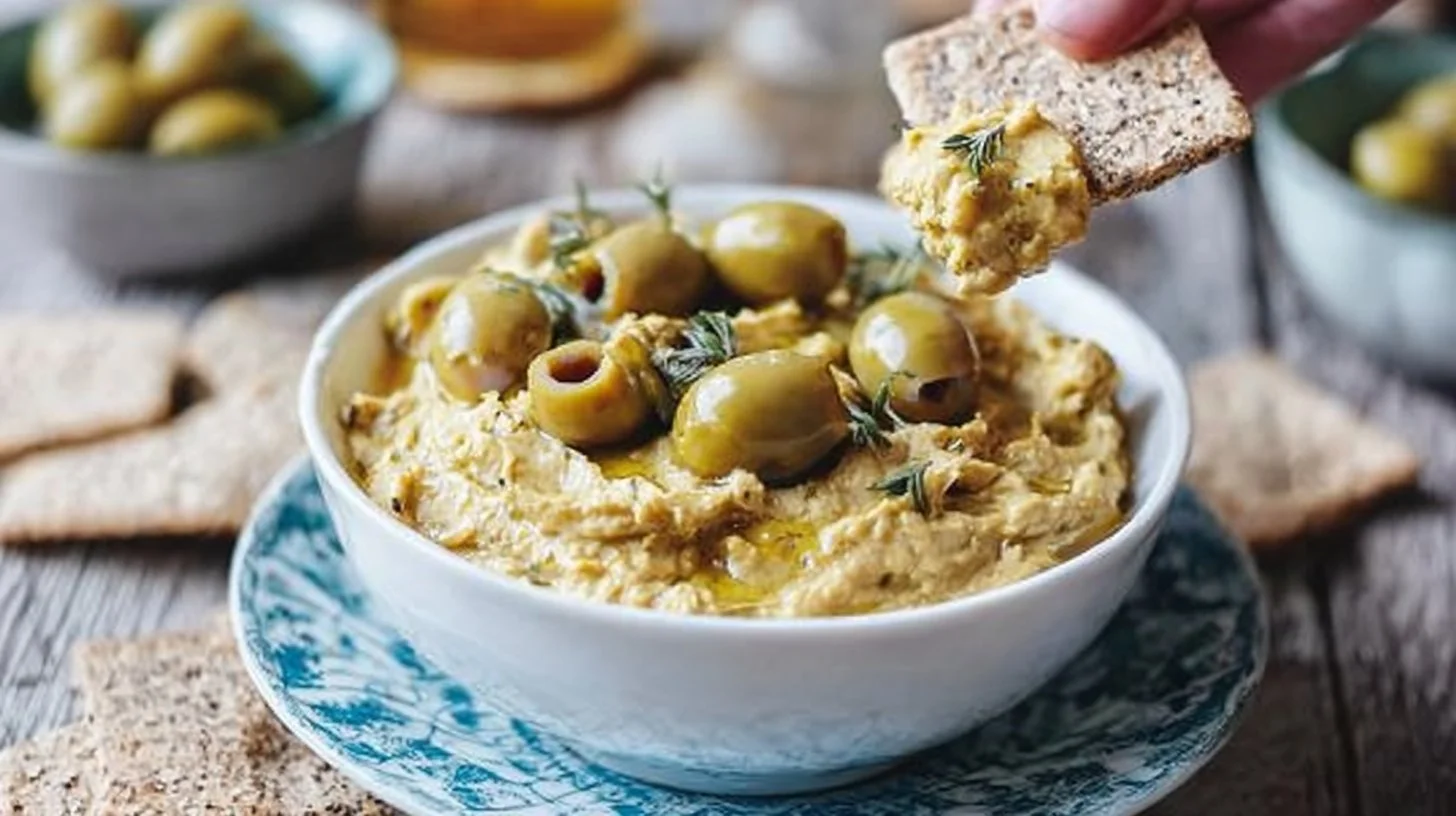
Olive hummus is a bright, briny twist on the classic Middle Eastern dip—silky chickpeas blended with tangy olives, tahini, and lemon-free brightness (the olives supply the zing). It’s an easy, no-cook spread that brings Mediterranean flavor to sandwiches, mezze plates, and weekday snacking. I often make a batch when I want an easy appetizer that feels special but takes under 15 minutes.
Why you’ll love this dish
This olive hummus punches above its weight: salty, creamy, and ready in minutes. It’s great for entertaining because it travels well, and the olive flavor pairs beautifully with grilled vegetables, pita, or a cheese board. It’s also naturally vegetarian and vegan, and you can stretch it into a larger party dip or keep it simple for lunch.
“Perfect balance of salty olives and smooth chickpeas—always the first thing gone at our gatherings.” — a regular tester
Benefits at a glance:
- Quick: about 10–15 minutes from start to finish.
- Budget-friendly: canned chickpeas and jarred olives keep cost down.
- Versatile: works as a dip, sandwich spread, or salad topper.
- Kid-friendly with mild olives or chopped for texture.
How to make Olive Hummus
Step-by-step overview:
- Gather ingredients and drain chickpeas and olives.
- Pulse olives and chickpeas with tahini and olive oil until combined.
- Add water to loosen and blend until smooth or slightly chunky, depending on preference.
- Taste and adjust salt (olives can be salty), then garnish and serve.
Yields: about 1 to 1 1/2 cups (4–6 servings as a dip)
Prep time: 10 minutes
Total time: 10 minutes
Ingredients
- 15 oz (400 g) olives, pitted (plus more for garnish) — any mix of green, Kalamata, or black; pitted is easiest
- 1 (15 oz / 400 g) can chickpeas, drained (reserve a tablespoon of the liquid if needed)
- 2–3 tablespoons tahini (use toasted-sesame tahini for best flavor)
- 3 tablespoons extra-virgin olive oil, plus more for garnish
- 1/2 cup (120 ml) water (use ice water for a lighter texture)
- Pinch of salt (taste first; olives may make extra salt unnecessary)
- 1–2 garlic cloves, optional (minced or smashed; adjust to taste)
Notes/substitutions:
- If olives are very salty, rinse lightly and taste before adding salt.
- Tahini can be swapped for 2 tablespoons plain yogurt for a creamier, dairy-containing version.
- For oil-free version, omit olive oil and increase water slightly; texture will be lighter but still tasty.
Directions
- Drain the chickpeas and olives. If using larger olives (like Kalamata), roughly chop so the blender runs smoothly.
- In a food processor or high-speed blender, add olives and tahini. Pulse 4–6 times to begin breaking down the olives.
- Add the drained chickpeas, olive oil, and 1 garlic clove (if using). Process until mixture starts to come together, stopping to scrape down the bowl once or twice.
- With the motor running, slowly stream in the 1/2 cup water (start with 1/4 cup and add more as needed) until you reach your desired consistency. For creamier hummus, use ice-cold water and blend longer.
- Taste and adjust: add salt only if needed, add more tahini for nuttiness, or more olives for punch.
- Transfer to a serving bowl. Drizzle with extra olive oil, scatter a few chopped olives and a sprinkle of paprika or chopped parsley if desired. Serve immediately or chill.
Short, clear verbs and actions make this easy to follow: drain, pulse, add, blend, adjust, plate.
How to serve Olive Hummus
Best served slightly chilled or at room temperature. Ideas:
- Classic: warm pita and a scattering of chopped olives and parsley.
- Mezze platter: pair with sliced cucumbers, cherry tomatoes, roasted peppers, falafel, and olives.
- Sandwich spread: use instead of mayo on wraps or veggie sandwiches.
- Bowl topping: dollop on grain bowls, roasted eggplant, or grilled fish for a salty boost.
Plating tip: make a shallow well in the center of the hummus, pour a thin swirl of olive oil, and top with a few whole olives and fresh herbs for an attractive presentation.
How to store
- Refrigerator: Store in an airtight container and keep at or below 40°F (4°C). Consume within 3–5 days. Because olives are salty and act as a preservative, flavor holds well, but freshness is best early.
- Freezing: Freeze in a small airtight container or freezer bag for up to 2–3 months. Leave a bit of headspace because liquids expand. Thaw overnight in the refrigerator, then stir and adjust texture with a splash of water or olive oil.
- Food safety: Discard if you notice off smells, color changes, or mold. Always use a clean spoon to serve to avoid introducing contaminants.
Tips to make
- For extra-smooth hummus: peel chickpeas by pinching them between thumb and forefinger to remove skins. It’s extra work but yields a silkier texture.
- Use ice water: adding cold water while blending helps emulsify tahini into a lighter, creamier consistency.
- Control salt: olives vary widely in saltiness—taste before adding extra salt. You can also rinse olives briefly to reduce brine.
- Tahini quality matters: a runny, bitter tahini will affect flavor. Look for a balanced, sesame-forward jar.
- Pulse first: broken-down olives before adding liquids prevents clumping and ensures even blending.
- Adjust texture: more olive oil or tahini thickens and enriches; more water thins and lightens.
Variations
- Spicy Olive Hummus: add 1/2 teaspoon harissa or 1 small jalapeño (seeded) when blending.
- Herb & Olive: fold in finely chopped parsley, dill, or basil after blending for a fresh green twist.
- Roasted Red Pepper & Olive: add one roasted bell pepper plus a splash of red wine vinegar for sweetness.
- Lemon-Hint: add 1 tablespoon lemon juice if you want a brighter, tangier profile.
- Olive Tapenade Hummus: blitz olives with capers and anchovy (omit for vegetarian) into a chunkier topping, then spoon over smooth hummus.
- Low-fat: replace tahini with 2–3 tablespoons plain nonfat yogurt (not vegan).
- Chunky salad-style: reserve half the olives chopped and fold them in after blending for texture.
FAQs
Q: Can I use Kalamata olives?
A: Yes. Kalamatas give a bold, fruity flavor and darker color. If you want a milder taste, mix in green or black olives.
Q: Do I need to peel chickpeas?
A: No—peeling is optional. Skins can make hummus slightly grainier but saves a lot of time. Peel for a restaurant-smooth texture.
Q: Is tahini necessary?
A: Tahini adds depth and creaminess but can be substituted with 2 tablespoons plain yogurt (dairy) or 2 tablespoons olive oil + a little extra water for a lighter version.
Q: How long does olive hummus last?
A: Refrigerated in an airtight container: 3–5 days. Frozen: up to 2–3 months. Always smell and check before eating.
Q: Can I use dried chickpeas instead of canned?
A: Yes. Cook dried chickpeas until very tender (pressure-cooked ~25–40 minutes depending on soak). Save some cooking liquid and use a splash for thinning; canned chickpeas are the quickest option.
Q: My hummus tastes too salty—what can I do?
A: Stir in a small spoonful of plain yogurt or additional drained cooked chickpeas to mellow the salt. Adding a little neutral oil and more water can also dilute high salinity.
If you want, I can convert this into a printable card, a shopping list, or scale the recipe for a larger crowd. Which would be most helpful?
Print
Olive Hummus
- Total Time: 10 minutes
- Yield: 4–6 servings
- Diet: Vegetarian, Vegan
Description
A bright, briny twist on the classic Middle Eastern dip made with chickpeas and tangy olives, perfect for sandwiches and snacking.
Ingredients
- 15 oz (400 g) olives, pitted (any mix of green, Kalamata, or black)
- 1 (15 oz / 400 g) can chickpeas, drained
- 2–3 tablespoons tahini
- 3 tablespoons extra-virgin olive oil
- 1/2 cup (120 ml) water
- Pinch of salt
- 1–2 garlic cloves, optional
Instructions
- Gather ingredients and drain chickpeas and olives.
- Pulse olives and chickpeas with tahini and olive oil until combined.
- Add water to loosen and blend until smooth or slightly chunky.
- Taste and adjust salt, then garnish and serve.
Notes
If olives are very salty, rinse lightly and taste before adding salt. For oil-free version, omit olive oil and increase water slightly.
- Prep Time: 10 minutes
- Cook Time: 0 minutes
- Category: Dip
- Method: Blending
- Cuisine: Mediterranean