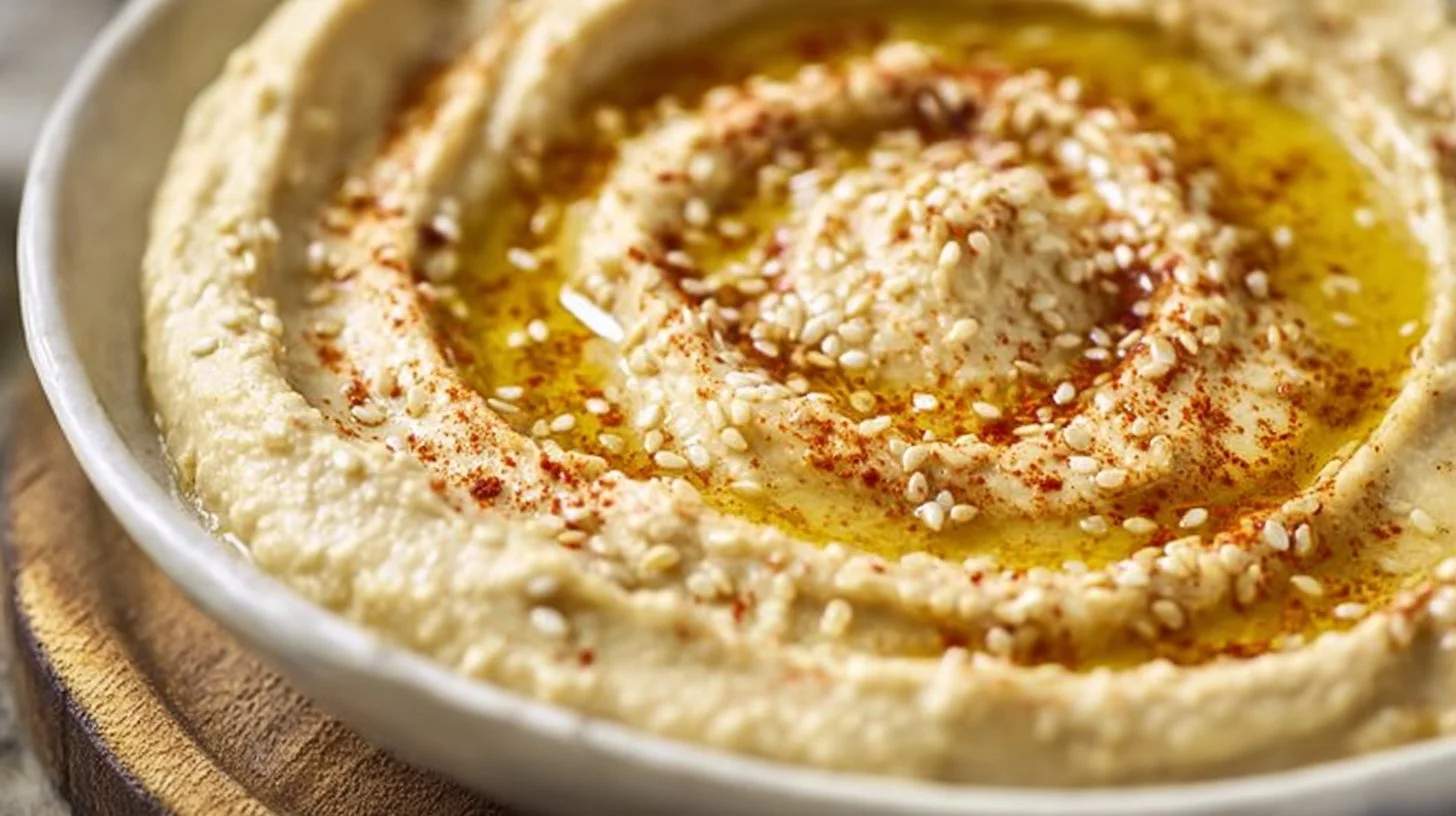
Roasted garlic hummus is one of those recipes that makes the whole kitchen smell like comfort. The first time I roasted a whole head of garlic for hummus, the spread turned a little caramelized and sweet — and everyone at the table kept coming back for more. This version is creamy, easy to scale, and uses a few simple techniques to get a silky texture and rounded garlic flavor without raw heat.
Why you’ll love this dish
This roasted garlic hummus is:
- Rich and mellow — roasting tames garlic’s sharpness and adds a buttery sweetness.
- Fast and flexible — uses canned chickpeas for speed, but adapts to home-cooked beans.
- Crowd-friendly — great for weeknight dipping, picnic platters, or as a sandwich spread.
- Nutrient-dense — plant-based protein, healthy fats from tahini and olive oil.
“The roasted garlic made it mellow and almost nutty. Smooth, not grainy — a new favorite for family dinners.” — a reader’s note after trying this recipe
How to make Roasted Garlic Hummus
Step-by-step overview
- Roast whole garlic until very soft and slightly caramelized.
- Prepare chickpeas (drain, rinse, and optionally peel skins for extra-smooth texture).
- Emulsify tahini and lemon first to create a light base.
- Blend chickpeas, roasted garlic, olive oil, and seasonings, adding liquid until silky.
- Taste, adjust salt/lemon, plate with a drizzle of olive oil and your favorite garnish.
This overview gives you the process in one line before we list the full ingredients and step-by-step directions.
What you’ll need
- 1 can (15 oz / 425 g) chickpeas, drained and rinsed (or 1 1/2 cups cooked chickpeas from dried)
- 1/4 cup (60 g) tahini, well stirred
- 2–3 cloves roasted garlic (see notes — for stronger garlic, use 1/2 head)
- 2 tablespoons extra-virgin olive oil, plus extra for serving
- 2 tablespoons fresh lemon juice (about 1 lemon)
- 1/2 teaspoon ground cumin
- 1/2–1 teaspoon kosher salt (adjust to taste)
- 2–4 tablespoons water or reserved chickpea liquid (aquafaba), as needed for consistency
- Optional for serving: smoked paprika or sumac, chopped parsley, toasted pine nuts, whole chickpeas
Substitutions/notes inline:
- Tahini: good-quality tahini makes a big difference. If you don’t have tahini, try 2–3 tablespoons plain yogurt for a different but tasty result (not vegan).
- Chickpeas: canned is quickest. If using home-cooked dried chickpeas, reserve some cooking liquid for thinning.
- Roasted garlic amount can be increased for a stronger flavor — roast a whole head and use as much as you like.
Directions
- Roast the garlic: Preheat oven to 400°F (200°C). Slice the top off a head of garlic to expose the cloves, drizzle with 1 teaspoon olive oil, wrap in foil, and roast 35–45 minutes until very soft and browned at the edges. Let cool, then squeeze 2–3 cloves out of the skins. (If you prefer, roast a whole head and use more cloves for a deeper flavor.)
- Prep the chickpeas: Drain and rinse the canned chickpeas. For an ultra-smooth hummus, optionally pinch each chickpea to slip off the skin—this takes time but yields the creamiest texture. Alternatively, rub chickpeas between clean kitchen towels to loosen skins.
- Emulsify the tahini: In a food processor, combine the tahini and lemon juice. Pulse 20–30 seconds until slightly lightened and creamy. This step prevents gritty tahini lumps and helps create a fluffy hummus.
- Add base ingredients: Add the drained chickpeas, roasted garlic, 1 tablespoon olive oil, cumin, and 1/2 teaspoon salt to the processor. Pulse to combine.
- Blend to texture: Run the processor and stream in 2–4 tablespoons water or aquafaba until you reach a smooth, spreadable consistency. Stop and scrape the sides once or twice. If it’s still coarse, process an extra minute — warmth from processing helps soften the hummus.
- Taste and adjust: Check seasoning. Add more salt, lemon juice for brightness, or a little more tahini or olive oil for richness. If hummus tastes bitter (sometimes from tahini), add a touch more lemon or a pinch of sugar.
- Serve: Spoon into a shallow bowl, make a small well in the center, drizzle with olive oil, and sprinkle with smoked paprika, sumac, parsley, or toasted pine nuts.
Equipment tips: a food processor yields the best texture. A high-powered blender works but may need more liquid; pause to scrape sides.
Best ways to enjoy it
- Classic platter: warm pita triangles, sliced cucumbers, cherry tomatoes, and olives.
- Sandwich spread: use instead of mayo on wraps or roasted-vegetable sandwiches.
- Bowl topper: spoon over grilled chicken, roasted eggplant, or baked fish for a Mediterranean-style bowl.
- Party dip: top with za’atar, chopped preserved lemon, or spicy harissa for color and kick.
- Creative plating: swirl in a contrasting sauce (roasted red pepper purée) and top with toasted sesame seeds and microgreens.
Storage and reheating tips
- Refrigerator: Store in an airtight container, smoothing the top and covering with a thin film of olive oil to prevent drying. Keeps 5–7 days refrigerated.
- Freezing: Freeze up to 3 months in freezer-safe containers. Thaw overnight in the fridge. Texture may be slightly looser after freezing; whisk or blend briefly to refresh.
- Food safety: Do not leave hummus at room temperature for more than 2 hours (1 hour in hot environments). Refrigerate promptly.
- Reheating: Hummus is best served at room temperature. If you prefer it warm, microwave briefly (15–30 seconds) and stir, or warm gently in a saucepan over low heat while stirring.
Helpful cooking tips
- Emulsify the tahini and lemon first — that tiny step makes hummus creamier and lighter.
- Warm chickpeas make smoother hummus; if using refrigerated cooked chickpeas, heat slightly before blending.
- Use aquafaba (the chickpea canning liquid) instead of plain water for added silkiness and flavor. Add it 1 tablespoon at a time.
- Too thick? Add water or aquafaba. Too thin? Add a few more chickpeas or a spoon of tahini.
- Bitter tahini fix: add a touch more lemon and a tiny pinch of sugar or honey (not for strict vegans).
- If you want a truly silken result, peel the chickpeas. It’s fiddly but noticeably smoother.
Creative twists and variations
- Roasted Red Pepper & Garlic: Add one jarred roasted red pepper and pulse until blended.
- Smoky Harissa Hummus: Stir in 1–2 teaspoons harissa or roasted chili paste.
- Beetroot Hummus: Add 1 small roasted beet for color and earthy sweetness (offset with extra lemon).
- Lemon-Herb Hummus: Increase lemon and add a handful of parsley or dill while blending.
- White Bean Swap: Use cannellini beans instead of chickpeas for a milder, creamier base.
- Yogurt Hummus: Swap 2 tablespoons tahini for 2 tablespoons Greek yogurt for tang and creaminess (not vegan).
- Keto/Low-carb: Use cauliflower purée (roasted and blended) instead of chickpeas, and increase tahini slightly.
Frequently Asked Questions (FAQs)
Q: Can I use raw garlic instead of roasted garlic?
A: Yes, but raw garlic is much sharper and can overpower the hummus. If you use raw garlic, start with 1 small clove, pulse well, and taste. Roasted garlic gives a sweeter, milder flavor that many prefer.
Q: Why is my hummus grainy or gritty?
A: Common causes are underprocessed chickpeas, low-quality or poorly blended tahini, or not emulsifying tahini with lemon first. Processing longer, using aquafaba or warm liquid, and peeling chickpea skins (if you want) will help.
Q: How long will hummus keep in the fridge?
A: Properly stored in an airtight container and refrigerated within two hours, homemade hummus lasts about 5–7 days. If it develops an off smell, visible mold, or changes color substantially, discard it.
Q: Can I use dried chickpeas instead of canned?
A: Absolutely. Soak overnight, then simmer until very tender (1–2 hours depending on age). For extra creaminess, cook with a pinch of baking soda to soften skins and reserve some cooking liquid to thin the hummus.
Q: Is hummus gluten-free and vegan?
A: Traditional hummus (chickpeas, tahini, olive oil, lemon, garlic) is both gluten-free and vegan. Check any added toppings or accompaniments (like pita) for gluten or non-vegan ingredients.
If you want, I can scale this recipe for a party, give a shopping list, or create a quick no-roast version using raw garlic and a little extra lemon to mellow it. Which would be most helpful?
Print
Roasted Garlic Hummus
- Total Time: 55 minutes
- Yield: 4 servings
- Diet: Vegan
Description
A creamy and mellow roasted garlic hummus that is perfect for dipping or as a sandwich spread.
Ingredients
- 1 can (15 oz / 425 g) chickpeas, drained and rinsed (or 1 1/2 cups cooked chickpeas from dried)
- 1/4 cup (60 g) tahini, well stirred
- 2–3 cloves roasted garlic
- 2 tablespoons extra-virgin olive oil, plus extra for serving
- 2 tablespoons fresh lemon juice (about 1 lemon)
- 1/2 teaspoon ground cumin
- 1/2–1 teaspoon kosher salt (adjust to taste)
- 2–4 tablespoons water or reserved chickpea liquid (aquafaba), as needed for consistency
- Optional for serving: smoked paprika, sumac, chopped parsley, toasted pine nuts, whole chickpeas
Instructions
- Roast the garlic: Preheat oven to 400°F (200°C). Slice the top off a head of garlic, drizzle with olive oil, wrap in foil, and roast 35–45 minutes until soft.
- Prep the chickpeas: Drain and rinse the canned chickpeas. Optionally pinch off the skins for smoother texture.
- Emulsify the tahini: In a food processor, combine tahini and lemon juice. Pulse until creamy.
- Add the chickpeas, roasted garlic, olive oil, cumin, and salt to the processor. Pulse to combine.
- Blend until smooth, adding water or aquafaba until you reach the desired consistency.
- Taste and adjust seasoning, then serve drizzled with olive oil and your choice of toppings.
Notes
For a stronger garlic flavor, roast a whole head of garlic and use more cloves. If you prefer, use yogurt in place of tahini for a different result.
- Prep Time: 10 minutes
- Cook Time: 45 minutes
- Category: Appetizer
- Method: Blending
- Cuisine: Mediterranean