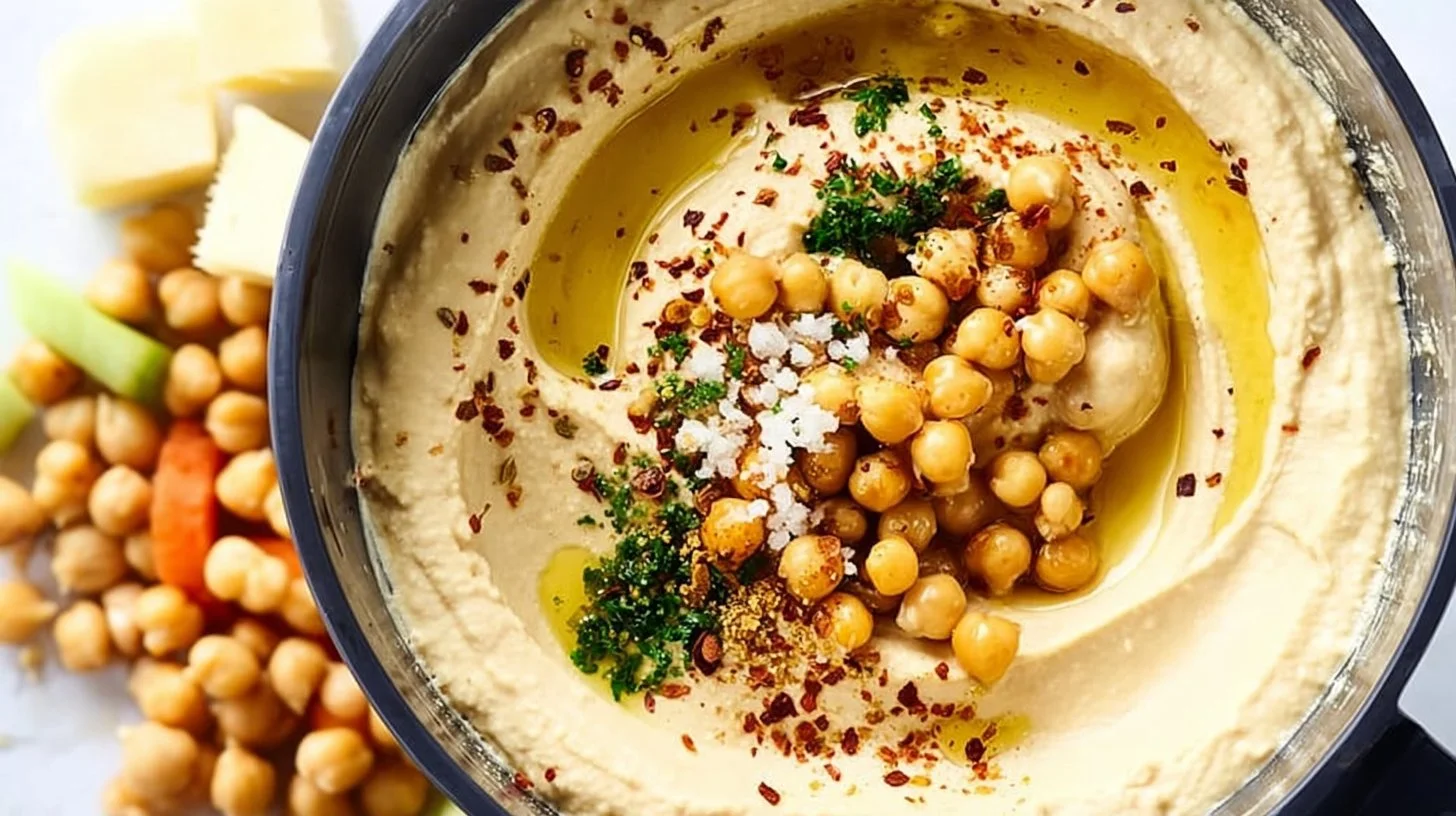
The first time I tasted truly silky hummus made at home, I wondered why I’d ever bought the store-bought kind again. This staple of Middle Eastern cuisine is creamy, bright with lemon, and endlessly flexible—perfect for weeknight snacks, party platters, or a protein-rich spread for sandwiches. With a few simple techniques, you can make hummus smoother and more vibrant than anything from a jar.
Why you’ll love this dish
Homemade hummus is quick, budget-friendly, and easy to customize. From a basic pantry pull-together to a gourmet centerpiece with toppings, it adapts to tastes and dietary needs. It’s also nutritious: chickpeas provide fiber and plant protein, while tahini adds healthy fats and a nutty depth.
“I whipped this up in 10 minutes and everyone inhaled it—creamy, tangy, and way better than the supermarket tubs.” — home cook review
Make it for weeknight dips, packed lunches, or as a healthy appetizer for guests.
How to make Homemade Hummus
Step-by-step overview
- Drain and rinse canned chickpeas (or use soft cooked dried chickpeas).
- Combine chickpeas, tahini, olive oil, lemon, garlic, cumin, and salt in a food processor.
- Process until smooth, adding water or reserved aquafaba to reach the texture you want.
- Taste and adjust seasoning. Serve with a drizzle of olive oil and optional toppings.
This recipe is built for a food processor, which gives the best texture. A high-speed blender can work, but you may need to add more liquid and stop to scrape frequently.
Ingredients
What you’ll need
- 1 can (15 oz) chickpeas, drained and rinsed (or ~1 1/2 cups cooked chickpeas)
- 1/4 cup tahini (see note below)
- 2 tablespoons extra-virgin olive oil, plus more for drizzle
- 2 tablespoons fresh lemon juice (about 1 lemon)
- 1 garlic clove, minced (or 1/2 tsp garlic paste)
- 1/2 teaspoon ground cumin
- Salt to taste (start with 1/2 teaspoon)
- Water or reserved chickpea liquid (aquafaba), 1–3 tablespoons as needed
Notes and substitutions inline:
- Tahini: use a good-quality tahini for the best flavor. For a lower-fat or nut-free swap, use 2 tablespoons plain Greek yogurt (yields a tangier result).
- Chickpeas: canned is fastest; if using dried, see Tips below for cooking instructions.
- Garlic: roast whole garlic cloves for a milder, sweeter hummus.
Directions
Step-by-step instructions
- Add the drained chickpeas, tahini, olive oil, lemon juice, minced garlic, cumin, and salt to a food processor.
- Process until the mixture starts to come together, about 30–60 seconds. Stop and scrape down the sides.
- With the motor running, slowly add water or 1–3 tablespoons of aquafaba until the hummus reaches your desired creaminess. Keep processing for an additional 1–2 minutes for extra-smooth texture.
- Taste and adjust: add more lemon, salt, or cumin as needed. Pulse once more to incorporate adjustments.
- Transfer to a serving bowl. Drizzle with olive oil and sprinkle toppings if using (paprika, za’atar, chopped parsley, toasted pine nuts, or roasted chickpeas).
- Serve immediately or chill for an hour to let flavors meld.
Short action verbs and clear ordering make these directions easy to follow. If your processor struggles, do it in batches.
How to serve Homemade Hummus
Best ways to enjoy it
- Classic: warm pita wedges, cucumber, and carrot sticks.
- Sandwich spread: layer under roasted veggies or grilled chicken.
- Bowl: dollop onto grain bowls with roasted vegetables and a squeeze of lemon.
- Party platter: surround with olives, marinated feta, roasted peppers, and fresh herbs.
For an attractive presentation: smooth the top with the back of a spoon, create a shallow well in the center, drizzle olive oil into the well, and sprinkle paprika or za’atar. Add a few whole chickpeas or toasted seeds for texture.
How to store
Storage and reheating tips
- Refrigerator: transfer to an airtight container and refrigerate within 2 hours of making. Use within 4–5 days.
- Freezer: hummus freezes well for up to 2–3 months. Freeze in portioned containers, leaving a little headspace. Thaw in the refrigerator overnight and stir well before serving.
- Food safety: always use clean utensils to avoid introducing bacteria. Discard if the hummus develops an off smell, taste, or visible mold.
Reheating: hummus is typically served cold or room temperature. To warm slightly, transfer to a saucepan and heat gently while stirring, or microwave in short intervals, stirring between each.
Tips to make
Helpful cooking tips
- For ultra-smooth hummus: peel the chickpeas (pinch the skins off). It’s tedious but yields silkier results. Alternatively, use the cooking method for dried chickpeas below.
- Ice water trick: adding 1–2 tablespoons of ice-cold water while processing helps make hummus fluffier.
- Aquafaba bonus: save the liquid from canned chickpeas (aquafaba) and use it in place of water for creamier texture and extra body.
- Blend longer: processing 1–2 extra minutes improves smoothness—just pause occasionally to avoid overheating the motor.
- Balance flavors: hummus tastes better after resting 30–60 minutes; flavors integrate and mellow.
- Tahini quality matters: bitter tahini (old or overheated) affects the final taste. Taste your tahini raw before using and add more lemon or a touch of honey/maple if it seems too bitter.
Quick method for dried chickpeas (for the silkiest hummus)
- Soak 1 cup dried chickpeas overnight in plenty of water.
- Drain, add to a pot with fresh water and 1 teaspoon baking soda. Bring to a boil, then simmer 45–60 minutes until very soft.
- Drain and rinse. Remove loose skins by rubbing handfuls between your palms under running water (optional but gives a noticeably smoother result).
- Use 1 1/2 cups cooked chickpeas in place of the canned chickpeas.
Variations
Creative twists
- Roasted red pepper hummus: add 1/2 cup roasted red peppers and 1/4 tsp smoked paprika.
- Spicy harissa hummus: fold in 1–2 tablespoons harissa paste or blend it in.
- Lemon-garlic herb hummus: add extra lemon zest and 2 tablespoons chopped dill, parsley, or cilantro.
- Beet hummus: blend 1 small roasted beet for color and earthy sweetness.
- Avocado hummus: replace half the tahini with 1 ripe avocado for a creamy, green twist (shorter fridge life).
- Low-fat: replace some tahini with plain Greek yogurt.
- Nut-free / sesame-free: omit tahini and add 2–3 tablespoons plain yogurt or 2 tablespoons sunflower seed butter for a similar richness.
FAQs
Common questions
Q: Can I use a blender instead of a food processor?
A: Yes, but you may need to add more liquid and stop to scrape the sides often. High-speed blenders can produce smooth hummus, but they can also heat the mixture—pulse and rest to prevent that.
Q: How long does homemade hummus last?
A: Stored in an airtight container in the fridge, hummus lasts about 4–5 days. Freeze for up to 2–3 months. Always check smell and appearance before eating.
Q: Is tahini necessary?
A: Tahini provides classic flavor and creaminess, but you can omit or reduce it. Substitute plain yogurt for a tangy alternative, or use 1–2 tablespoons sunflower seed butter for a sesame-free option.
Q: Why is my hummus grainy or gritty?
A: Common causes are undercooked or old chickpeas, insufficient processing time, or not removing skins. Try adding aquafaba or ice water and processing longer. For the smoothest texture, use very soft cooked chickpeas and consider peeling them.
Q: Can I make hummus without garlic or with less lemon?
A: Absolutely. Adjust garlic and lemon to taste. Roasting garlic gives a milder, sweeter profile. Start with small amounts and increase after tasting.
Q: Is hummus baby-safe?
A: Plain hummus (no added salt for babies under 1) can be introduced around 8–10 months, but check for allergies (sesame from tahini) and consult your pediatrician. For young children reduce sodium and avoid honey-sweetened variations.
If you’d like, I can provide a printable recipe card, a step-by-step photo guide, or variations tailored to gluten-free, low-FODMAP, or baby-friendly diets. Which would you prefer?
Print
Homemade Hummus
- Total Time: 10 minutes
- Yield: 4 servings
- Diet: Vegan
Description
Creamy, homemade hummus that is perfect for dips, spreads, and party platters. Quick to make and highly customizable.
Ingredients
- 1 can (15 oz) chickpeas, drained and rinsed (or ~1 1/2 cups cooked chickpeas)
- 1/4 cup tahini
- 2 tablespoons extra-virgin olive oil, plus more for drizzle
- 2 tablespoons fresh lemon juice (about 1 lemon)
- 1 garlic clove, minced (or 1/2 tsp garlic paste)
- 1/2 teaspoon ground cumin
- Salt to taste (start with 1/2 teaspoon)
- Water or reserved chickpea liquid (aquafaba), 1–3 tablespoons as needed
Instructions
- Add the drained chickpeas, tahini, olive oil, lemon juice, minced garlic, cumin, and salt to a food processor.
- Process until the mixture starts to come together, about 30–60 seconds. Stop and scrape down the sides.
- With the motor running, slowly add water or 1–3 tablespoons of aquafaba until the hummus reaches your desired creaminess. Keep processing for an additional 1–2 minutes for extra-smooth texture.
- Taste and adjust: add more lemon, salt, or cumin as needed. Pulse once more to incorporate adjustments.
- Transfer to a serving bowl. Drizzle with olive oil and sprinkle toppings if using.
- Serve immediately or chill for an hour to let flavors meld.
Notes
For ultra-smooth hummus, peel the chickpeas and consider using ice-cold water for fluffiness.
- Prep Time: 10 minutes
- Cook Time: 0 minutes
- Category: Appetizer
- Method: Blending
- Cuisine: Middle Eastern