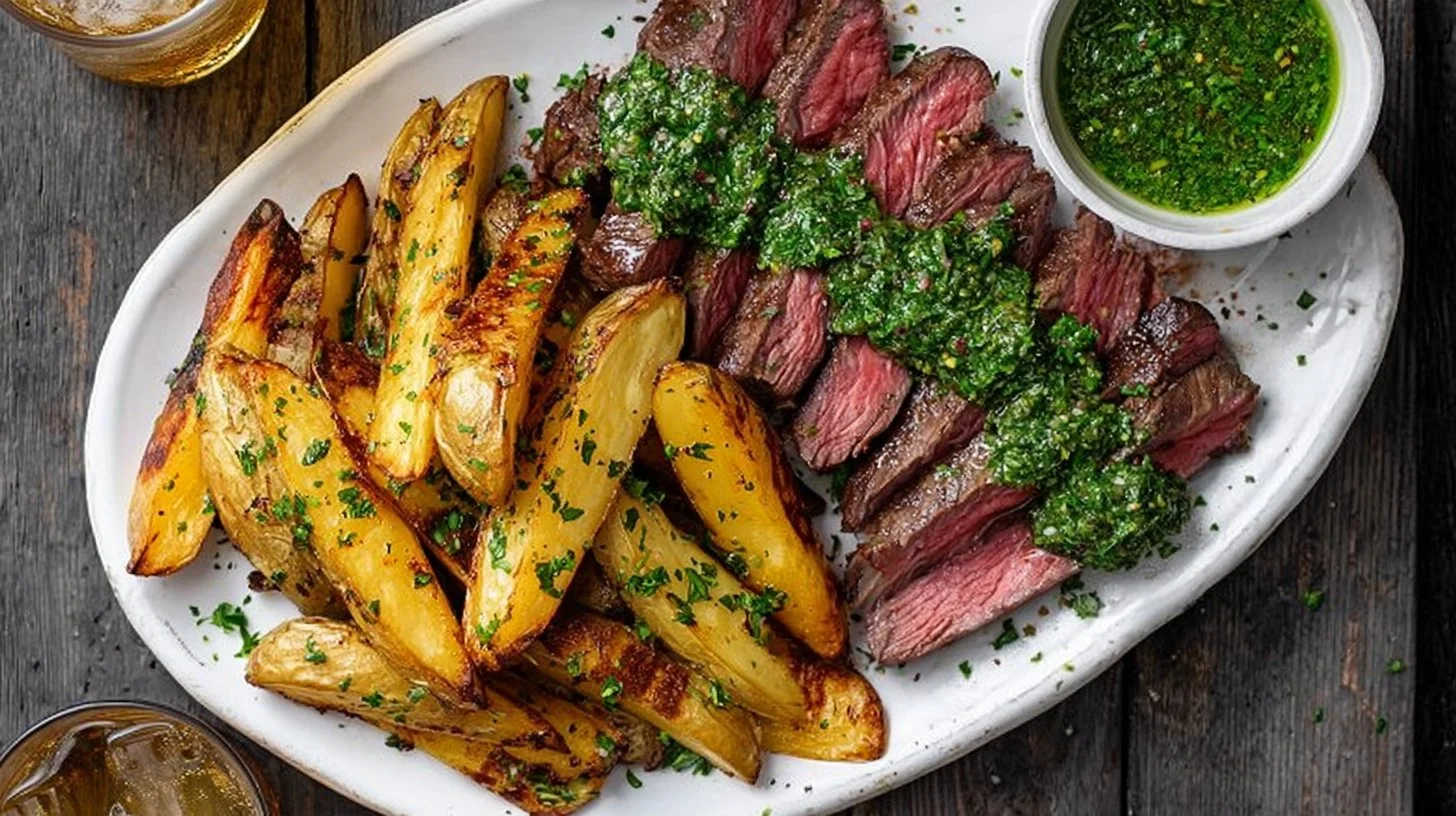
A hot, charred ribeye and a pile of golden potato wedges are simple pleasures for a reason. This version pairs seared ribeye with a bright cilantro‑cumin chimichurri and crispy oven wedges—easy enough for a weeknight, impressive enough for guests. The method focuses on strong seasoning, high‑heat searing, and a fresh sauce that cuts through the steak’s richness.
Why you’ll love this dish
This recipe balances bold flavors and straightforward technique. The steak gets a caramelized crust from a hot pan, while oven‑roasted wedges require little hands‑on time. The chimichurri adds acidity and herb freshness that lifts every bite.
“Fast to pull together, restaurant results at home—crispy wedges and the chimichurri made this our favorite Friday dinner.” — a home cook
Reasons to try it:
- Quick active time: sear the steak while wedges roast.
- Crowd friendly: scales easily for 2–6 people.
- Flexible: swap cuts or change herbs for new flavors.
How this recipe comes together
Step-by-step overview
- Preheat the oven and start the potato wedges so they can roast while you prepare the steak.
- Make a quick cilantro‑cumin chimichurri to marinate the steak and finish the dish.
- Pat the ribeye dry, season, and sear in a very hot skillet for a crust.
- Rest the steak, slice against the grain, and serve with chimichurri over the top and the wedges on the side.
Knowing this flow helps you multitask: potatoes roast while you make the sauce and sear the steak.
What you’ll need
- 1 large ribeye steak (about 1 to 1¼ lb / 450–570 g), 1–1.5 inches thick
- 2–3 tablespoons neutral oil for searing (canola, grapeseed, or light olive oil)
- Salt and freshly ground black pepper
- 4 medium potatoes (russet or Yukon), cut into wedges (about 1 lb / 450 g)
- 2 tablespoons olive oil (for wedges)
- 1 teaspoon garlic powder
- 1 teaspoon onion powder
- 1 teaspoon paprika
- Optional: pinch of cayenne or smoked paprika for heat
- For the chimichurri:
- 1 cup packed cilantro leaves, chopped (about 1 large bunch)
- 2–3 cloves garlic, minced
- 1 teaspoon ground cumin
- 2 tablespoons red wine vinegar (or lime juice for a brighter touch)
- 1/3 to 1/2 cup extra‑virgin olive oil
- Salt and freshly ground black pepper to taste
- Optional: 1 small shallot finely chopped or 1/4 tsp red pepper flakes
Substitutions/notes:
- Steak: New York strip, sirloin, or skirt/flank (adjust cook time for thickness).
- Potatoes: sweet potatoes work—use olive oil and add a touch of brown sugar or chili for a twist.
- If you prefer parsley chimichurri, swap half the cilantro for flat‑leaf parsley and add a pinch of dried oregano.
Directions
- Preheat your oven to 400°F (200°C).
- Toss potato wedges with 2 tablespoons olive oil, garlic powder, onion powder, paprika, salt, and pepper. Spread in a single layer on a baking sheet. Roast 25–30 minutes, turning once halfway, until golden and crisp.
- While the potatoes roast, make the chimichurri. In a bowl, combine chopped cilantro, minced garlic, cumin, red wine vinegar (or lime juice), and 1/3 cup olive oil. Season with salt and pepper. Taste and add more oil or vinegar to balance. Set aside—flavors deepen if it rests a few minutes.
- Bring the ribeye to room temperature for 20–30 minutes. Pat it dry with paper towels. Generously season both sides with salt and pepper.
- Heat a heavy skillet (cast iron preferred) over high heat until very hot. Add 1–2 tablespoons neutral oil and swirl to coat. When the oil just begins to smoke, lay the steak in the pan away from you.
- Sear the steak undisturbed: about 4–5 minutes per side for a 1–1¼" steak to reach medium‑rare (this varies—use a thermometer). For internal temperatures: rare 120–125°F (49–52°C), medium‑rare 130–135°F (54–57°C), medium 140–145°F (60–63°C).
- Remove the steak to a cutting board. Tent loosely with foil and rest 5–10 minutes—this lets juices redistribute.
- Slice the steak thinly against the grain. Spoon chimichurri over the steak. Serve with the roasted potato wedges.
Best ways to enjoy it
- Serve sliced steak topped with chimichurri on a platter. Add wedges down one side.
- Pair with a crisp green salad, charred asparagus, or grilled corn for color and contrast.
- Wine pairing: a medium‑bodied red like Malbec, Tempranillo, or a peppery Syrah. For beer, try a brown ale or amber.
Plating idea: fan the sliced steak, drizzle or spoon chimichurri over, and stack wedges for height. Finish with a small extra bowl of chimichurri for dipping.
Storage and reheating tips
- Refrigeration: Store leftovers in an airtight container within 2 hours of cooking. Keep for up to 3–4 days.
- Freezing: Slice steak and arrange in a single layer in a freezer‑safe bag. Freeze up to 2–3 months. Cooked wedges can be frozen about 1 month; texture will change.
- Reheating steak: Thaw (if frozen) in the refrigerator. Reheat gently in a skillet over medium heat with a splash of oil or in a 300°F (150°C) oven until warmed through (aim for 120–130°F for already medium‑rare to avoid overcooking). Finish with a quick sear if you want crust.
- Reheating wedges: Reheat in a 425°F (220°C) oven or in an air fryer for 5–10 minutes to regain crispness. Avoid microwaving unless you accept soggier wedges.
- Food safety: Reheat leftovers to an internal temperature of 165°F (74°C) before serving.
Helpful cooking tips
- Pat the steak dry: moisture prevents a good crust.
- High heat is vital: a hot skillet builds the Maillard crust you want. Use an oil with a high smoke point for searing.
- Use an instant‑read thermometer: it’s the most reliable way to hit your preferred doneness.
- Let the steak rest: cutting too soon releases juices and dries the meat.
- Crispier wedges: soak cut potatoes 20–30 minutes in cold water, drain, and dry well. This removes starch and helps them crisp.
- Flip wedges halfway and give them space on the sheet—crowding steams them.
- Make chimichurri ahead: it keeps well and actually improves after a few hours in the fridge (up to 2–3 days).
Pro chef secret: after searing, you can finish a thicker steak in a 400°F (200°C) oven for 4–8 minutes to reach target temp without burning the crust.
Creative twists
- Chimichurri variations: swap cilantro for parsley, add oregano, or use lemon juice instead of vinegar. Add anchovy paste for umami.
- Spicy chimichurri: add red pepper flakes or a diced fresh chili.
- Garlic‑butter finish: top hot steak with a slice of compound butter (garlic, parsley, lemon zest) instead of chimichurri.
- Steak frites style: cut potatoes into thin fries, double‑fry or bake for extra crispness.
- Vegetarian swap: replace steak with thick grilled portobello caps or marinated tofu; serve with chimichurri and wedges.
FAQs
Q: How long does this take from start to finish?
A: Active hands‑on time is about 20–30 minutes. With potato roasting time, total is roughly 35–45 minutes.
Q: Can I use a different cut of meat?
A: Yes. Strip, sirloin, or skirt work well. Thinner cuts cook faster; reduce searing time. For tough cuts (flank, skirt), slice thin across the grain after resting.
Q: How do I know when the steak is done without a thermometer?
A: Use the touch test (firmer = more done) as a guide, but a thermometer is more accurate. For a quick visual: juices run slightly pink for medium‑rare; very clear juices indicate well done.
Q: Can I make the chimichurri ahead or freeze it?
A: Chimichurri keeps 2–3 days in the fridge and actually improves as flavors meld. You can freeze it in an ice cube tray up to 2 months; thaw and stir before using.
Q: Is it safe to leave cooked steak or potatoes out on the counter?
A: No. Per food safety guidelines, don’t leave cooked food at room temperature for more than 2 hours (or 1 hour if the ambient temperature is above 90°F / 32°C). Refrigerate promptly.
Q: My wedges aren’t crisp. What went wrong?
A: Likely too much moisture, crowding on the tray, or oven temperature too low. Try soaking and drying potatoes, spacing them out, and increasing oven heat or using convection.
If you’d like, I can scale this recipe to feed a specific number of people or create a full grocery list with amounts for 2, 4, or 6 servings. Which would help you most?
Print
Charred Ribeye with Cilantro-Cumin Chimichurri and Crispy Potato Wedges
- Total Time: 60 minutes
- Yield: 4 servings
- Diet: Carnivore
Description
A perfectly seared ribeye steak paired with a bright chimichurri and crispy potato wedges, ideal for weeknights or impressing guests.
Ingredients
- 1 large ribeye steak (about 1 to 1¼ lb / 450–570 g), 1–1.5 inches thick
- 2–3 tablespoons neutral oil for searing (canola, grapeseed, or light olive oil)
- Salt and freshly ground black pepper
- 4 medium potatoes (russet or Yukon), cut into wedges (about 1 lb / 450 g)
- 2 tablespoons olive oil (for wedges)
- 1 teaspoon garlic powder
- 1 teaspoon onion powder
- 1 teaspoon paprika
- Optional: pinch of cayenne or smoked paprika for heat
- 1 cup packed cilantro leaves, chopped (about 1 large bunch)
- 2–3 cloves garlic, minced
- 1 teaspoon ground cumin
- 2 tablespoons red wine vinegar (or lime juice for a brighter touch)
- 1/3 to 1/2 cup extra-virgin olive oil
- Salt and freshly ground black pepper to taste
- Optional: 1 small shallot finely chopped or 1/4 tsp red pepper flakes
Instructions
- Preheat your oven to 400°F (200°C).
- Toss potato wedges with 2 tablespoons olive oil, garlic powder, onion powder, paprika, salt, and pepper. Spread on a baking sheet.
- Roast for 25–30 minutes, turning once halfway, until golden and crisp.
- While potatoes roast, make the chimichurri by combining cilantro, garlic, cumin, vinegar, and olive oil. Season with salt and pepper.
- Bring the ribeye to room temperature for 20–30 minutes and pat dry. Season both sides with salt and pepper.
- Heat a skillet over high heat and add 1–2 tablespoons of neutral oil.
- Sear the steak undisturbed for about 4–5 minutes per side for medium-rare.
- Remove the steak and let it rest for 5–10 minutes.
- Slice the steak against the grain, spoon chimichurri over, and serve with the roasted wedges.
Notes
Chimichurri can be made in advance and improves in the fridge. Use an instant-read thermometer for accurate doneness.
- Prep Time: 30 minutes
- Cook Time: 30 minutes
- Category: Main Course
- Method: Searing and Roasting
- Cuisine: Argentinian