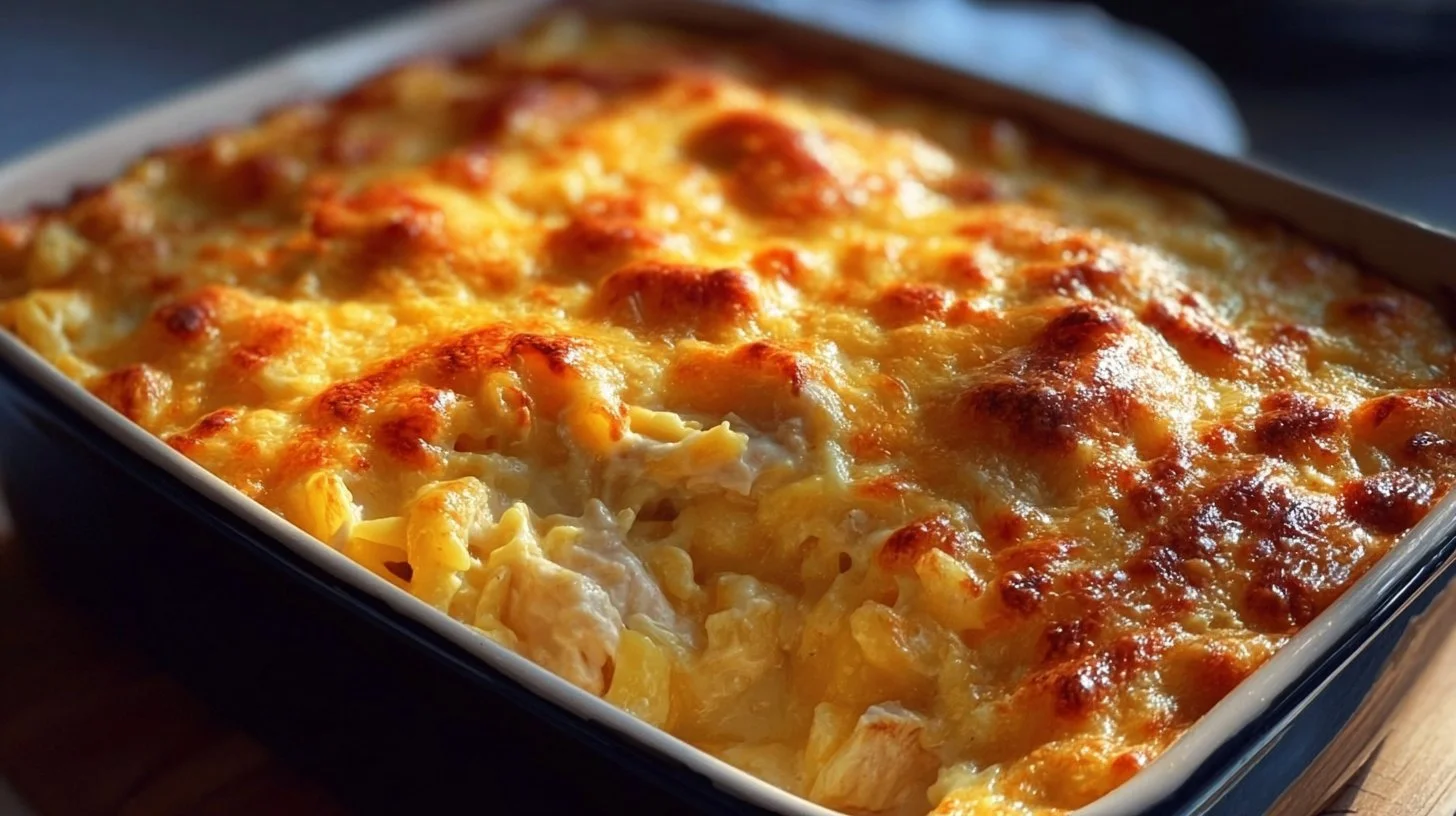
Some recipes earn their place in your regular rotation not through fancy techniques or exotic ingredients, but by delivering pure, uncomplicated comfort. This creamy chicken casserole does exactly that—combining tender chicken, pasta, and a luscious cheese sauce that’s rich without being overwhelming. The sour cream adds a subtle tang that keeps the dish from feeling too heavy, while red pepper flakes provide just enough warmth to make things interesting. It’s the kind of meal that feels like a hug on a plate.
What Makes This Recipe Special
This casserole shines because it strikes that perfect balance between easy and impressive. You can have it assembled and in the oven within 20 minutes using simple pantry staples and leftover chicken. It’s endlessly forgiving—use whatever pasta shape you have, mix and match cheeses based on what’s in your fridge, or toss in vegetables that need using up. The result always delivers that satisfying, creamy comfort you’re craving.
“This was a hit with my family! The cowboy butter added a delicious richness to the pasta, and the chicken was so flavorful and tender. Plus, it was quick and easy to make. A definite winner!”
It’s budget-friendly enough for weekly meal planning but impressive enough for potlucks and church dinners where you want to bring something people will actually finish. Families with picky eaters appreciate how the mild, cheesy flavors appeal to kids, while the option to amp up the red pepper flakes keeps adults interested. Plus, it reheats beautifully, making it ideal for meal prep or those nights when everyone eats at different times.
The Cooking Process Explained
The beauty of this recipe lies in its straightforward approach. You’ll start by sautéing onions and garlic in butter until fragrant and translucent, then create a simple roux by stirring in flour. This forms the base for your creamy sauce. Milk and sour cream get whisked in next, creating a smooth, tangy sauce that thickens as it cooks. Cheese melts into the warm sauce, and then everything—cooked pasta, chicken, and seasonings—gets folded together before going into the baking dish. A final sprinkle of cheese on top creates that irresistible golden, bubbly crust during baking. The entire process takes about an hour from start to finish, with only 30 minutes of hands-on work.
What You’ll Need
Protein and Pasta:
- 2 cups cooked chicken, cut into small bite-sized pieces (rotisserie chicken is perfect here)
- 4 cups cooked pasta, drained (about 2 cups uncooked—penne, cavatappi, or rigatoni all work beautifully)
Sauce Base:
- 3 tablespoons butter
- 1 small onion, finely chopped
- 2 garlic cloves, minced
- 2 tablespoons all-purpose flour (this thickens the sauce)
Creamy Components:
- ½ cup sour cream (adds tang and richness)
- 1 cup milk (whole milk creates the creamiest results)
Cheese:
- 3 cups grated cheese (cheddar, Colby Jack, Swiss, or any combination you prefer), with ½ cup reserved for topping
Seasonings:
- ½ teaspoon red pepper flakes (adjust based on your heat preference)
- Salt and black pepper to taste
The ingredient list is wonderfully flexible—use what you have and adjust quantities based on your family’s preferences.
Step-by-Step Instructions
Prepare your components: Preheat your oven to 350°F and lightly grease a 9×13-inch baking dish. If you haven’t already, cook your pasta according to package directions until al dente, drain well, and set aside. Cook and cube your chicken, or use leftover rotisserie chicken for a shortcut.
Build the sauce base: Melt butter in a large skillet or saucepan over medium heat. Add the finely chopped onion and cook for 3-4 minutes until it becomes translucent and soft. Add the minced garlic and cook for another minute until fragrant, stirring constantly to prevent burning.
Create the roux: Sprinkle the flour over the onion and garlic mixture. Stir continuously and cook for about 1 minute. This removes the raw flour taste and creates the thickening base for your sauce. Don’t let it brown.
Make the creamy sauce: Add the sour cream and milk to the pan. Switch to a whisk and stir constantly to prevent lumps from forming. Continue cooking over medium-low heat until the sauce thickens noticeably, about 3-5 minutes. It should coat the back of a spoon.
Incorporate the cheese: Reduce heat to low and add 2½ cups of the grated cheese (reserving ½ cup for topping). Stir until the cheese melts completely and the sauce becomes smooth and creamy.
Combine everything: Add the cooked chicken, cooked pasta, red pepper flakes, salt, and black pepper to the cheese sauce. Fold everything together gently but thoroughly, ensuring every piece of pasta and chicken gets coated in that luscious sauce.
Assemble and bake: Transfer the mixture to your prepared baking dish, spreading it evenly. Press down lightly to compact it slightly—this helps it hold together when serving. Sprinkle the reserved ½ cup of cheese evenly over the top.
Bake to perfection: Place the casserole in your preheated oven and bake for 20-30 minutes, until the cheese on top melts completely and starts developing golden, bubbly spots around the edges.
Rest and serve: Let the casserole rest for 5-10 minutes after removing it from the oven. This allows the sauce to set slightly, making serving much neater.
Best Ways to Enjoy It
This casserole is hearty enough to stand alone as a complete meal, but thoughtful sides enhance the experience. A crisp green salad with vinaigrette cuts through the richness beautifully—try mixed greens with cucumbers, tomatoes, and a lemon-herb dressing. Roasted vegetables like carrots, broccoli, or Brussels sprouts add color and nutritional balance. For comfort-food lovers, serve with warm, buttery garlic bread or dinner rolls for soaking up extra sauce.
For casual family dinners, serve directly from the baking dish at the table, letting everyone help themselves. For potlucks or gatherings, cut into neat squares and garnish individual portions with fresh herbs like parsley or chives for a polished look. The casserole holds its shape well when portioned, especially after that important resting period.
Consider offering hot sauce or extra red pepper flakes on the side for those who enjoy more heat. A sprinkle of fresh black pepper or grated Parmesan just before serving adds an extra layer of flavor.
Keeping Leftovers Fresh
Store cooled leftovers in an airtight container in the refrigerator for up to 4 days. The casserole actually develops deeper flavors as it sits, making day-two servings particularly delicious.
Reheating methods: For best results, reheat in a skillet over low heat. Add 2-3 tablespoons of water or milk, cover with a lid, and heat gently for 5-7 minutes, stirring occasionally. This method revives the creamy texture better than other options. For oven reheating, cover the casserole with foil and warm at 350°F for 10-15 minutes. Microwave individual portions in 1-minute intervals, adding a splash of milk if needed.
Freezing instructions: This casserole freezes well for 2-3 months. Let it cool completely before wrapping tightly in aluminum foil and plastic wrap, or transfer to a freezer-safe container. For best results, freeze before baking rather than after—assemble completely, wrap well, and freeze. When ready to serve, thaw overnight in the refrigerator, then bake as directed, adding 5-10 minutes to account for the cold start.
Make-ahead tip: Assemble the entire casserole up to 2 days ahead. Stop just before baking, wrap tightly with plastic wrap, and refrigerate. When ready to serve, remove the plastic, sprinkle with the reserved cheese, and bake as directed. You may need to add 5 minutes to the baking time if starting from cold.
Pro Chef Tips
Use 2 cups of uncooked pasta, not 4 cups. This is the most common mistake based on reader feedback. Two cups of dry pasta yields approximately 4 cups cooked, which is the perfect amount for this recipe. Using 4 cups dry creates an overly dry, pasta-heavy casserole.
Cook your pasta just to al dente—it will continue softening in the oven. Overcooked pasta can turn mushy in casseroles with cream sauces.
Whisk constantly when adding liquids to the flour mixture to prevent lumps. If lumps do form, use an immersion blender to smooth out the sauce before adding cheese.
For a saucier casserole, add an extra ½ cup of milk or a splash of chicken broth. Some readers prefer a more sauce-forward dish, especially when using heartier pasta shapes.
Rotisserie chicken is your best friend for quick assembly. Shred or cube the meat and skip the chicken-cooking step entirely. This also adds more flavor than plain boiled chicken.
Let the sauce thicken properly before combining with pasta. If your sauce seems thin, cook it a bit longer. A properly thickened sauce won’t pool at the bottom of your baking dish.
Add a tablespoon of mayo to the cheese sauce to prevent it from breaking or separating during baking—this is a chef’s trick that works wonderfully.
Creative Twists
Vegetable additions: Fold in steamed broccoli florets, frozen peas, diced bell peppers, or sautéed mushrooms. Many readers love adding mixed frozen vegetables (peas, carrots, green beans) to make it a true one-dish meal. Fresh spinach wilts beautifully into the warm sauce.
Topping variations: Skip the cheese topping and use French-fried onions, crushed Ritz crackers mixed with melted butter, or panko breadcrumbs for a crunchy contrast. Some readers swear by Stovetop stuffing as a topping.
Cheese combinations: Experiment with Gruyère for a sophisticated, nutty flavor, pepper Jack for heat, or a Mexican cheese blend for Southwestern flair. Mixing sharp cheddar with mild cheddar and Monterey Jack creates wonderful depth.
Protein swaps: Use leftover turkey (especially post-Thanksgiving), diced ham steak with Swiss cheese for a chicken cordon bleu vibe, or keep it vegetarian by omitting meat entirely and doubling the vegetables.
Cream variations: Substitute heavy cream for milk and sour cream for an ultra-rich version. For lighter options, use half-and-half or even chicken broth with cream cheese. Greek yogurt can replace sour cream for added protein.
Spice adjustments: Add jalapeños with the onions for heat, or try dried herbs like thyme, basil, or Italian seasoning. Cajun seasoning creates a completely different flavor profile.
Pasta alternatives: Egg noodles are a popular swap that creates a more traditional casserole texture. For gluten-free needs, use your favorite gluten-free pasta variety. Some readers have successfully used rice instead of pasta.
Your Questions Answered
How many servings does this recipe make? This casserole serves 4-6 people depending on portion sizes and what sides you’re serving. For smaller households, it’s perfect for meals with leftovers. For larger families or gatherings, double all ingredients and use two 9×13-inch baking dishes.
Can I make this ahead and bake later? Absolutely. Assemble the casserole completely, cover tightly with plastic wrap, and refrigerate for up to 2 days before baking. When ready to serve, remove the plastic wrap, add the cheese topping, and bake as directed. You may need to add 5-10 minutes to the baking time.
Why is my casserole dry? The most common cause is using too much pasta. Remember, 2 cups uncooked pasta expands to 4 cups cooked. Other causes include overbaking or not having enough sauce. Add extra milk or chicken broth to the sauce if it seems thick before baking. Cover with foil if the top browns too quickly.
Can I use cream of chicken soup instead of making a sauce? Yes, many home cooks simplify this by substituting 1-2 cans of cream of chicken soup for the butter-flour-milk-sour cream sauce. You’ll still want to sauté the onions and garlic for flavor, then mix everything together with the soup and cheese.
What’s the best cheese to use? Sharp cheddar provides the most flavor, but combining cheeses creates depth. Popular combinations include cheddar with Monterey Jack, Colby Jack, or Swiss. Avoid pre-shredded cheese when possible—freshly grated melts more smoothly because it doesn’t contain anti-caking agents.
Can I use chicken tenderloins? Definitely. Any boneless chicken works. Tenderloins, breasts, or thighs all work equally well. Just ensure the chicken is fully cooked and cut into bite-sized pieces before adding to the casserole.
How do I know when it’s done baking? The casserole is ready when the cheese on top has melted completely and starts bubbling around the edges. You’ll see golden-brown spots developing. The internal temperature should reach 165°F if you want to check with a thermometer.