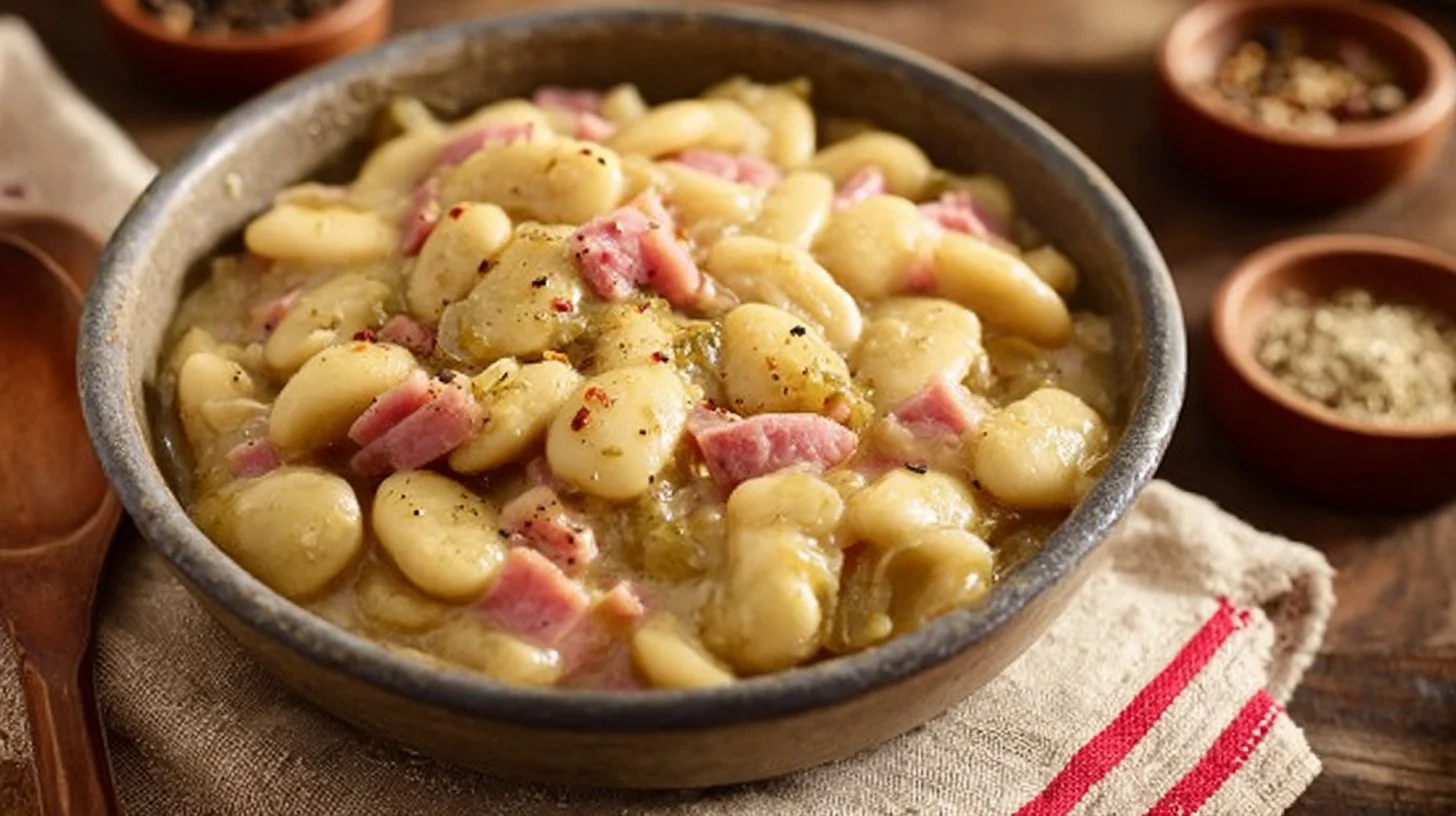
Lima beans are small, starchy legumes with a buttery texture and a mild, slightly sweet flavor. They’re a classic side in Southern cooking and a hearty addition to stews, succotash, and vegetarian mains. Make them when you want an inexpensive, protein-rich side that’s comforting and easy to customize.
Why you’ll love this dish
Lima beans cook up creamy and comforting with very little hands-on time. They’re budget-friendly, kid-friendly, and versatile—perfect for a simple weeknight side, a potluck contribution, or a make-ahead base for salads and purees. Because dried lima beans absorb flavors, they pair beautifully with aromatics, smoked ham, or bright vinegar-based dressings.
“A pantry staple that turns into something cozy in 45 minutes. I toss mine with butter and parsley and everyone asks for seconds.” — home cook review
Step-by-step overview
- Sort and rinse dried lima beans, then soak (overnight or quick-soak).
- Drain, add fresh water, and simmer until tender (30–45 minutes).
- Season, finish with butter or oil, and serve.
- Cool promptly and store leftovers in the fridge or freezer.
This recipe follows a simple soak-then-cook method for reliably tender beans. If you prefer no-soak cooking or pressure cooking, see the Tips section for timing alternatives.
What you’ll need
- 1 cup dried lima beans (about 6–7 oz)
- 4 cups water (for cooking)
- 1/2 to 1 teaspoon salt, to taste (see tips)
- 1 tablespoon butter or olive oil (optional)
- Freshly ground black pepper, to taste (optional)
Substitutions/notes:
- Use canned lima beans (about 15 oz can) if short on time—rinse and reduce cooking time (see Directions).
- For more savory depth, cook with a small smoked ham hock, piece of bacon, or 1 bay leaf and a clove of garlic. Remove solids before serving.
Directions
- Sort and rinse. Spread the beans on a clean counter and pick out any stones or shriveled pieces. Rinse under cold water.
- Soak the beans. Cover with 3–4 cups cold water and soak 6–8 hours or overnight. (If short on time, use the quick-soak method in Tips.) Drain and rinse the soaked beans.
- Start cooking. Put the drained beans into a medium pot and add 4 cups fresh water. Bring to a gentle boil over medium-high heat.
- Reduce heat and simmer. Lower the heat to maintain a gentle simmer. Skim any foam from the surface. Cook until beans are tender, about 30–45 minutes for baby limas and 45–60 minutes for larger Fordhook-type limas. Check for doneness by mashing one between your fingers—it should be soft and creamy.
- Season late. Add 1/2–1 teaspoon salt and pepper in the last 10–15 minutes of cooking. Stir in butter or oil just before serving.
- Serve warm. Drain or serve with a little of the cooking liquid for a saucier side. Pair with cornbread, roasted meats, or toss into succotash.
If using canned beans: rinse thoroughly, then warm in a saucepan with a little stock or butter for 5–10 minutes—no extended cooking needed.
Best ways to enjoy it
- Classic Southern: fold in crumbled bacon or a diced ham hock and finish with butter and parsley.
- Succotash: combine with sautéed corn, bell pepper, and scallions.
- Salad: cool and toss with lemon vinaigrette, red onion, and herbs.
- Puree: blend with olive oil and lemon for a bean dip or spread.
- Stew addition: add near the end of a vegetable or meat stew so the beans don’t overcook.
Storage and reheating tips
- Refrigerate: cool beans to room temperature within 2 hours, then refrigerate in an airtight container for 3–4 days.
- Freeze: portion into freezer-safe containers or bags and freeze up to 6 months. Label with date.
- Reheat: gently rewarm on the stovetop with a splash of water or broth until steaming, or microwave covered until hot. Reheat to at least 165°F (74°C) for safety.
- Safe handling: never leave cooked beans at room temperature more than 2 hours.
Helpful cooking tips
- Sort first: always pick out stones or discolored beans before rinsing.
- Quick-soak option: boil beans for 2 minutes, remove from heat, cover, and let stand 1 hour. Drain and continue as usual.
- Salt timing: adding salt late (last 10–15 minutes) helps control texture, but salting early is also fine—modern chefs often salt at the start. If beans are old or stubborn, a pinch of baking soda speeds softening (use sparingly).
- Skim foam: a white foam will form early in cooking—skim it off for a clearer broth.
- Aromatics: add onion, garlic, bay, thyme, or a piece of smoked meat for flavor. Remove large aromatics before serving.
- Test for doneness: beans should be uniformly soft and creamy; avoid a mealy center.
Creative twists
- Tomato-stewed limas: simmer with canned tomatoes, smoked paprika, and a splash of vinegar.
- Coconut lime limas (vegan): cook in part coconut milk, finish with lime zest and cilantro.
- Mexican-style: finish with cumin, cilantro, lime, and a serrano slice.
- Mashed “butter bean” spread: puree cooked limas with olive oil, lemon, and roasted garlic for a dip similar to hummus.
- Smoky ham variation: cook with ham hock and remove it before serving; shred any meat back into the beans.
FAQs
Q: Do lima beans need to be soaked?
A: Soaking speeds cooking, reduces gas-causing oligosaccharides, and helps them cook more evenly. You can cook unsoaked lima beans, but expect longer simmering (up to 1–1.5 hours) or use a pressure cooker.
Q: Can you eat lima beans raw?
A: No. Raw or undercooked lima beans contain compounds (cyanogenic glycosides) that can be harmful. Always cook dried lima beans thoroughly: bring to a boil and simmer until fully tender.
Q: How long do dried lima beans take to cook?
A: After soaking, expect 30–45 minutes for small/baby limas and 45–60 minutes for larger Fordhook-type beans. Unsoaked beans can take longer (up to 90 minutes) on the stovetop.
Q: Can I use canned lima beans instead of dried?
A: Yes. Canned beans are fully cooked—rinse and heat through for 5–10 minutes. They’re a convenient shortcut but typically less flavorful than beans cooked from scratch with aromatics.
Q: How long do cooked lima beans keep in the freezer?
A: Up to 6 months when stored in airtight containers or heavy-duty freezer bags. Thaw overnight in the fridge or reheat from frozen on low heat.
If you’d like, I can convert this into a quick printable recipe card with exact yields and a shopping list.