Introduction
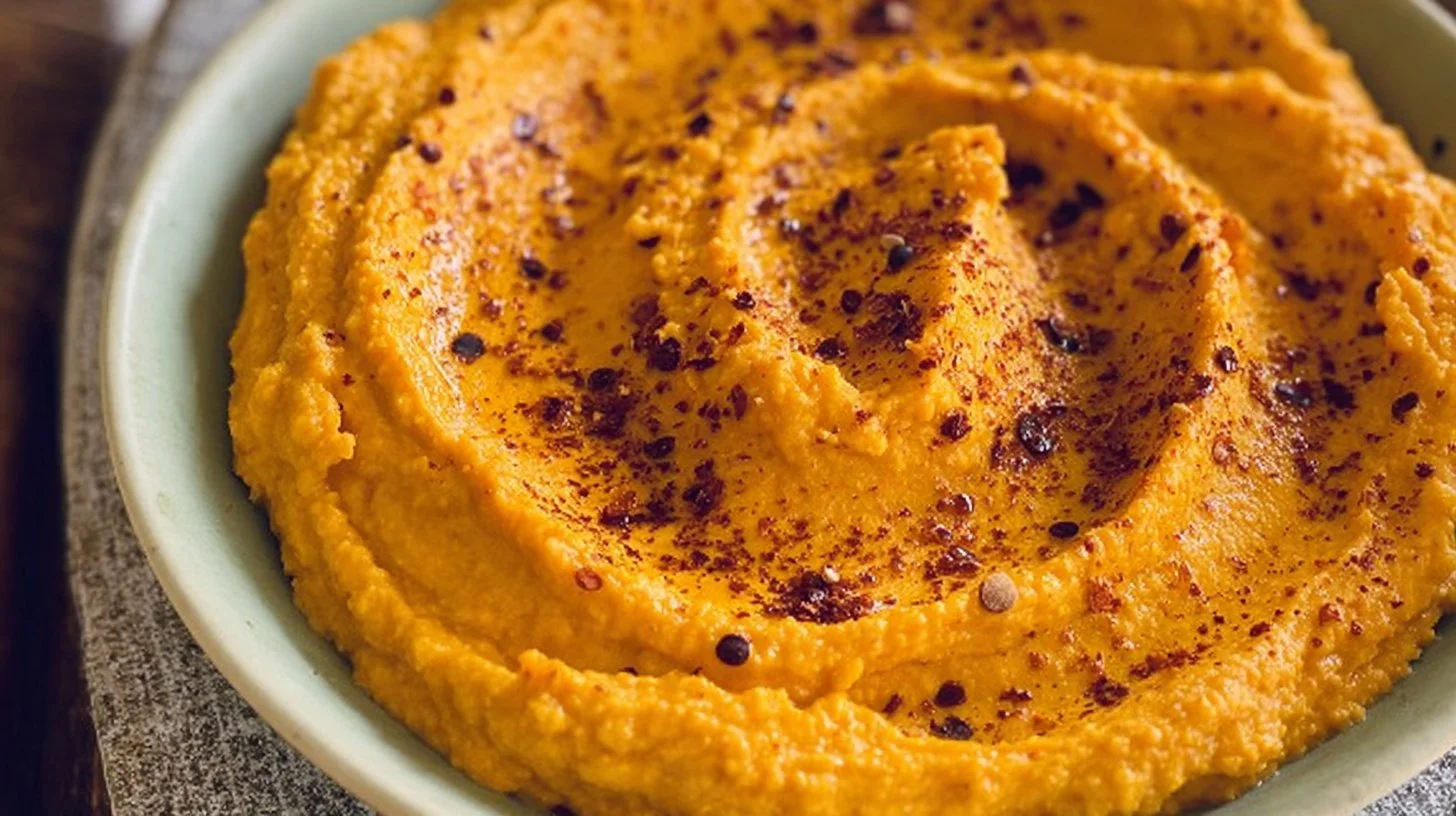
Warm, slightly sweet, and just a little smoky—roasted carrot hummus takes the familiar comfort of traditional hummus and lifts it with bright orange color and deep caramelized flavor. It’s a simple twist that makes raw veggies and pita sing, and it’s the kind of spread you’ll reach for when you want something a little more special than store-bought. I first made this to use up a full tray of roasted carrots after a dinner party; the leftovers disappeared faster than the roast itself.
Why you’ll love this dish
- Sweetness and smoke: Roasting concentrates the carrots’ natural sugars and adds a gentle caramelized edge that pairs beautifully with tahini and lemon.
- Quick and budget-friendly: Uses a single can of chickpeas and pantry staples. Minimal hands-on time.
- Crowd-pleasing and versatile: Works as a party dip, sandwich spread, or a colorful mezze addition.
“I brought this to a potluck and everyone asked for the recipe. The color is irresistible and the flavor is more complex than regular hummus.” — a recent tester
Step-by-step overview
- Roast carrots and garlic until tender and caramelized.
- Drain and rinse chickpeas (reserve some liquid if you like).
- Blend chickpeas, roasted carrots, garlic, tahini, lemon, and salt until smooth.
- Adjust texture with olive oil, aquafaba, or water and balance seasoning.
- Serve drizzled with olive oil and a sprinkle of paprika or sumac.
Ingredients
- 1 can (15 oz / ~425 g) chickpeas, drained and rinsed (reserve 2–3 tbsp of the can liquid — aquafaba — if you want extra creaminess)
- 2 cups roasted carrots (about 6–8 medium carrots before roasting)
- 2 cloves roasted garlic (see note below on roasting whole heads)
- 2 tablespoons tahini (sesame paste)
- 2 tablespoons lemon juice (fresh is best)
- Salt to taste (start with 1/2 teaspoon)
- Paprika or sumac for serving
- Olive oil for drizzling and for blending (about 1–3 tablespoons)
Optional/additional: 1/2 teaspoon ground cumin, pinch of cayenne or 1 tablespoon harissa for heat, 2–3 tablespoons reserved chickpea liquid or water to thin, cracked black pepper, chopped parsley for garnish.
Notes/substitutions inline:
- Tahini substitute: any smooth nut or seed butter (sunflower seed butter for nut-free).
- Tahini-free or lower-fat: reduce tahini and add 1–2 tbsp plain yogurt (dairy) or extra aquafaba (vegan).
- For a nuttier finish: swap 1 tbsp tahini for 1 tbsp almond butter.
Directions
- Preheat the oven to 425°F (220°C).
- Prepare carrots: Peel (or scrub) and cut carrots into 1–2 inch pieces for even roasting. Toss with 1–2 tablespoons olive oil and a pinch of salt. Spread in a single layer on a rimmed baking sheet.
- Roast carrots: Roast until tender and edges are caramelized, about 25–30 minutes, turning once halfway through. Thinner pieces will finish faster.
- Roast garlic: Toss garlic cloves (still in their skins) with a little oil and roast alongside the carrots, or roast a whole head wrapped in foil for 35–40 minutes until soft. Squeeze out the softened cloves.
- Prep chickpeas: Drain and rinse the canned chickpeas. For an extra-silky hummus, pinch off a few skins or rub chickpeas between towels to loosen skins before processing (optional).
- Combine in food processor: Add chickpeas, roasted carrots, roasted garlic, tahini, lemon juice, and 1/2 teaspoon salt to a food processor. Add 1 tablespoon olive oil and 1–2 tablespoons aquafaba or water if using.
- Blend: Pulse to combine, then run the processor until smooth, 1–2 minutes. Scrape down the bowl as needed. If too thick, add more olive oil or reserved chickpea liquid a tablespoon at a time until you reach your desired consistency.
- Taste and adjust: Add more salt, lemon, or a pinch of cumin or cayenne if you like. Re-blend briefly to incorporate.
- Serve: Transfer to a bowl, drizzle with olive oil, and sprinkle with paprika or sumac and chopped parsley if using. Serve at room temperature or chilled.
How to serve Homemade Roasted Carrot Hummus
- Classic platter: Center the hummus in a shallow bowl, make a swirl with the back of a spoon, drizzle olive oil, and scatter toasted pine nuts or sesame seeds. Surround with warm pita, cucumber slices, cherry tomatoes, and radishes.
- Sandwich spread: Use as a vibrant spread for wraps, grain bowls, or grilled veggie sandwiches.
- Elevated appetizer: Dollop onto crostini, top with za’atar and lemon zest, or pair with roasted beets for a color-forward starter.
- Protein pairing: Serve with grilled chicken kebabs, falafel, or roasted salmon for a heartier plate.
How to store
- Refrigerator: Place hummus in an airtight container and refrigerate within two hours. It will keep 4–5 days. Press a piece of plastic wrap directly onto the surface to minimize oxidation and drying.
- Freezing: Freeze in a freezer-safe container for up to 3 months. Leave a bit of headspace because hummus can expand slightly. Thaw overnight in the fridge and stir or re-blend before serving.
- Reheating: Hummus is typically served cold or room temperature. If you prefer it warm, heat gently in a saucepan over low heat, stirring constantly, and add a splash of water or olive oil if it thickens. Do not microwave for long periods—high heat can change texture and flavor.
Tips to make
- Roast at high heat: 425°F encourages caramelization and more depth of flavor. Avoid steaming by spacing carrots in one layer.
- Cut evenly: Similar-sized carrot pieces roast uniformly.
- Use aquafaba: The reserved chickpea liquid adds silkiness without extra oil. Add it tablespoon by tablespoon.
- For ultra-smooth hummus: Remove skins from chickpeas (time-consuming but effective), use a high-speed blender or process longer, and add a little extra fat (olive oil or tahini).
- Balance flavors: Carrots are sweeter than traditional hummus ingredients. Brighten with more lemon if it tastes too sweet. A small pinch of baking soda during chickpea cooking (if using dried) can help make them tender faster—only relevant when cooking dried chickpeas.
- Roast whole garlic for a mellow, caramelized garlic flavor; raw garlic will be sharper.
Variations
- Spicy Harissa Carrot Hummus: Add 1 tablespoon harissa and a pinch of smoked paprika.
- Herb-forward: Blend in a handful of cilantro or parsley for a green lift.
- Curried Carrot Hummus: Add 1 teaspoon curry powder and top with toasted coconut.
- Beet + Carrot Hummus: Swap half the carrots for roasted beets for a deeper, sweeter flavor and magenta hue.
- Nut-free / allergy-friendly: Use sunflower seed butter instead of tahini.
- Oil-free: Replace olive oil with extra aquafaba and a touch more tahini or yogurt (if not vegan).
FAQs
Q: How long does it take from start to finish?
A: Plan 40–55 minutes total. About 25–30 minutes to roast the carrots and 10–15 minutes to blend and finish. Prep time is minimal.
Q: Can I use fresh (not roasted) carrots?
A: Yes, but raw carrots yield a brighter, crunchier taste and a firmer texture. Roasting gives caramelization and deeper flavor, which is the point of this recipe.
Q: Can I use dried chickpeas instead of canned?
A: Absolutely. Soak overnight and cook until very tender (about 1–1.5 hours simmering, or 30–40 minutes in a pressure cooker). Reserve some cooking liquid for thinning. Cooked-from-dry chickpeas often make an even creamier hummus.
Q: Is this recipe vegan and gluten-free?
A: Yes—the basic recipe is both vegan and gluten-free. Watch toppings (some store-bought pita chips may contain gluten).
Q: How do I fix hummus that’s too thin or too thick?
A: Too thin: add more chickpeas or a tablespoon of tahini and blend. Too thick: add a tablespoon of aquafaba, water, or olive oil and blend until you reach the desired texture.
Q: How long will hummus keep in the fridge?
A: Stored in an airtight container and refrigerated within two hours, hummus stays good for 4–5 days. Always check for off smells or mold before eating.
Final note
Roasted carrot hummus is forgiving and adaptable. Tweak the lemon, tahini, and roasting time until it matches your palate, and don’t be afraid to experiment with spice blends or garnishes. Once you try it, this bright, creamy spread is likely to become a regular in your refrigerator rotation.
Print
Roasted Carrot Hummus
- Total Time: 45 minutes
- Yield: 4 servings
- Diet: Vegan
Description
Warm, slightly sweet, and smoky roasted carrot hummus, perfect for dipping and spreading.
Ingredients
- 1 can (15 oz) chickpeas, drained and rinsed (reserve 2–3 tbsp of the can liquid)
- 2 cups roasted carrots (about 6–8 medium carrots before roasting)
- 2 cloves roasted garlic
- 2 tablespoons tahini
- 2 tablespoons lemon juice
- Salt to taste (start with 1/2 teaspoon)
- Paprika or sumac for serving
- Olive oil for drizzling (about 1–3 tablespoons)
- Optional: 1/2 teaspoon ground cumin, pinch of cayenne or 1 tablespoon harissa
- Optional: Cracked black pepper, chopped parsley for garnish
Instructions
- Preheat the oven to 425°F (220°C).
- Prepare carrots by peeling and cutting into 1–2 inch pieces. Toss with olive oil and salt.
- Roast carrots for about 25–30 minutes until tender and caramelized.
- Roast garlic alongside or in foil until soft, about 35–40 minutes.
- Drain and rinse chickpeas. Optionally, remove skins for a smoother texture.
- Combine chickpeas, roasted carrots, garlic, tahini, lemon juice, and salt in a food processor. Add olive oil and any reserved chickpea liquid if desired.
- Blend until smooth, adjusting consistency with more liquid as needed.
- Taste and adjust seasoning if necessary.
- Serve drizzled with olive oil and sprinkled with paprika or sumac.
Notes
For ultra-smooth hummus, remove skins from chickpeas. Store hummus in an airtight container; it keeps for 4-5 days in the fridge.
- Prep Time: 15 minutes
- Cook Time: 30 minutes
- Category: Appetizer
- Method: Blending
- Cuisine: Mediterranean