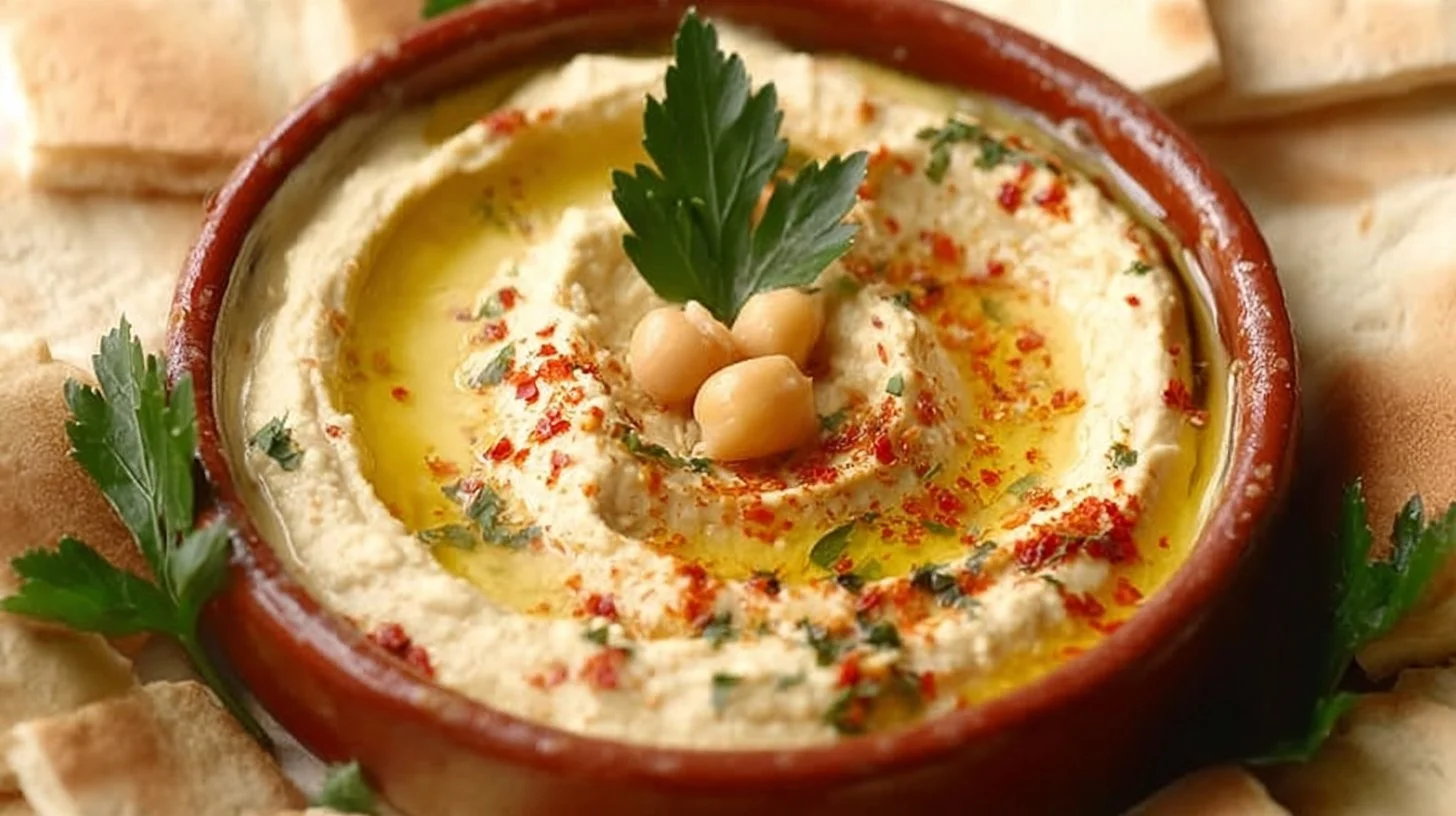
Homemade hummus is a silky, tangy spread made from chickpeas, tahini, lemon, garlic, and olive oil. It’s a pantry-friendly staple that elevates weeknight snacks, picnics, mezze plates, and lunchboxes. Make it when you want something healthy, customizable, and far fresher than most store-bought tubs.
Why you’ll love this dish
Hummus is quick, budget-friendly, and endlessly adaptable. It’s naturally vegetarian and vegan, high in protein and fiber, and plays well with bold flavors—think roasted red pepper, harissa, or smoked paprika. Homemade hummus also lets you control salt, oil, and garlic levels so you can adapt it to kids, dietary needs, or sophisticated tastes.
“Creamy, bright, and better than any jar—this hummus disappeared before I could finish plating.” — a regular at my weekend mezze nights
How this recipe comes together
Overview: Drain and rinse canned chickpeas (or use freshly cooked chickpeas). Blend chickpeas with tahini, lemon juice, garlic, and salt. Add olive oil while processing, then thin with water or aquafaba until smooth. Taste and adjust acidity/salt. Finish with a drizzle of olive oil and a sprinkle of paprika or chopped herbs.
This short process ensures you know what to expect: a few minutes of prep, a few more of blending, and an almost-instant dip.
What you’ll need
- 1 can (15 oz) chickpeas, drained and rinsed (reserve a few tablespoons of the liquid/aquafaba if you like)
- 1/4 cup tahini (sesame paste)
- 2 tablespoons extra-virgin olive oil, plus more for serving
- 2 tablespoons fresh lemon juice (about 1 lemon)
- 1 garlic clove, minced (or more to taste)
- Salt, to taste (start with 1/2 teaspoon)
- Water or chickpea liquid (aquafaba), as needed for consistency
Notes/substitutions:
- Canned chickpeas are fastest. For richer flavor, use home-cooked chickpeas (see Tips).
- Aquafaba (the reserved can liquid) adds silkiness; use it instead of water if you like.
- Tahini can vary in bitterness—taste it before adding lots of salt. Swap for sunflower-seed butter for sesame-free hummus.
Step-by-step instructions
- Drain and rinse the chickpeas. If using canned, peel a few chickpeas (optional—see Tips).
- In a food processor, combine chickpeas, tahini, lemon juice, garlic, and 1/2 teaspoon salt.
- Pulse a few times to start breaking down the mixture.
- With the processor running, drizzle in the 2 tablespoons olive oil.
- Add 2–4 tablespoons water or aquafaba, one tablespoon at a time, until the hummus reaches your desired creaminess.
- Blend on high for 1–2 minutes to develop a silky texture. Stop and scrape the sides as needed.
- Taste and adjust: more lemon for brightness, more salt for flavor, or a touch of cumin for warmth.
- Transfer to a bowl, drizzle with olive oil, and garnish as desired.
Best ways to enjoy it
- Serve with warm pita, pita chips, or fresh vegetables (carrots, cucumber, bell pepper).
- Use as a sandwich spread instead of mayo.
- Dollop on grilled meats or roasted veggies as a creamy, tangy condiment.
- Plate it at the center of a mezze board with olives, feta, and roasted peppers.
- Dress a grain bowl with a few spoonfuls of hummus for extra protein and creaminess.
Storage and reheating tips
- Refrigerate: Store hummus in an airtight container in the fridge for 3–5 days. Always refrigerate within two hours of making.
- Freeze: Hummus freezes well for up to 3 months. Use freezer-safe containers, leaving some headspace. Thaw overnight in the fridge and stir—texture may be slightly grainier.
- Reheating: Hummus is typically served cold or room temperature. If you prefer warm, gently heat a small portion in short bursts in the microwave, stirring between bursts to avoid drying.
Food safety note: Discard any hummus that smells off, shows mold, or has been left at room temperature for more than two hours.
Helpful cooking tips
- For ultra-creamy hummus, peel the chickpeas: rub them between a clean dish towel or pinch each pod—this removes skins that can make hummus grainy. It takes a bit of time but gives a velvety result.
- Use warm chickpeas: if using freshly cooked chickpeas, blend them warm for a silkier texture.
- Tahini timing: when you mix tahini and lemon first, it lightens and becomes more emulsified—try blending them together before adding chickpeas.
- Ice water trick: adding a tablespoon of very cold water at a time while blending can help make hummus lighter and fluffier.
- Avoid over-salting early. Taste after a full blend because flavors concentrate as the hummus smooths out.
- If your hummus is grainy, keep processing longer—good machines turn a grainy mix into smooth hummus with time.
Creative twists
- Roasted red pepper hummus: add 1/2 cup roasted red peppers and a pinch of smoked paprika.
- Spicy harissa hummus: stir in 1–2 teaspoons harissa or 1 tablespoon chili paste.
- Beet hummus: blend in 1 small roasted beet for color and earthy sweetness.
- Avocado hummus: add 1 ripe avocado for a creamier, milder flavor (serve immediately).
- White-bean “hummus”: swap chickpeas for cannellini or navy beans for a different texture and milder taste.
- Mediterranean top: finish with toasted pine nuts, chopped herbs, and a drizzle of herb-infused oil.
FAQs
Q: Do I have to peel the chickpeas?
A: No, but peeling a portion (or all) of the chickpeas reduces graininess and yields silkier hummus. For quick batches, skip peeling; for restaurant-style creaminess, peel.
Q: Can I use dried chickpeas instead of canned?
A: Yes. Soak overnight, then simmer until very tender (1–2 hours depending on the bean). For the creamiest hummus, cook until skins are soft and beans mash easily. Save some cooking liquid to use instead of water.
Q: Why is my hummus bitter?
A: Bitterness often comes from tahini—different brands vary. Taste the tahini alone; if bitter, use less and balance with a little extra lemon or olive oil.
Q: How long does homemade hummus last?
A: Stored in the refrigerator in an airtight container, hummus stays good for 3–5 days. Freeze for up to 3 months.
Q: Can I make hummus without tahini?
A: Yes. You can omit tahini and add a tablespoon or two of olive oil or sunflower-seed butter. The flavor and texture will be different but still tasty.
Q: My hummus is too thin or watery—how do I fix it?
A: Add a few extra tablespoons of chickpeas or a small spoonful of tahini and blend until thicker. Drain excess liquid before adjusting.
If you want, I can give a scaled recipe for larger batches, a no-garlic version, or step-by-step photos to walk you through peeling chickpeas. Which would help most?
Print
Homemade Hummus
- Total Time: 10 minutes
- Yield: 4 servings
- Diet: Vegan
Description
A silky, tangy spread made from chickpeas, tahini, lemon, garlic, and olive oil, perfect for snacks, picnics, and mezze plates.
Ingredients
- 1 can (15 oz) chickpeas, drained and rinsed
- 1/4 cup tahini (sesame paste)
- 2 tablespoons extra-virgin olive oil, plus more for serving
- 2 tablespoons fresh lemon juice (about 1 lemon)
- 1 garlic clove, minced
- Salt, to taste (start with 1/2 teaspoon)
- Water or chickpea liquid (aquafaba), as needed for consistency
Instructions
- Drain and rinse the chickpeas.
- If using canned, peel a few chickpeas (optional).
- Combine chickpeas, tahini, lemon juice, garlic, and salt in a food processor.
- Pulse a few times to start breaking down the mixture.
- Drizzle in the olive oil while the processor is running.
- Add water or aquafaba, one tablespoon at a time, until desired creaminess is reached.
- Blend on high for 1–2 minutes until silky.
- Taste and adjust flavor with more lemon, salt, or cumin.
- Transfer to a bowl, drizzle with olive oil, and garnish as desired.
Notes
For ultra-creamy hummus, consider peeling the chickpeas. Aquafaba for silkiness can replace water.
- Prep Time: 10 minutes
- Cook Time: 0 minutes
- Category: Appetizer
- Method: Blending
- Cuisine: Mediterranean