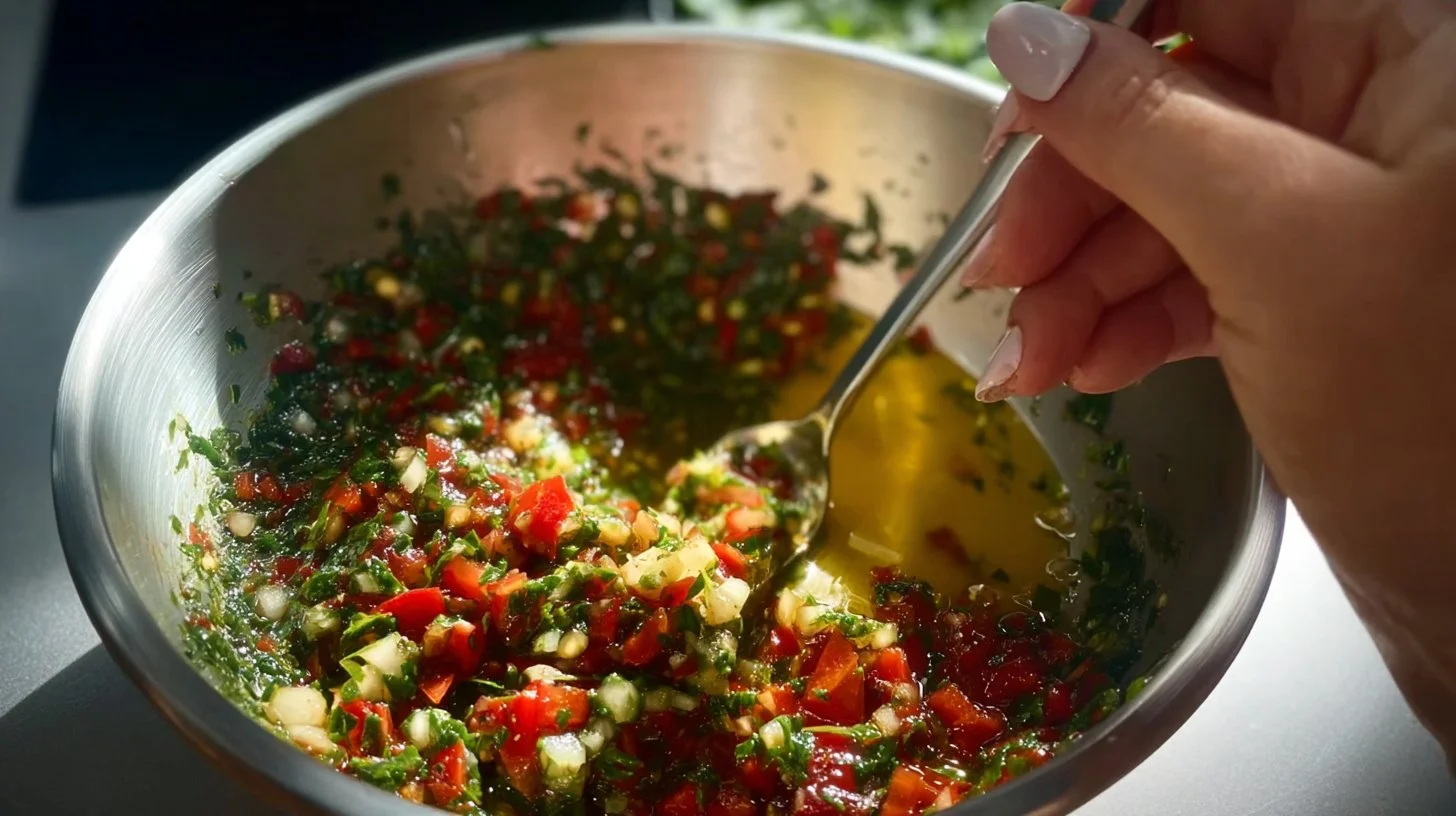
Chimichurri sauce is the kind of recipe that quietly becomes your “secret weapon.” It takes minutes to stir together, yet it can make simple grilled chicken taste like a restaurant plate. I started making it as a steak topper, but it quickly turned into my go-to for roasted vegetables, grain bowls, and even scrambled eggs when I want something bright and herby.
Why you’ll love this dish
Chimichurri is a bold, zippy herb sauce from Argentina and Uruguay, traditionally served with grilled meats. What makes it special is how big the flavor is for such little effort—no cooking required, just chopping and mixing.
Reasons to try it at home:
- Fast and low-effort: Mostly “mix and rest,” with minimal prep.
- Budget-friendly: Parsley, garlic, oil, and vinegar do a lot of heavy lifting.
- Meal-prep friendly: It actually tastes better after it sits.
- Versatile: Works as a sauce, marinade, dressing, or dip.
- Perfect for grilling season: A fresh counterpoint to smoky char.
“I made this for a last-minute barbecue and everyone asked for the recipe. It made plain chicken thighs taste incredible—bright, garlicky, and just spicy enough.”
Preparing Chimichurri Sauce (step-by-step overview)
Before you start measuring, here’s how the process comes together:
- Chop the parsley finely so the sauce feels spoonable, not leafy.
- Mix the dry flavor base (garlic, oregano, chili flakes) with the herbs first to distribute evenly.
- Stir in vinegar and olive oil to create a loose, glossy sauce.
- Season, then rest for at least 30 minutes so the garlic and herbs infuse the oil.
- Taste again before serving—chimichurri often needs a final pinch of salt after resting.
What you’ll need (Ingredients)
- 1 cup fresh parsley, finely chopped (flat-leaf parsley is classic; curly works in a pinch)
- 1/2 cup olive oil (use a good-tasting one; it’s a main flavor)
- 1/4 cup red wine vinegar (white wine vinegar works too; lemon can substitute but tastes different)
- 4 cloves garlic, minced (reduce to 2–3 cloves if you prefer less bite)
- 1 teaspoon dried oregano (or 1 tablespoon fresh oregano, chopped)
- 1/2 teaspoon red pepper flakes (adjust up/down for heat)
- Salt and pepper to taste
Step-by-step instructions
- Combine the herbs and aromatics. In a medium bowl, mix the chopped parsley, minced garlic, dried oregano, and red pepper flakes.
- Add the liquids. Pour in the red wine vinegar and olive oil. Stir until everything is evenly coated and the mixture looks glossy.
- Season carefully. Add salt and black pepper, then stir and taste. (It should taste punchy—acidic, herbal, and garlicky.)
- Let it rest. Cover and let the chimichurri sit for at least 30 minutes at room temperature so the flavors meld.
- Serve. Spoon over grilled meats, poultry, or seafood, or use as a dip or dressing.
Serving suggestions (Best ways to enjoy it)
- Classic: Drizzle over grilled steak (skirt, flank, ribeye) and finish with flaky salt.
- Chicken night upgrade: Spoon onto grilled or roasted chicken thighs and serve with rice or roasted potatoes.
- Seafood pairing: Try it with shrimp skewers, salmon, or scallops—especially good with a squeeze of lemon.
- Veg-forward: Toss with roasted cauliflower, mushrooms, or crispy potatoes.
- Sandwich spread: Add to steak sandwiches, burgers, or grilled veggie wraps.
- Plating tip: Spoon chimichurri around the protein (not just on top) so every bite gets sauce.
Keeping leftovers fresh (How to store & freeze)
- Refrigerate: Store in an airtight container in the fridge for up to 4–5 days. The oil may thicken when cold—this is normal.
- Before serving again: Let it sit at room temperature for 10–15 minutes, then stir well and re-taste for salt/acid.
- Food safety note: Don’t leave chimichurri sitting out for hours at a party—after serving, refrigerate promptly.
- Freezing: You can freeze chimichurri for up to 2 months. For best results, freeze in an ice cube tray, then transfer cubes to a freezer bag. Thaw in the fridge and stir to recombine.
Helpful cooking tips (Tricks for success)
- Chop parsley finely for a cohesive sauce that clings to food instead of falling off in leaves.
- Resting is not optional if you want the best flavor—30 minutes is the minimum; a few hours is even better.
- Balance matters: If it tastes too sharp, add a touch more olive oil. If it tastes flat, add a pinch more salt or a small splash of vinegar.
- Garlic intensity tip: Minced raw garlic gets stronger as it sits. If you’re sensitive to raw garlic, start with less, then add more after resting.
Recipe variations (Flavor swaps)
- Cilantro-parsley blend: Replace 1/4–1/2 of the parsley with cilantro for a brighter, citrusy twist.
- Lemon chimichurri: Swap part (or all) of the vinegar for fresh lemon juice and add lemon zest.
- Shallot version: Add 1–2 tablespoons finely minced shallot for a softer allium flavor.
- Smoky chimichurri: Add a pinch of smoked paprika or a small amount of finely chopped roasted red pepper.
- Less spicy: Skip the red pepper flakes entirely (still flavorful and kid-friendlier).
FAQ (Your questions answered)
Can I make chimichurri ahead of time?
Yes—chimichurri is excellent made ahead. Make it a few hours to 1 day in advance for the best flavor, then stir and adjust seasoning before serving.
Why does my chimichurri taste bitter?
Bitterness usually comes from olive oil (some are naturally more bitter) or over-processing herbs in a blender/food processor. Hand-chopping helps keep the flavor clean. If it’s slightly bitter, add a bit more vinegar and salt to balance.
Can I use dried parsley instead of fresh?
Fresh parsley is strongly recommended for chimichurri’s signature flavor and texture. Dried parsley will taste muted and can seem dusty. If you must, use much less (start with 2–3 tablespoons dried) and let it rehydrate longer, but expect a different result.
Is chimichurri spicy?
Traditionally it has a gentle heat. With 1/2 teaspoon red pepper flakes, it’s usually mild-to-medium. Reduce or omit the flakes to keep it mild.
Can I use it as a marinade?
Yes. Chimichurri works well as a marinade for steak, chicken, shrimp, or tofu. For food safety, don’t reuse marinade that touched raw meat unless you boil it first—set some aside as a clean serving sauce before marinating.
Print
Chimichurri Sauce
- Total Time: 40 minutes
- Yield: 1 cup
- Diet: Vegan
Description
A bold and zesty herb sauce from Argentina and Uruguay, perfect for grilled meats, roasted vegetables, and more.
Ingredients
- 1 cup fresh parsley, finely chopped
- 1/2 cup olive oil
- 1/4 cup red wine vinegar
- 4 cloves garlic, minced
- 1 teaspoon dried oregano
- 1/2 teaspoon red pepper flakes
- Salt and pepper to taste
Instructions
- Combine the herbs and aromatics in a medium bowl: mix the chopped parsley, minced garlic, dried oregano, and red pepper flakes.
- Add the liquids by pouring in the red wine vinegar and olive oil; stir until everything is evenly coated and glossy.
- Season carefully with salt and black pepper; stir and taste for a punchy flavor.
- Let it rest covered for at least 30 minutes at room temperature so flavors meld.
- Serve over grilled meats, poultry, or seafood, or use as a dip or dressing.
Notes
Chimichurri gets better after sitting. Store leftovers in an airtight container for up to 4-5 days.
- Prep Time: 10 minutes
- Cook Time: 0 minutes
- Category: Sauce
- Method: Mixing
- Cuisine: Argentinian