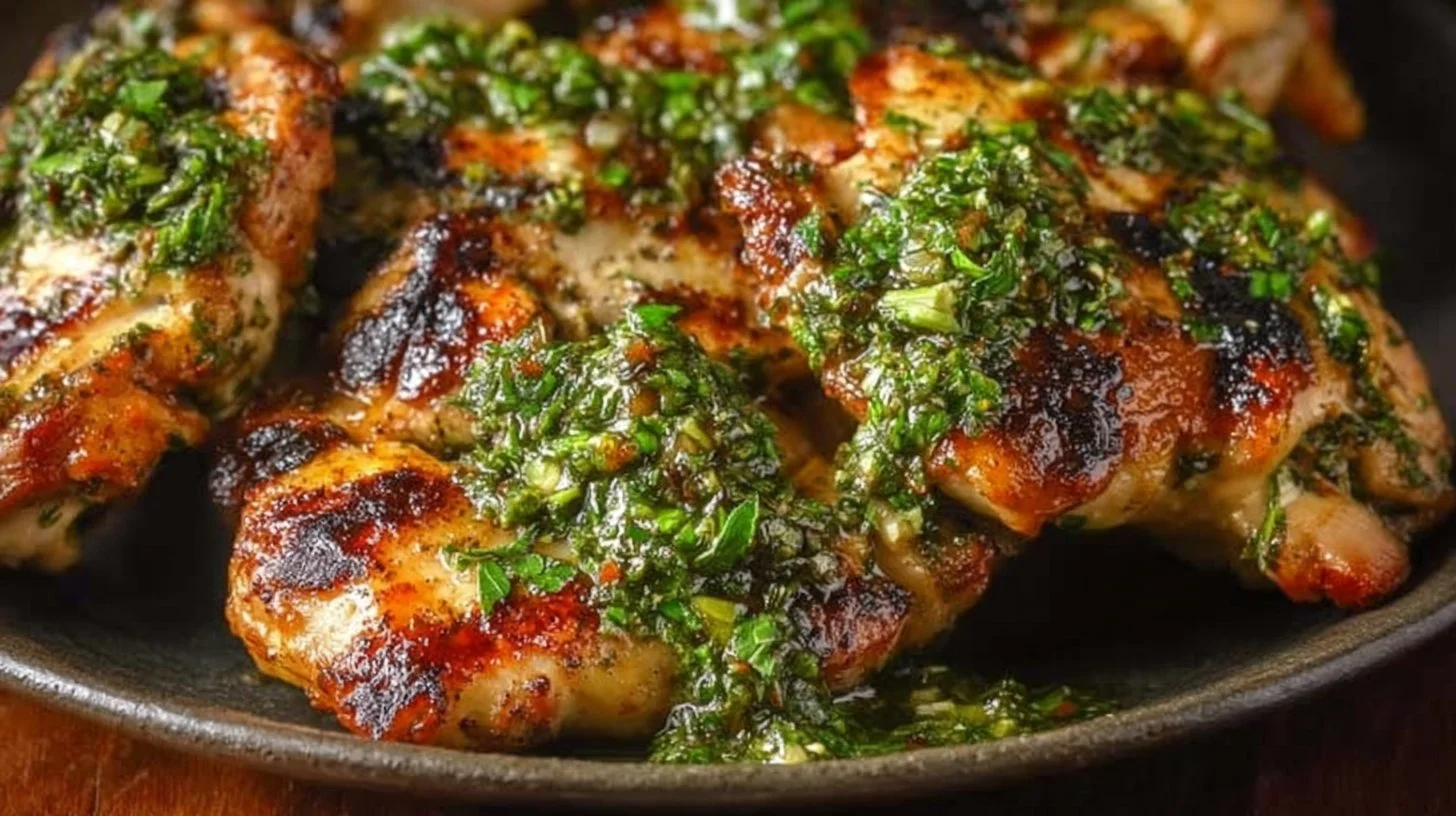
Chimichurri chicken is one of those recipes that tastes like you did “something fancy,” even though the work is mostly chopping herbs and letting time do the heavy lifting. The bright, garlicky sauce soaks into the chicken, then doubles as a punchy topping at the end—so every bite stays juicy and bold, not bland or dry.
Why you’ll love this dish
- Big flavor, simple method: One herb sauce becomes both a marinade and a finishing sauce.
- Weeknight-friendly: Minimal prep, fast cook time once the chicken hits the heat.
- Great for meal prep: It keeps well, and the flavor actually improves overnight.
- Flexible cooking options: Grill it, pan-sear it, or even bake it if needed.
- Fresh and balanced: The vinegar and herbs cut through richness, so it doesn’t feel heavy.
“I made this for a quick dinner and everyone asked for the sauce recipe. The chicken stayed juicy, and the chimichurri was so fresh I wanted to put it on everything.”
How this recipe comes together (Chimichurri Chicken)
Here’s the game plan before you start measuring:
- Make the chimichurri by blending or finely chopping herbs, garlic, vinegar, oil, and spices.
- Split the sauce: half becomes the marinade, half stays clean for serving (important for food safety).
- Marinate the chicken for at least 30 minutes (longer if you have time).
- Cook the chicken on a grill or in a hot skillet until it reaches a safe internal temperature.
- Slice and serve with the reserved chimichurri spooned over the top.
What you’ll need (Ingredients)
- Chicken breasts (boneless, skinless)
- Fresh parsley (flat-leaf is best for chimichurri)
- Fresh cilantro (optional in traditional versions, but excellent here)
- Garlic (fresh cloves for the cleanest bite)
- Red wine vinegar (adds classic tang; white wine vinegar can work in a pinch)
- Olive oil (use a decent one—it’s a main flavor)
- Oregano (dried is typical; fresh works too—use a bit more)
- Red pepper flakes (adjust for heat)
- Salt
- Black pepper
Step-by-step instructions (Directions)
Make the chimichurri.
Add parsley, cilantro, garlic, red wine vinegar, olive oil, oregano, red pepper flakes, salt, and pepper to a blender or food processor. Pulse until well combined.- Prefer a traditional texture? Finely chop everything by hand instead of blending.
Split the sauce.
Pour half the chimichurri into a container and refrigerate it for serving later. This reserved portion should never touch raw chicken.Marinate the chicken.
Place chicken breasts in a bowl or zip-top bag. Add the remaining chimichurri and coat well. Marinate for at least 30 minutes (up to 8 hours in the fridge).Cook the chicken.
- Grill: Preheat and oil the grates. Grill until the chicken is cooked through.
- Sauté/Pan-sear: Heat a skillet over medium-high with a small drizzle of oil. Cook chicken until browned and fully cooked.
For best accuracy, cook until the thickest part reaches 165°F / 74°C (USDA safe temperature for poultry).
Rest and serve.
Let chicken rest 5 minutes, then slice. Spoon the reserved chimichurri over the top and serve immediately.
Serving suggestions (How to plate and pair)
- Classic: Serve with roasted potatoes or crispy smashed potatoes and a simple green salad.
- Fresh and light: Pair with rice, quinoa, or cauliflower rice plus sliced avocado.
- Dinner-party style: Slice chicken, fan it on a platter, and drizzle chimichurri over the top. Add lemon wedges and extra herbs.
- Taco night: Chop the chicken and stuff into warm tortillas with shredded cabbage and a little extra chimichurri.
- Meal prep bowls: Chicken + rice + black beans + grilled corn + chimichurri on top.
Storage and reheating tips (How to store)
- Refrigerator: Store cooked chicken in an airtight container for 3–4 days.
- Chimichurri sauce: Keep separate and refrigerated for up to 4–5 days for best freshness.
- Food safety note: Never reuse marinade that touched raw chicken unless you boil it first. It’s safer (and tastier) to reserve sauce before marinating, as written.
Reheating:
- Reheat chicken gently (microwave at lower power or warm in a covered skillet with a splash of water). Overheating can dry it out. Add chimichurri after reheating for the brightest flavor.
Freezing:
- Freeze cooked chicken for up to 2–3 months.
- Chimichurri can be frozen too (ice cube trays work well), though the herbs may darken slightly—flavor stays good.
Helpful cooking tips (Tricks for success)
- Pound chicken breasts to even thickness before marinating—this prevents dry edges and undercooked centers.
- Don’t blend too smooth if you like classic chimichurri texture; pulsing keeps it vibrant and spoonable.
- Use a thermometer for perfect doneness (165°F / 74°C). It’s the most reliable way to avoid dry chicken.
- Marinate longer when possible: 2–4 hours gives noticeably deeper flavor than 30 minutes.
- Taste the sauce before marinating: Vinegar levels vary—add a pinch more salt or a touch more oil if it tastes too sharp.
Recipe variations (Different ways to try it)
- Chicken thighs instead of breasts: Juicier and more forgiving on the grill.
- Citrus chimichurri: Add lemon or lime zest for extra brightness.
- Herb swap: Use all parsley (more traditional) or add a little fresh mint for a fresh twist.
- Spicy version: Add a chopped jalapeño or a pinch of cayenne.
- Baked option: Bake marinated chicken at 400°F / 205°C until it reaches 165°F / 74°C, then top with reserved sauce.
- Dairy-free, gluten-free: Naturally both—just double-check any packaged spices.
FAQ (Common questions)
Can I make chimichurri chicken ahead of time?
Yes. You can make the chimichurri up to 2 days ahead and marinate the chicken the morning of (or the night before). Keep the reserved “serving” chimichurri separate from anything that touches raw chicken.
How long should I marinate the chicken?
At least 30 minutes, but 2–4 hours is ideal for better flavor. Try not to exceed 8 hours for chicken breasts, as the vinegar can start to affect the texture.
Can I use bottled parsley or dried herbs?
Fresh parsley is strongly recommended for chimichurri’s signature flavor. Dried parsley won’t give the same bright, grassy taste. If you’re stuck, use dried oregano (that part is normal), but keep parsley fresh if possible.
What if I don’t have red wine vinegar?
White wine vinegar works well. In a pinch, use apple cider vinegar (slightly fruitier). If using plain distilled vinegar, use a bit less and add a touch more olive oil to soften the sharpness.
Is it safe to use leftover marinade as sauce?
Not as-is. Marinade that touched raw chicken can contain bacteria. If you want to use it, you’d need to boil it thoroughly, but the best practice is what this recipe does: reserve half the chimichurri for serving before adding any to raw chicken.
Print
Chimichurri Chicken
- Total Time: 35 minutes
- Yield: 4 servings
- Diet: Gluten-Free, Dairy-Free
Description
A flavorful chimichurri chicken recipe that combines fresh herbs for a vibrant marinade and sauce.
Ingredients
- 4 boneless, skinless chicken breasts
- 1 cup fresh parsley (flat-leaf is best)
- 1/2 cup fresh cilantro (optional)
- 4 cloves garlic (fresh, minced)
- 1/4 cup red wine vinegar
- 1/2 cup olive oil
- 2 teaspoons dried oregano
- 1 teaspoon red pepper flakes (adjust for heat)
- 1 teaspoon salt
- 1/2 teaspoon black pepper
Instructions
- Make the chimichurri by adding parsley, cilantro, garlic, red wine vinegar, olive oil, oregano, red pepper flakes, salt, and pepper to a blender or food processor. Pulse until well combined.
- Split the sauce by pouring half into a container and refrigerate for serving later. This reserved portion should never touch raw chicken.
- Marinate the chicken by placing it in a bowl or zip-top bag. Add the remaining chimichurri and coat well. Marinate for at least 30 minutes (up to 8 hours in the fridge).
- Cook the chicken by grilling or sautéing in a hot skillet until the thickest part reaches 165°F / 74°C.
- Rest the chicken for 5 minutes, then slice and serve with the reserved chimichurri spooned over the top.
Notes
For best flavor, marinate chicken longer if possible and ensure to taste the chimichurri sauce before marinating the chicken.
- Prep Time: 15 minutes
- Cook Time: 20 minutes
- Category: Main Course
- Method: Grilling
- Cuisine: Argentinian