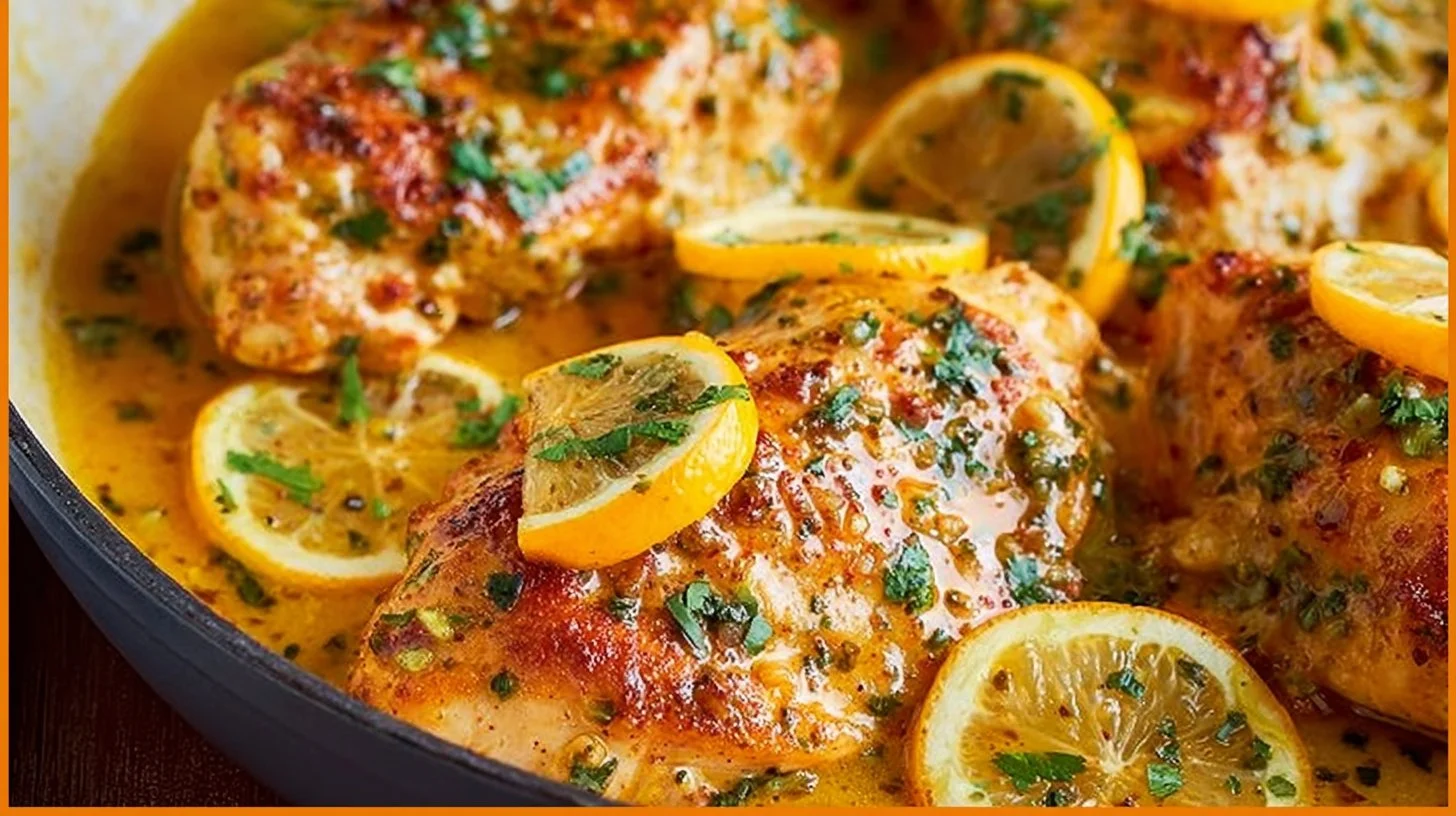
Chicken with Lemon Butter Sauce
Bright, silky, and perfectly balanced—this Chicken with Lemon Butter Sauce combines golden seared breasts with a simple pan sauce that tastes far more luxurious than the handful of ingredients suggests. It’s a weeknight hero when you want something quick and impressive, and equally at home on a weekend dinner table when guests drop by.
Why you’ll love this dish
This recipe pairs the rich, nutty flavor of browned butter with fresh lemon acidity for a sauce that wakes up mild chicken without overpowering it. It’s fast (30–35 minutes), budget-friendly, and adaptable: swap breasts for thighs, add capers for brininess, or stir in cream for a richer finish. Serve it for a weeknight family meal, a light dinner party, or as an elegant dish for brunch.
“Simple ingredients, restaurant-quality results. The sauce is bright, buttery, and spoonable—my picky eaters asked for seconds.” — a home cook’s quick review
How this recipe comes together
- Pound or butterfly the chicken for even thickness so it cooks uniformly.
- Season and sear the breasts until a golden crust forms—this develops flavor.
- Sauté garlic briefly, then deglaze the pan with a splash of stock or wine to lift the fond (browned bits).
- Add lemon juice and zest, reduce slightly, then whisk in cold butter off the heat to create a glossy, emulsified sauce.
- Finish with chopped parsley and rest the chicken briefly so juices redistribute before slicing.
This straightforward sequence makes the technique easy to follow and gives you a rich, balanced sauce without heavy cream.
What you’ll need
- 4 chicken breasts (boneless, skinless; about 1 to 1¼ lb / 450–560 g total) — see notes below
- 1/4 cup (56 g) unsalted butter
- 2 lemons — juice and zest (about 3–4 tablespoons juice)
- 2 cloves garlic, minced
- Salt and freshly ground black pepper, to taste
- Fresh parsley, chopped, for garnish
Optional/additional (helpful but not mandatory): 1–2 tablespoons olive oil (for searing); 1/4 cup (60 ml) low-sodium chicken broth or dry white wine (for deglazing); 1 tablespoon capers; 1 tablespoon flour or cornstarch (for a thicker sauce); pinch of red pepper flakes.
Substitutions/notes inline:
- Chicken thighs: use bone-in or boneless thighs; adjust cooking time until 165°F (74°C).
- Butter alternatives: ghee or clarified butter for higher-heat stability; use salted butter but reduce added salt.
- To make sauce creamy: stir in 2–3 tablespoons heavy cream after adding lemon juice.
Directions
- Prep the chicken: Pat breasts dry with paper towels. If breasts are uneven, place between two sheets of plastic wrap and gently pound to an even thickness (about 1/2 inch / 1.3 cm) or butterfly and press flat. Season both sides with salt and pepper.
- Heat the pan: Warm a large skillet over medium-high heat. Add 1 tablespoon olive oil (or 1/2 tablespoon if using a nonstick skillet) and let it shimmer but not smoke.
- Sear the chicken: Add the breasts in a single layer. Cook undisturbed 5–7 minutes per side, until deep golden brown and the internal temperature reads 165°F (74°C) at the thickest part. (Thin breasts will cook faster; start checking at 4–5 minutes per side.) Transfer the chicken to a plate and loosely tent with foil to rest.
- Sauté the garlic: Reduce heat to medium. Add the minced garlic to the hot pan and sauté 30–45 seconds—just until fragrant. Don’t let it brown or it will taste bitter.
- Deglaze: Pour in 1/4 cup chicken broth or white wine and scrape the bottom of the skillet with a wooden spoon to release browned bits. Let the liquid reduce by about half, 1–2 minutes.
- Build the sauce: Remove the pan from direct heat. Add the lemon juice and zest, stirring to combine. Add the butter a few small pieces at a time, whisking or shaking the pan after each addition to emulsify into a glossy sauce. If you prefer a thicker sauce, sprinkle a little flour or mix 1 teaspoon cornstarch with 2 teaspoons cold water and stir in.
- Finish and serve: Return the chicken to the pan briefly to coat with sauce and warm through (30–60 seconds). Spoon sauce over each breast, garnish with chopped parsley, and serve.
Timing summary: active work ~15–20 minutes; total time ~30–35 minutes including resting.
Best ways to enjoy it
- Serve over cooked pasta (linguine or angel hair) or creamy mashed potatoes to catch every drop of sauce.
- Pair with simple steamed or roasted vegetables—asparagus, green beans, or a lemony arugula salad complement it well.
- For a lighter plate, place chicken on a bed of mixed greens with a few avocado slices and a sliver of parmesan.
- Wine pairing: a crisp Sauvignon Blanc, a unoaked Chardonnay, or a light Pinot Grigio are excellent matches.
Plating tip: slice the breasts on a bias, fan them over pasta or potatoes, and spoon sauce across the top. Finish with lemon zest and parsley for color.
Storage and reheating tips
- Refrigerate: Cool leftovers within 2 hours and store in an airtight container for up to 3–4 days.
- Freeze: Place cooled chicken and sauce in a freezer-safe container for up to 2 months. Squeeze out excess air or use vacuum sealing if available.
- Thawing: Thaw overnight in the refrigerator.
- Reheating stovetop: Gently warm chicken with sauce over low heat in a covered skillet until heated through. Add a splash of chicken broth to loosen sauce if it’s thickened.
- Reheating oven: Place in a baking dish, cover with foil, and warm at 300°F (150°C) for 10–15 minutes.
- Microwave: Use short intervals (30–45 seconds), stirring or turning between intervals to avoid overcooking.
Food safety: always reheat to at least 165°F (74°C) before serving.
Pro chef tips
- Start with room-temperature chicken: it cooks more evenly and browns better. Remove from fridge 15–20 minutes before cooking.
- Don’t overcrowd the pan: space allows browning instead of steaming. Work in batches if necessary.
- Dry well before searing: moisture prevents a proper crust.
- Use a heavy skillet (stainless steel or cast iron) for the best fond (the browned bits that build flavor).
- To avoid bitter garlic, add it after searing and watch the heat—garlic cooks fast.
- Emulsify butter off the heat: adding cold butter off-heat and whisking keeps the sauce glossy and prevents separation.
- Finish with a small knob of cold butter (mounting) for extra shine and silkiness.
Variations
- Lemon Caper Chicken: Stir in 1–2 tablespoons capers with the lemon juice for a briny punch.
- Creamy Lemon Butter: After deglazing, reduce heat and add 2–3 tablespoons heavy cream before whisking in butter.
- Herb-Forward: Add chopped tarragon, chives, or basil alongside parsley for a fresh herb profile.
- Garlic-Lemon Chicken Thighs: Use boneless skin-on thighs; sear skin-side down longer to render fat, then finish in oven at 400°F (200°C) for 8–10 minutes.
- Low-Fat Option: Use 1 tablespoon butter and 1 tablespoon olive oil, and thicken sauce lightly with a cornstarch slurry.
- Citrus Swap: Replace half the lemon juice with orange for a sweeter, less tart sauce.
FAQs
Q: Can I use frozen chicken breasts?
A: Thaw completely in the refrigerator before cooking. Cooking from frozen will brown unevenly and extend cook time, often resulting in overcooked outside and undercooked inside.
Q: What if my sauce breaks or separates?
A: If the butter separates, remove the pan from heat and whisk vigorously, or add a tablespoon of warm water or stock and whisk to bring it back. Emulsifying cold butter off-heat in small pieces usually prevents breaking.
Q: How do I know when the chicken is done?
A: The safest and most reliable way is an instant-read thermometer: 165°F (74°C) at the thickest point. Alternatively, slice into the thickest part—the juices should run clear, and meat should be opaque throughout.
Q: Can I make the sauce ahead?
A: You can make the lemon sauce base (garlic + deglazed liquid) ahead and refrigerate for up to 48 hours, but hold off on whisking in the butter until reheating. Add butter at the last minute over low heat to refresh the emulsion.
Q: How can I make more sauce?
A: Double the liquid and butter components (broth/wine + lemon + butter). Keep garlic proportionate and reduce slightly to intensify flavor before finishing with butter.
Q: Is this safe for kids?
A: Yes. Keep the lemon amount moderate for young palates, and ensure chicken is cooked to 165°F (74°C). Omit capers or red pepper flakes if making for children.
If you’d like, I can convert this to metric-only measurements, create a printable recipe card, or suggest a complete 3-course menu that pairs with the chicken. Which would help you most?