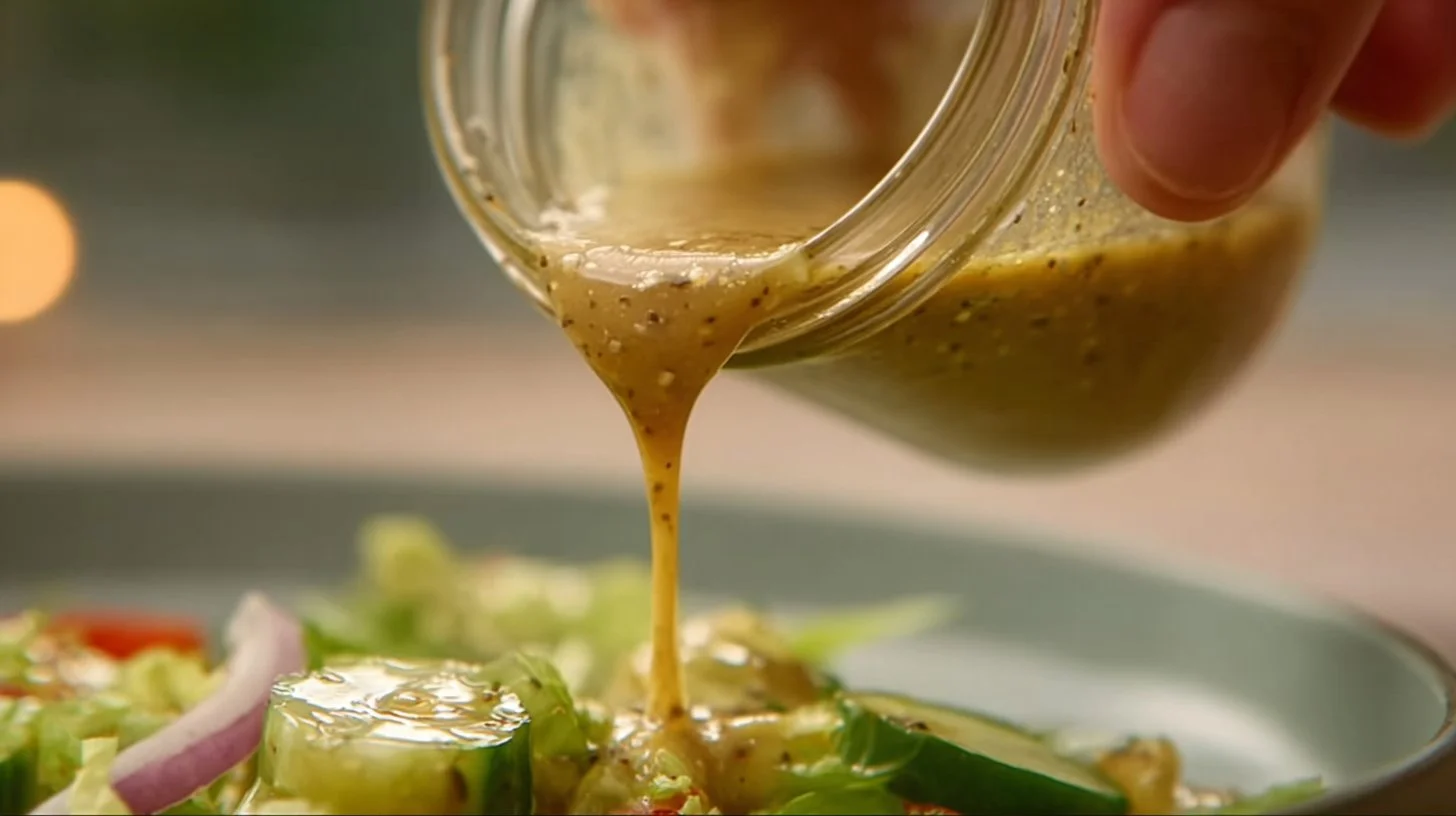
I still remember the first time I whisked together a simple vinaigrette — the sharp tang of vinegar cutting through the silk of olive oil and a bright mustardy kick that made a plain bowl of greens taste like something special. A good homemade vinaigrette is fast, flexible, and far better than most bottled dressings. It’s the tiny finishing touch that turns salads, roasted vegetables, and grain bowls from blasé to memorable.
Why you’ll love this dish
Homemade vinaigrette is one of the easiest flavor upgrades you can make. It’s quick (ready in minutes), inexpensive, and endlessly adaptable: swap the acid, change the oil, or add herbs to suit the season. Make a batch for weeknight salads, drizzle over grilled fish, or toss with roasted vegetables for a bright finish.
“This is my go-to dressing — so simple but it elevates every salad. I always keep a jar in the fridge.”
Reasons to try it:
- Fast: 5 minutes from start to finish.
- Versatile: pairs with greens, vegetables, grains, and proteins.
- Cleaner flavor: fresher and brighter than most commercial options.
- Easy to scale and customize for dietary needs.
How this recipe comes together
Step-by-step overview:
- Combine the acidic ingredients (vinegar and mustard) and aromatics (garlic).
- Whisk or shake while slowly adding the oil to form an emulsion.
- Season, taste, and adjust.
- Use immediately or chill; shake before serving if stored.
This method gives a stable, well-balanced vinaigrette without special equipment. For a smoother, longer-lasting emulsion use an immersion blender or small food processor.
Ingredients
What you’ll need:
- 1/4 cup extra-virgin olive oil (substitute light olive oil, avocado, or a neutral oil like grapeseed for a milder taste)
- 2 tablespoons vinegar (balsamic, red wine, or apple cider vinegar — choose based on flavor)
- 1 teaspoon Dijon mustard (helps emulsify; use grainy mustard for texture)
- 1 clove garlic, minced (or 1/4 teaspoon garlic powder)
- Salt and freshly ground black pepper, to taste
Optional add-ins: 1 teaspoon honey or maple syrup (for sweetness), 1 tablespoon minced fresh herbs (parsley, chives, or tarragon), 1 teaspoon lemon zest or juice for brightness.
Yield: about 6 tablespoons (enough for a large salad serving 3–4).
Prep time: 5 minutes.
Directions
Step-by-step instructions:
- In a small bowl or jar combine the 2 tablespoons vinegar, 1 teaspoon Dijon mustard, and minced garlic. Add a pinch of salt and some freshly ground black pepper.
- Whisk the mixture to dissolve the salt and distribute the mustard. If using a jar, give it a quick shake.
- Slowly pour in the 1/4 cup olive oil in a steady stream while whisking vigorously until the dressing thickens and becomes glossy. If using a jar, add the oil, seal, and shake quickly for 20–30 seconds until emulsified.
- Taste and adjust seasoning: add more salt, pepper, or a teaspoon of honey if it’s too sharp. If it’s too thick, thin with a splash of water.
- Serve immediately, or refrigerate. Shake or whisk again before using if separation occurs.
Notes on technique: For a very stable emulsion, use an immersion blender or small blender and process for 10–20 seconds. Add oil slowly to allow the mixture to emulsify.
How to serve Homemade Vinaigrette
Best ways to enjoy it:
- Toss with mixed greens, arugula, or butter lettuce for a classic salad.
- Drizzle over warm roasted vegetables (asparagus, Brussels sprouts, or carrots) for a bright finish.
- Use as a marinade for chicken or firm fish before grilling (apply at least 30 minutes before cooking).
- Mix into cooked grains (quinoa, farro) with chopped herbs for a quick grain salad.
- Brush on roasted potatoes just before serving for shine and flavor.
Try plating tip: Add the vinaigrette just before serving to keep greens crisp. If using as a marinade, reserve some fresh vinaigrette to dress the cooked dish.
How to store
Storage and safety:
- Transfer the vinaigrette to a clean jar with a tight-fitting lid. Refrigerate promptly.
- Keep refrigerated and use within 5–7 days. Because this dressing contains raw garlic and oil, do not store at room temperature.
- If separation occurs, bring to room temperature briefly and shake or whisk until combined.
- Freezing is not recommended for best texture; oils solidify and separation can change the flavor. If you must freeze, pour into an ice cube tray and freeze for up to 3 months; thaw in the fridge and re-emulsify before use.
Food-safety note: Homemade oil-and-garlic mixtures stored at room temperature can create anaerobic conditions that increase the risk of botulism. Always refrigerate and use within a week when garlic is fresh and raw.
Tips to make
Pro chef tips:
- Use room-temperature ingredients so the oil and vinegar emulsify more easily.
- Add oil in a slow, steady stream while whisking for a smooth, stable emulsion.
- Mustard is a natural emulsifier and also adds flavor — don’t skip it unless you replace it with another emulsifier (honey, egg yolk, or mayonnaise).
- For a stronger garlic presence without raw pungency, roast or briefly sauté the garlic before combining. Roasted garlic stores better in oil.
- If dressing tastes too sharp, balance with a little sweetener (honey, maple syrup) or a bit more oil. If it’s bland, add more acid or salt.
- Make extra and store in a jar; a jar with a lid makes shaking and storage easy.
Variations
Creative twists:
- Balsamic-Honey Vinaigrette: Use balsamic vinegar and 1 teaspoon honey; omit additional sweeteners.
- Lemon-Herb Vinaigrette: Substitute lemon juice for vinegar and stir in 1 tablespoon chopped fresh herbs.
- Mustard-Maple Vinaigrette (gluten-free, vegan): Use apple cider vinegar, 1 tsp maple syrup, and grainy mustard.
- Asian Sesame Vinaigrette: Replace vinegar with rice vinegar, use neutral oil, add 1 tsp toasted sesame oil, 1 tsp soy sauce, and 1 tsp grated ginger.
- Creamy Vinaigrette: Add 1 tablespoon Greek yogurt or mayonnaise for a creamy texture (refrigerate and use within 3–4 days).
Dietary swaps: Use avocado oil for a neutral, heart-healthy fat; use maple syrup instead of honey to keep it vegan.
FAQs
Q: How long will this vinaigrette last in the fridge?
A: Refrigerated in a sealed jar, use within 5–7 days. Because of the raw garlic and oil, don’t store at room temperature and discard if you notice off smells, mold, or unusual cloudiness.
Q: Can I make this without Dijon mustard?
A: Yes. You can substitute whole-grain mustard, honey mustard, or 1 teaspoon honey plus an immersion-blend for emulsification. Without an emulsifier the dressing may separate more quickly; just shake before using.
Q: Why did my vinaigrette split and how do I fix it?
A: Separation is natural because oil and vinegar don’t permanently combine. To fix it, whisk vigorously, shake in a sealed jar, or emulsify with a blender. Adding a small amount of mustard or an emulsifier helps maintain a stable emulsion.
Q: Can I use other oils or vinegars?
A: Absolutely. Olive oil gives a fruity richness; avocado or grapeseed oil is milder. Use balsamic, red wine, white wine, apple cider, or citrus juice depending on the flavor profile you want.
Q: Is it safe to put raw garlic in vinaigrette?
A: Yes if refrigerated and used within about a week. To reduce any risk and mellow the garlic flavor, roast the garlic first or use garlic powder.
If you want, I can convert this into several flavor-specific vinaigrette recipes (lemon-herb, balsamic-honey, sesame-ginger) with exact measurements and pairing suggestions. Which flavor would you like first?
Print
Homemade Vinaigrette
- Total Time: 5 minutes
- Yield: 6 tablespoons (enough for 3-4 servings)
- Diet: Vegetarian
Description
A quick and versatile homemade vinaigrette that enhances salads, roasted vegetables, and grain bowls.
Ingredients
- 1/4 cup extra-virgin olive oil
- 2 tablespoons vinegar (balsamic, red wine, or apple cider)
- 1 teaspoon Dijon mustard
- 1 clove garlic, minced
- Salt and freshly ground black pepper, to taste
- Optional: 1 teaspoon honey or maple syrup
- Optional: 1 tablespoon minced fresh herbs (parsley, chives, or tarragon)
- Optional: 1 teaspoon lemon zest or juice
Instructions
- Combine the vinegar, Dijon mustard, and minced garlic in a bowl or jar. Add a pinch of salt and pepper.
- Whisk the mixture to dissolve the salt. If using a jar, shake it quickly.
- Slowly pour in the olive oil while whisking until the dressing thickens.
- Taste and adjust seasoning as needed.
- Serve immediately or refrigerate, shaking before use if stored.
Notes
For a more stable emulsion, use an immersion blender.
- Prep Time: 5 minutes
- Cook Time: 0 minutes
- Category: Condiment
- Method: Mixing
- Cuisine: General