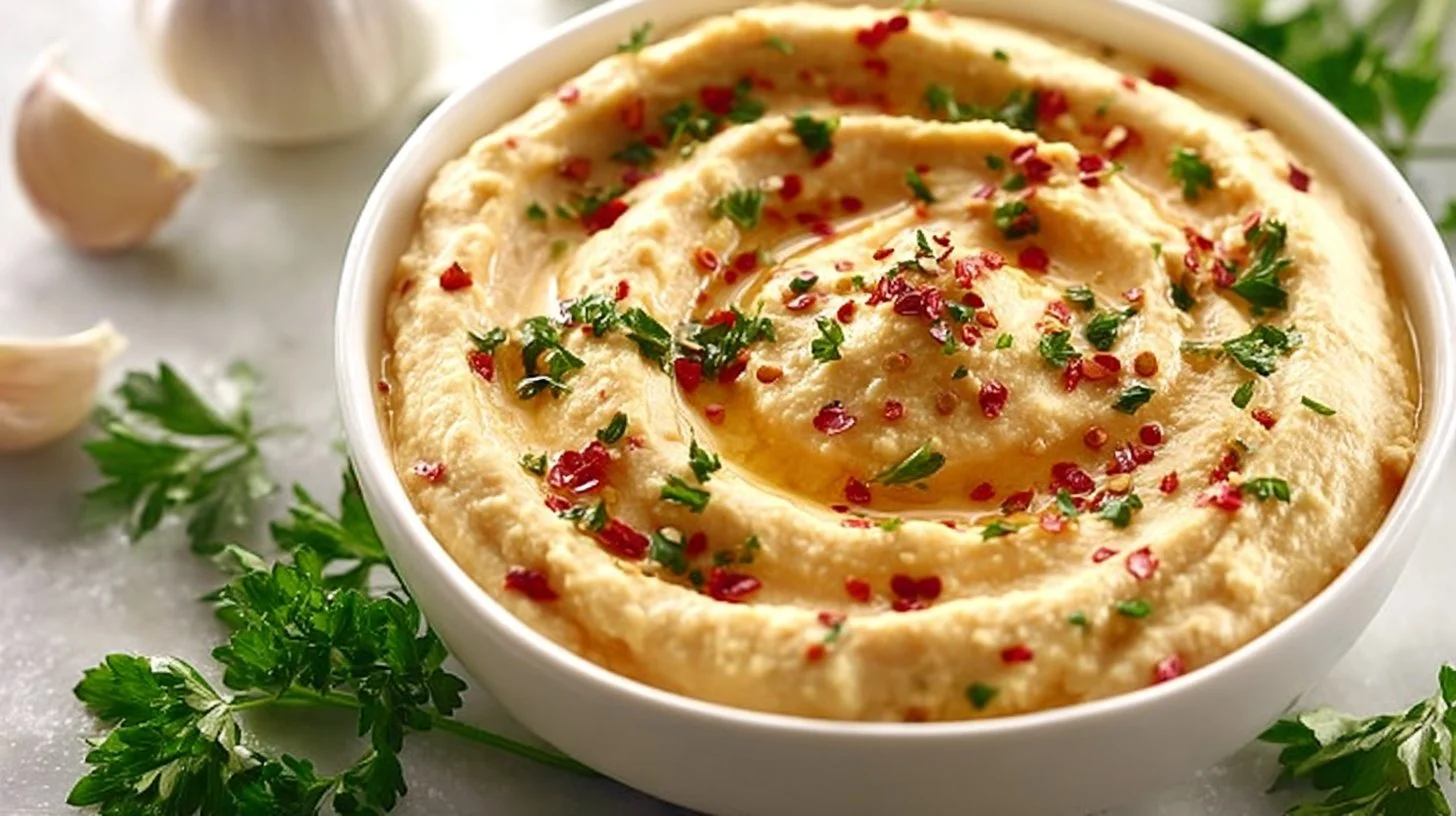
I learned to make hummus without tahini the day my pantry was missing sesame paste but my guests were already on the way. A few simple swaps and a food processor later, I’d made a bright, creamy dip that kept the familiar lemon-garlic hummus character without the sesame flavor. This version is fast, budget-friendly, and great when tahini isn’t an option because of allergies, cost, or personal taste.
Why you’ll love this dish
This tahini-free hummus keeps everything you expect from the classic: smooth texture, bright lemon notes, and garlicky depth—without sesame paste. It’s perfect for weeknight dips, kid-friendly snack platters, and potlucks where someone might have a sesame allergy. Because it uses pantry staples (canned chickpeas, olive oil, lemon, garlic), it’s quick to pull together and very forgiving.
“Creamy, garlicky, and unstoppable—my kids can’t tell it’s tahini-free.” — a quick tester review
Benefits at a glance:
- Fast: about 10 minutes active time.
- Low-cost: uses basic pantry ingredients.
- Allergy-friendly: avoids sesame/tahini for those with sensitivities.
- Flexible: easy to make vegan, lower-fat, or richer depending on preference.
Step-by-step overview
- Rinse and drain canned chickpeas. (Optional: remove skins for extra silkiness.)
- Combine chickpeas, olive oil, lemon juice, garlic, and salt in a food processor.
- Blend, adding water a tablespoon at a time until smooth and spreadable.
- Taste and adjust lemon, salt, or garlic.
- Transfer to a bowl, drizzle with olive oil and garnish as desired.
This gives you a clear road map before you start—no surprises in the middle of blending.
What you’ll need
- 1 can (15 oz / 425 g) chickpeas, drained and rinsed
- Substitution: 1 1/2 cups cooked chickpeas from dried (see tips for cooking)
- 2 tablespoons extra-virgin olive oil (plus extra for serving)
- Substitution: neutral oil (grapeseed, avocado) if you prefer less olive flavor
- 2 tablespoons lemon juice (about 1 lemon)
- Adjust to taste for brightness
- 1 garlic clove, minced (or 1/2 teaspoon garlic paste)
- Adjust up to 2 cloves for stronger garlic flavor
- Salt to taste (start with 1/2 teaspoon)
- Water, as needed, 1–4 tablespoons to adjust consistency
- Paprika or smoked paprika for garnish (optional)
- Fresh parsley or za’atar for garnish (optional)
Short notes: For a creamier texture without tahini, you can add 1 tablespoon plain Greek yogurt (non-vegan) or 1 tablespoon sunflower seed butter (vegan) as a substitute for some richness.
Directions to follow
- Drain and rinse the chickpeas well. Shake off excess water. If you want ultra-smooth hummus, pinch off a few chickpea skins or briefly simmer the chickpeas until very soft (see tips).
- Put the chickpeas, olive oil, lemon juice, minced garlic, and 1/2 teaspoon salt into a food processor. Secure the lid.
- Pulse a few times to break the chickpeas down, then run the processor continuously. With the motor running, add water one tablespoon at a time through the feed tube until the hummus reaches your desired consistency—thicker for dipping, thinner for drizzling.
- Stop and scrape down the bowl with a spatula as needed to ensure even blending. Blend again for 20–30 seconds to make the texture cohesive.
- Taste and adjust: add more lemon for brightness, salt for seasoning, or garlic for bite. If you want it silkier, add another tablespoon of oil or a splash of aquafaba (the chickpea canning liquid) and blend.
- Transfer to a serving bowl, drizzle with olive oil, and sprinkle paprika or chopped parsley on top.
Serve immediately or chill briefly to meld flavors.
Best ways to enjoy it
- Classic pairings: warm pita or pita chips, sliced cucumber, carrot sticks, and bell pepper strips.
- As a sandwich spread: layer on toast or wraps with grilled vegetables, roasted chicken, or falafel.
- Bowl topper: spoon over grain bowls (quinoa, rice) with roasted vegetables and fresh herbs.
- Party option: top with spiced ground lamb or caramelized onions for a heartier dip.
Plating idea: spread hummus in a shallow bowl, create a swirl with the back of a spoon, drizzle olive oil into the groove, and finish with paprika and chopped parsley for contrast.
Storage and reheating tips
- Refrigerator: Store in an airtight container for 3–5 days. Press a piece of plastic wrap directly onto the hummus surface to reduce air exposure.
- Freezing: Freeze up to 3 months in a freezer-safe container, leaving some headspace for expansion. Thaw overnight in the fridge, then stir vigorously (or briefly re-blend) to restore creaminess. Texture can become slightly grainier after freezing.
- Food safety: Keep hummus refrigerated and discard if left at room temperature for more than 2 hours. Reheat only if you plan to serve warm (microwave briefly and stir), but usually hummus is best cold or at room temperature.
Helpful cooking tips
- For silkier hummus: remove skins from a portion of chickpeas by pinching them between fingers; this is time-consuming but makes a noticeable difference. Alternatively, simmer rinsed canned chickpeas for 10 minutes to soften them further before blending.
- Emulsify for creaminess: add a little ice-cold water while blending to help emulsify the oil and chickpeas; it creates a fluffier texture.
- Use aquafaba: the chickpea canning liquid (aquafaba) is a great egg-free emulsifier—use 1–2 tablespoons in place of water for a richer mouthfeel.
- Garlic control: roast the garlic for a milder, sweeter flavor or use raw garlic for a brighter, more pungent hummus.
- Balance is key: always taste after blending. Lemon and salt often need a small bump at the end to bring flavors forward.
Creative twists
- Roasted red pepper hummus: add 1/2 cup roasted red peppers during blending.
- Herbed hummus: blend in fresh basil, cilantro, or dill for a green twist.
- Spicy harissa hummus: add 1–2 teaspoons harissa paste or 1/4 teaspoon cayenne.
- Creamy yogurt hummus: add 1–2 tablespoons plain Greek yogurt for tang and creaminess (not vegan).
- Sunflower seed butter version: replace the olive oil with 1 tablespoon sunflower seed butter for a sesame-free, nutty option with extra creaminess.
- White bean alternative: use cannellini beans instead of chickpeas for a milder, silkier dip (different flavor profile).
Common questions (FAQ)
Q: Is tahini necessary in hummus?
A: No. Tahini adds a sesame, nutty richness but is not required. Olive oil, aquafaba, sunflower seed butter, or yogurt can provide body and creaminess. This recipe is intentionally tahini-free and still yields a classic hummus experience.
Q: Can I use dried chickpeas instead of canned?
A: Yes. Soak 1 cup dried chickpeas overnight, then simmer with a pinch of baking soda until very tender (1–1.5 hours). Use about 1 1/2 cups cooked chickpeas to replace one 15-oz can. Cooking dried chickpeas yourself often results in silkier hummus.
Q: How long does homemade hummus last?
A: Refrigerated, homemade hummus lasts 3–5 days. If you see off smells, mold, or a slimy texture, discard it. Freeze for up to 3 months if you need longer storage; expect some texture change.
Q: My hummus is grainy—how do I fix it?
A: Try blending longer, adding a tablespoon of hot water or olive oil, or reprocessing with a splash of aquafaba. Removing some chickpea skins before blending also reduces graininess.
Q: Is this hummus safe for people with sesame allergies?
A: Yes—this recipe contains no sesame or tahini. However, always check ingredient labels and any garnishes for cross-contamination risk if serving someone with a severe allergy.
Q: Can I make this in a blender instead of a food processor?
A: You can, but a high-powered blender (like a Vitamix) is better suited. You may need to add more liquid and stop to scrape the sides frequently. A food processor gives the best texture for most home cooks.
If you have other questions—dietary swaps, serving ideas, or texture problems—ask and I’ll help you troubleshoot.
Print
Tahini-Free Hummus
- Total Time: 10 minutes
- Yield: 4 servings
- Diet: Vegan
Description
A creamy, delicious hummus recipe made without tahini, perfect for those with sesame allergies or as a budget-friendly dip.
Ingredients
- 1 can (15 oz / 425 g) chickpeas, drained and rinsed
- 2 tablespoons extra-virgin olive oil (plus extra for serving)
- 2 tablespoons lemon juice (about 1 lemon)
- 1 garlic clove, minced (or 1/2 teaspoon garlic paste)
- Salt to taste (start with 1/2 teaspoon)
- Water, as needed, 1–4 tablespoons to adjust consistency
- Paprika or smoked paprika for garnish (optional)
- Fresh parsley or za’atar for garnish (optional)
Instructions
- Drain and rinse the chickpeas well. Shake off excess water. Pinch off some chickpea skins for ultra-smooth hummus if desired.
- Combine chickpeas, olive oil, lemon juice, minced garlic, and salt in a food processor. Secure the lid.
- Pulse a few times to break the chickpeas down, then run the processor continuously. Add water one tablespoon at a time until you reach the desired consistency.
- Stop and scrape down the bowl with a spatula as needed to ensure even blending. Blend again for 20–30 seconds.
- Taste and adjust with more lemon, salt, or garlic as needed. For silkier texture, add another tablespoon of oil or aquafaba and blend.
- Transfer to a serving bowl, drizzle with olive oil, and sprinkle with paprika or chopped parsley on top.
- Serve immediately or chill briefly to meld flavors.
Notes
For creamier texture, consider adding 1 tablespoon of Greek yogurt (for non-vegan) or sunflower seed butter (for vegan). Can be enjoyed with pita, vegetables, or as a sandwich spread.
- Prep Time: 10 minutes
- Cook Time: 0 minutes
- Category: Appetizer
- Method: Blending
- Cuisine: Middle Eastern