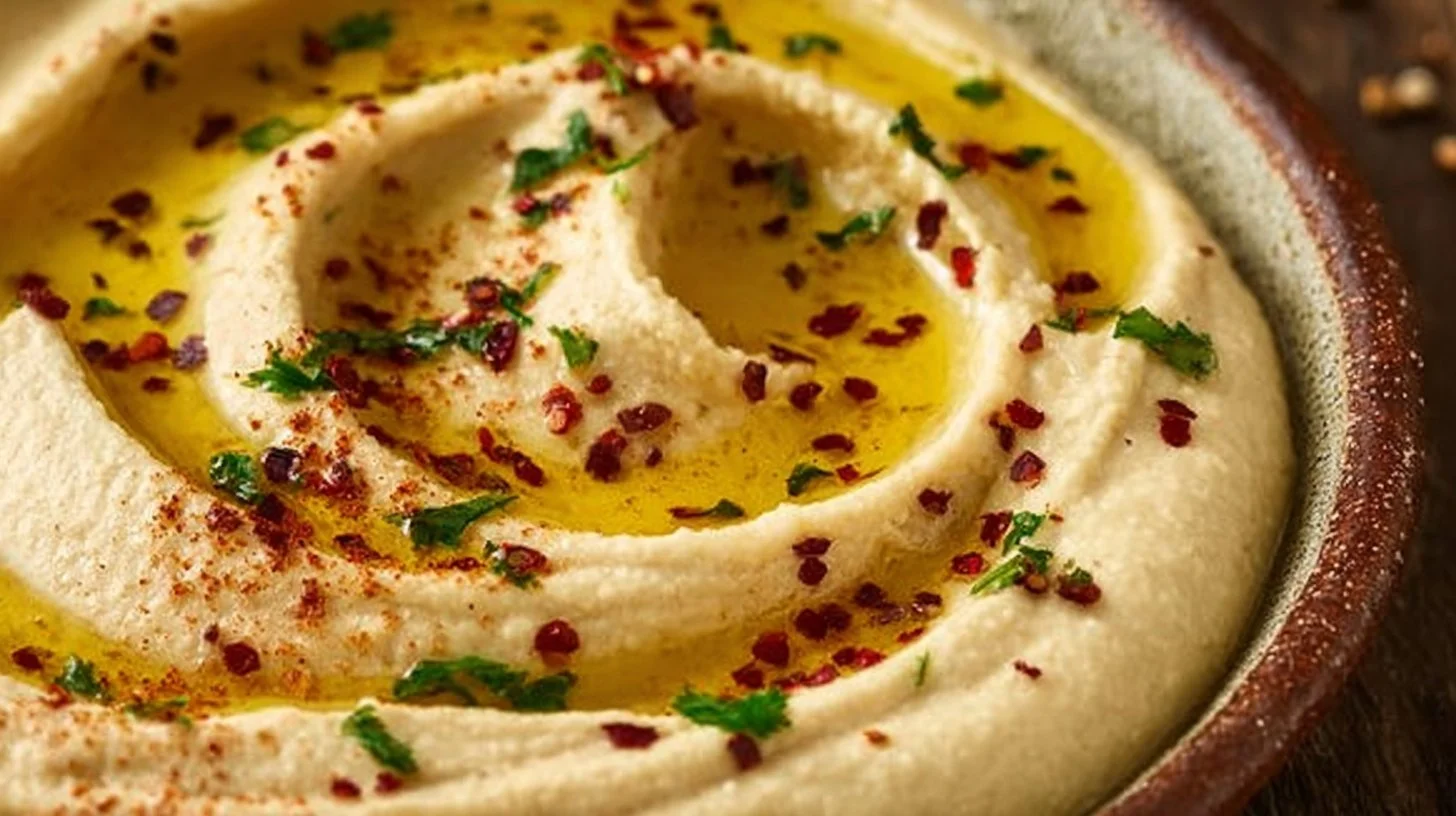
I always keep a batch of hummus in the fridge — it’s the quickest way to turn a few pantry staples into a satisfying snack, lunch add-on, or party dip. This homemade hummus is smooth, bright with lemon, and easy to tweak to your taste. It’s perfect for weeknights, picnics, or when you want a healthier spread without preservatives.
Why you’ll love this dish
Homemade hummus is fast, economical, and far more flexible than store-bought versions. You control the salt, oil, and garlic, and you can make it creamy or chunky depending on your preference. It’s also naturally vegan and protein-rich, so it’s a great snack for kids, adults, and anyone following plant-based diets.
“Silky, lemony, and ready in minutes — this hummus turned our movie night into a feast.” — a family favorite
This recipe shines as a quick appetizer, a lunchbox addition, or a healthy dip for guests. Make it when you want something make-ahead, kid-friendly, or simply comforting and wholesome.
How to make Homemade Hummus
Step-by-step overview:
- Assemble ingredients and rinse the chickpeas.
- Pulse ingredients in a food processor until blended.
- Emulsify with water (or reserved aquafaba) to reach a silky texture.
- Taste and adjust seasoning.
- Serve with toppings or store for later.
The process is mostly about blending and adjusting. Using a food processor (or a high-speed blender) you’ll combine chickpeas, tahini, lemon, garlic, cumin, and salt, then slowly add water to achieve a spreadable, creamy consistency. A brief rest after blending lets flavors meld.
Ingredients
- 1 can (15 oz) chickpeas, drained and rinsed (reserve a few tablespoons of aquafaba if you like)
- 1/4 cup tahini
- 2 tablespoons extra-virgin olive oil, plus more for drizzling
- 2 tablespoons fresh lemon juice (about 1 lemon)
- 1 clove garlic, minced (or 1/2 teaspoon garlic paste)
- 1/2 teaspoon ground cumin
- Salt, to taste (start with 1/2 teaspoon)
- Water, as needed (or aquafaba from the can)
Optional garnishes and add-ins: paprika, chopped parsley, toasted pine nuts, za’atar, roasted red peppers.
Substitutions/notes:
- Tahini: use store-bought or homemade sesame paste. For a sesame-free option, use 1/4 cup plain Greek yogurt (not vegan) or sunflower seed butter (adjust flavor).
- Chickpeas: see FAQs for using dried chickpeas.
- Garlic: roast for milder flavor.
Directions
- Prep the chickpeas. Drain and rinse the canned chickpeas well. For extra-silky hummus, pinch off a few skins or rub chickpeas between your fingers under cold water to slip skins off (this is optional but improves texture).
- Add base ingredients to a food processor. Place chickpeas, tahini, lemon juice, garlic, cumin, and 1/2 teaspoon salt into the bowl.
- Pulse to combine. Process for 30–60 seconds until the mixture begins to come together.
- Emulsify with liquid. With the processor running, slowly pour in 2 tablespoons olive oil and 2–4 tablespoons water (or aquafaba) until the hummus loosens. Scrape down the sides and continue blending for another 30–60 seconds. Add water a tablespoon at a time until you reach your desired creaminess.
- Taste and adjust. Add more salt, lemon, or cumin to taste. If it tastes flat, a pinch more salt or a splash more lemon brightens it.
- Serve and finish. Spoon into a bowl, make a shallow well, drizzle extra olive oil, and sprinkle with paprika, parsley, or toasted pine nuts. Serve with warm pita, fresh veggies, or use as a sandwich spread.
Timing: about 10–15 minutes active time.
How to serve Homemade Hummus
Best pairings:
- Warm pita or flatbread, sliced.
- Vegetable sticks: carrots, cucumber, bell pepper, celery.
- Grain bowls: use hummus as a creamy base under roasted vegetables.
- Sandwiches and wraps: spread on bread for extra flavor and moisture.
- Mezze platter: pair with olives, feta, roasted eggplant, falafel.
Plating ideas: Spread hummus in a shallow bowl, create a swirl with the back of a spoon, drizzle olive oil into the center, and sprinkle toppings for color and texture.
How to store
- Refrigerator: Store in an airtight container. Fresh homemade hummus keeps 4–5 days in the fridge. Always use a clean spoon to serve.
- Freezing: Hummus can be frozen for up to 3 months. Portion into airtight containers or freezer bags, leaving a little headspace. Thaw overnight in the fridge and stir vigorously before serving; you may need to add a tablespoon of water or olive oil to restore creaminess.
- Food safety: Chill within 2 hours of serving. Discard if you see off smells, mold, or excessive separation that doesn’t recombine after stirring.
Tips to make
- For extra-smooth hummus: remove skins from chickpeas or use the aquafaba (the can liquid) instead of water to help emulsify.
- Blend longer and add liquid slowly — emulsifying slowly yields a creamier texture.
- Use freshly squeezed lemon juice for brightness; bottled lemon juice is less vibrant.
- Taste as you go: balance salt and lemon to avoid a flat result.
- If tahini is bitter, stir it first (it can separate) and use a little more lemon to balance.
- If using a blender instead of a food processor, add a few tablespoons more liquid and scrape often to prevent overheating the motor.
Variations
- Roasted red pepper hummus: Add 1/2 cup roasted red peppers while blending.
- Garlic-forward: Roast 2–3 garlic cloves and use in place of the raw clove for a sweeter, mellow flavor.
- Spicy harissa hummus: Blend in 1–2 teaspoons harissa or sriracha.
- Herbed lemon: Add 1/4 cup fresh parsley or cilantro and an extra tablespoon lemon.
- Smoky chipotle: Add 1 chipotle in adobo (minced) for a smoky kick.
- Beet hummus: Blend in 1 small roasted beet for color and earthiness.
- Low-fat: Reduce oil to 1 tablespoon and increase water/aquafaba for consistency.
FAQs
Q: Can I use dried chickpeas instead of canned?
A: Yes. Soak 1 cup dried chickpeas overnight and simmer until very tender (1–1.5 hours). For ultra-creamy hummus, add a pinch of baking soda during cooking to soften skins and cook until falling apart. Reserve some cooking liquid to use instead of water/aquafaba.
Q: Why is my hummus grainy or gritty?
A: Graininess can come from under-blended chickpeas, tough chickpea skins, or low-quality tahini. Remove skins, blend longer, and add liquid slowly. Using high-quality tahini makes a noticeable difference.
Q: Can I make hummus without tahini?
A: Yes — use 1/4 cup plain Greek yogurt (not vegan) for creaminess, or 3–4 tablespoons of sunflower seed butter for a nut-free vegan option. Flavor will differ slightly.
Q: How do I make hummus less bitter if my tahini is strong?
A: Add more lemon juice or a pinch of sugar, and blend again. Roasted garlic or a touch of olive oil on top can also mellow bitterness.
Q: Is hummus safe for babies and toddlers?
A: Hummus can be a healthy finger food for older infants/toddlers, but be cautious with added salt and garlic intensity. Introduce in small amounts and watch for sesame allergies (tahini).
Q: Can I reheat hummus?
A: Hummus is typically served cold or at room temperature. If you prefer warm, gently heat in a skillet with a little olive oil for a few minutes, or warm in the microwave in short bursts, stirring between. Reheating can change texture; thawed frozen hummus may separate and need stirring.
If you want, I can provide a printable recipe card or a version scaled up for a crowd. Which would help you most?
Print
Homemade Hummus
- Total Time: 15 minutes
- Yield: 4 servings
- Diet: Vegan
Description
A quick and easy recipe for homemade hummus, bright with lemon and customizable to your taste.
Ingredients
- 1 can (15 oz) chickpeas, drained and rinsed (reserve a few tablespoons of aquafaba if you like)
- 1/4 cup tahini
- 2 tablespoons extra-virgin olive oil, plus more for drizzling
- 2 tablespoons fresh lemon juice (about 1 lemon)
- 1 clove garlic, minced (or 1/2 teaspoon garlic paste)
- 1/2 teaspoon ground cumin
- Salt, to taste (start with 1/2 teaspoon)
- Water, as needed (or aquafaba from the can)
- Optional garnishes: paprika, chopped parsley, toasted pine nuts, za’atar, roasted red peppers
Instructions
- Prep the chickpeas. Drain and rinse the canned chickpeas well.
- Add base ingredients to a food processor. Place chickpeas, tahini, lemon juice, garlic, cumin, and 1/2 teaspoon salt into the bowl.
- Pulse to combine. Process for 30–60 seconds until the mixture begins to come together.
- Emulsify with liquid. Slowly pour in 2 tablespoons olive oil and 2–4 tablespoons water (or aquafaba) until the hummus loosens.
- Taste and adjust seasoning. Add more salt, lemon, or cumin to taste.
- Serve and finish. Spoon into a bowl, drizzle extra olive oil, and sprinkle with paprika, parsley, or toasted pine nuts.
Notes
For extra-smooth hummus, remove skins from chickpeas. Store in an airtight container in the fridge for up to 4-5 days.
- Prep Time: 15 minutes
- Cook Time: 0 minutes
- Category: Appetizer
- Method: Blending
- Cuisine: Mediterranean