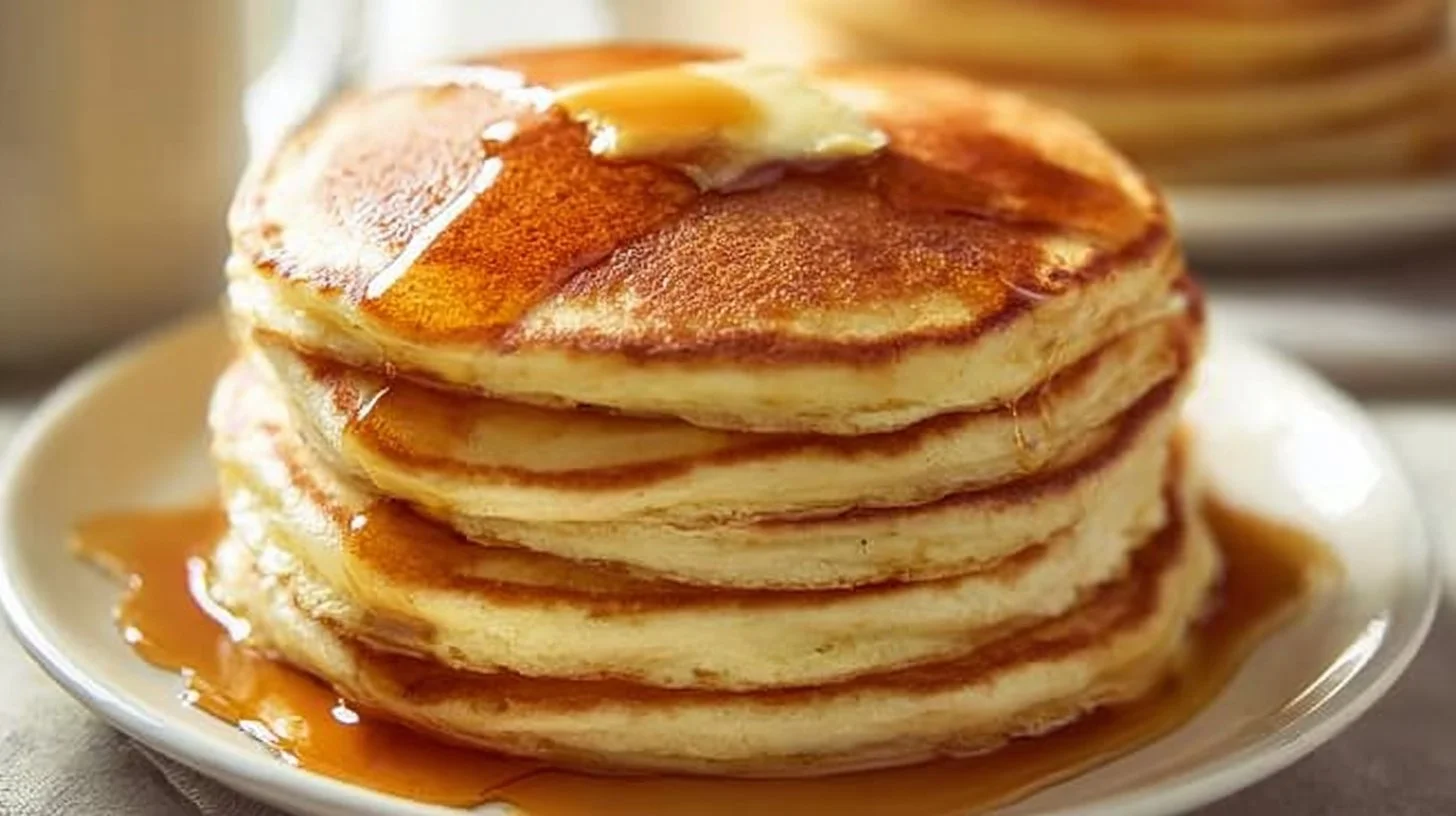
Buttermilk Pancakes
The first time I flipped a perfectly round, pillowy pancake and watched the edges turn golden, I knew a weekday breakfast had been upgraded. These buttermilk pancakes are tender on the inside, lightly crisp at the edges, and simple enough to make any morning feel special.
Why you’ll love this dish
These pancakes are a classic for good reason: the acidity in buttermilk reacts with baking soda to give an extra lift and a tender crumb you won’t get with plain milk. They’re quick to make, kid-approved, and easy to customize, so they work for lazy weekend brunches or busy weeknights when you want something comforting fast.
“Light, fluffy, and reliably golden every time — my go-to pancake recipe for guests and busy mornings.” — home cook review
Benefits at a glance:
- Fast prep and cook time.
- Fluffy texture from buttermilk and baking soda.
- Easy to scale for a crowd.
- Flexible for sweet or savory toppings.
Step-by-step overview
- Whisk dry ingredients in one bowl.
- Combine buttermilk, egg, and melted butter in another bowl.
- Fold wet into dry until just combined; let batter rest briefly.
- Heat a skillet or griddle and test the temperature.
- Cook pancakes in batches until bubbles form, flip, and finish until golden.
- Serve immediately or keep warm in a low oven.
What you’ll need
- 1 cup (120 g) all-purpose flour
- 2 tablespoons granulated sugar
- 2 teaspoons baking powder
- 1/2 teaspoon baking soda
- 1/4 teaspoon salt
- 1 cup (240 ml) buttermilk (see substitutions below)
- 1 large egg
- 2 tablespoons melted butter, plus more for cooking
- Vegetable oil or additional butter for the pan
Substitutions/notes:
- No buttermilk? Use 1 cup milk + 1 tablespoon lemon juice or vinegar; let sit 5 minutes.
- For dairy-free, use a plant-based milk + 1 tablespoon lemon juice and a neutral oil instead of butter.
- For whole-wheat, swap up to half the flour for whole-wheat pastry flour.
Directions
- In a large bowl, whisk the flour, sugar, baking powder, baking soda, and salt until combined.
- In a separate bowl, beat the buttermilk, egg, and melted butter together until smooth.
- Pour the wet ingredients into the dry. Stir gently with a spatula or whisk until the flour is just incorporated. Small lumps are okay. Do not overmix.
- Let the batter rest for 5–10 minutes while you heat the pan. This helps the baking agents activate and produces fluffier pancakes.
- Heat a nonstick skillet or griddle over medium heat. Brush lightly with melted butter or oil. Test with a drop of batter — it should sizzle gently.
- Scoop about 1/4 cup batter per pancake onto the hot surface. Leave space between pancakes.
- Cook until bubbles form across the top and edges look set, about 2–3 minutes. Flip and cook 1–2 minutes more, until golden and cooked through.
- Transfer cooked pancakes to a baking sheet and keep warm in a 200°F (95°C) oven while you finish the batch. Serve warm.
Best ways to enjoy it
Classic toppings:
- Warm maple syrup and a pat of butter.
- Fresh berries and whipped cream.
- Sliced bananas and toasted pecans.
Creative ideas:
- Lemon curd and blueberry compote for a bright brunch plate.
- Savory stack: top with fried chicken and hot honey for a Southern twist.
- Fold in chocolate chips or blueberries to the batter for loaded pancakes.
Plate like a pro:
- Stack pancakes and add warm syrup so it cascades down the sides.
- Garnish with a dusting of powdered sugar and a sprig of mint for guests.
Storage and reheating tips
Short-term:
- Refrigerate leftover pancakes in an airtight container for up to 3 days. Cool completely before sealing.
Freezing:
- Freeze pancakes in a single layer on a baking sheet until solid, then transfer to a freezer bag for up to 2 months. Separate with parchment if stacking.
Reheating:
- Oven (best for texture): Preheat to 350°F (175°C). Arrange pancakes on a baking sheet and heat 8–10 minutes from refrigerated, 12–15 minutes from frozen.
- Toaster: Toast frozen pancakes on a low setting until warm and crisp.
- Microwave (quick): Heat 20–30 seconds per pancake from refrigerated; add 10–20 seconds for frozen (may soften texture).
Food safety:
- Refrigerate leftovers within 2 hours of cooking. Reheat to at least 165°F (74°C) before serving.
Helpful cooking tips
- Don’t overmix the batter. Overworking develops gluten and makes pancakes chewy.
- Letting the batter rest for 5–10 minutes improves rise and texture.
- Use a 1/4-cup measuring cup or small ladle for evenly sized pancakes.
- Keep cooked pancakes warm in a 200°F (95°C) oven on a wire rack set over a baking sheet so they don’t steam.
- If pancakes brown too fast, lower the heat. Medium-low keeps them golden without burning.
- For extra-fluffy pancakes: separate the egg. Whip the white to soft peaks and fold it into the batter last.
Recipe variations
- Blueberry Buttermilk Pancakes: Fold 1/2 cup fresh or thawed frozen blueberries into the batter.
- Banana Walnut: Stir in 1 mashed ripe banana and 1/3 cup chopped walnuts. Reduce sugar by 1 tablespoon if bananas are very sweet.
- Chocolate Chip: Add 1/3 cup mini chocolate chips. Sprinkle a few on the batter after pouring on the griddle to prevent sinking.
- Whole-Wheat: Replace up to half the flour with whole-wheat pastry flour and add 1–2 tablespoons extra buttermilk if batter seems thick.
- Vegan: Use 1 cup plant milk + 1 tbsp lemon juice (rested), 2 tbsp oil instead of butter, and 1/2 tsp baking powder extra; swap the egg for 1/4 cup applesauce or a commercial egg replacer.
- Savory Herb Pancakes: Omit sugar, add 1–2 tbsp chopped chives or herbs, and serve with smoked salmon and crème fraîche.
Common questions
Q: How long does this recipe take from start to finish?
A: About 20–25 minutes total: 5–10 minutes to mix and rest the batter, 10–15 minutes to cook a batch depending on pan size.
Q: Can I use regular milk instead of buttermilk?
A: Yes. For best results, make a quick buttermilk substitute: add 1 tablespoon lemon juice or white vinegar to 1 cup of milk and let sit 5 minutes. This mimics the acidity that reacts with baking soda for lift.
Q: Can I make the batter ahead?
A: You can mix the dry ingredients and wet ingredients separately and combine them just before cooking. Mixed batter is best used within 1–2 hours; the leavening can weaken if it sits too long. If you must store it, refrigerate and expect slightly less rise.
Q: How do I keep pancakes fluffy for a crowd?
A: Cook in batches and keep warm in a 200°F (95°C) oven on a wire rack. Do not stack tightly — trapped steam will soften them.
Q: Are these pancakes freezer-friendly?
A: Yes. Freeze in a single layer, then store in a sealed bag for up to 2 months. Reheat from frozen in a toaster or oven.
Q: Can I make gluten-free pancakes?
A: Use a 1:1 gluten-free flour blend that contains xanthan gum, or follow a tested gluten-free pancake recipe. Texture will vary by blend.
Enjoy these buttermilk pancakes plain, piled high, or dressed up for guests. They’re forgiving, adaptable, and a reliable way to make any morning feel a little brighter.
Print
Buttermilk Pancakes
- Total Time: 25 minutes
- Yield: 4 servings
- Diet: Vegetarian
Description
Classic fluffy buttermilk pancakes that are quick to make and perfect for any morning.
Ingredients
- 1 cup (120 g) all-purpose flour
- 2 tablespoons granulated sugar
- 2 teaspoons baking powder
- 1/2 teaspoon baking soda
- 1/4 teaspoon salt
- 1 cup (240 ml) buttermilk
- 1 large egg
- 2 tablespoons melted butter, plus more for cooking
- Vegetable oil or additional butter for the pan
Instructions
- Whisk dry ingredients in a large bowl.
- Combine buttermilk, egg, and melted butter in another bowl.
- Fold wet ingredients into dry until just combined; let batter rest briefly.
- Heat a skillet or griddle and test the temperature.
- Cook pancakes in batches until bubbles form, flip, and finish until golden.
- Serve immediately or keep warm in a low oven.
Notes
For dairy-free, substitute with plant-based milk plus lemon juice. For whole-wheat, use up to half whole-wheat pastry flour.
- Prep Time: 10 minutes
- Cook Time: 15 minutes
- Category: Breakfast
- Method: Grilling
- Cuisine: American