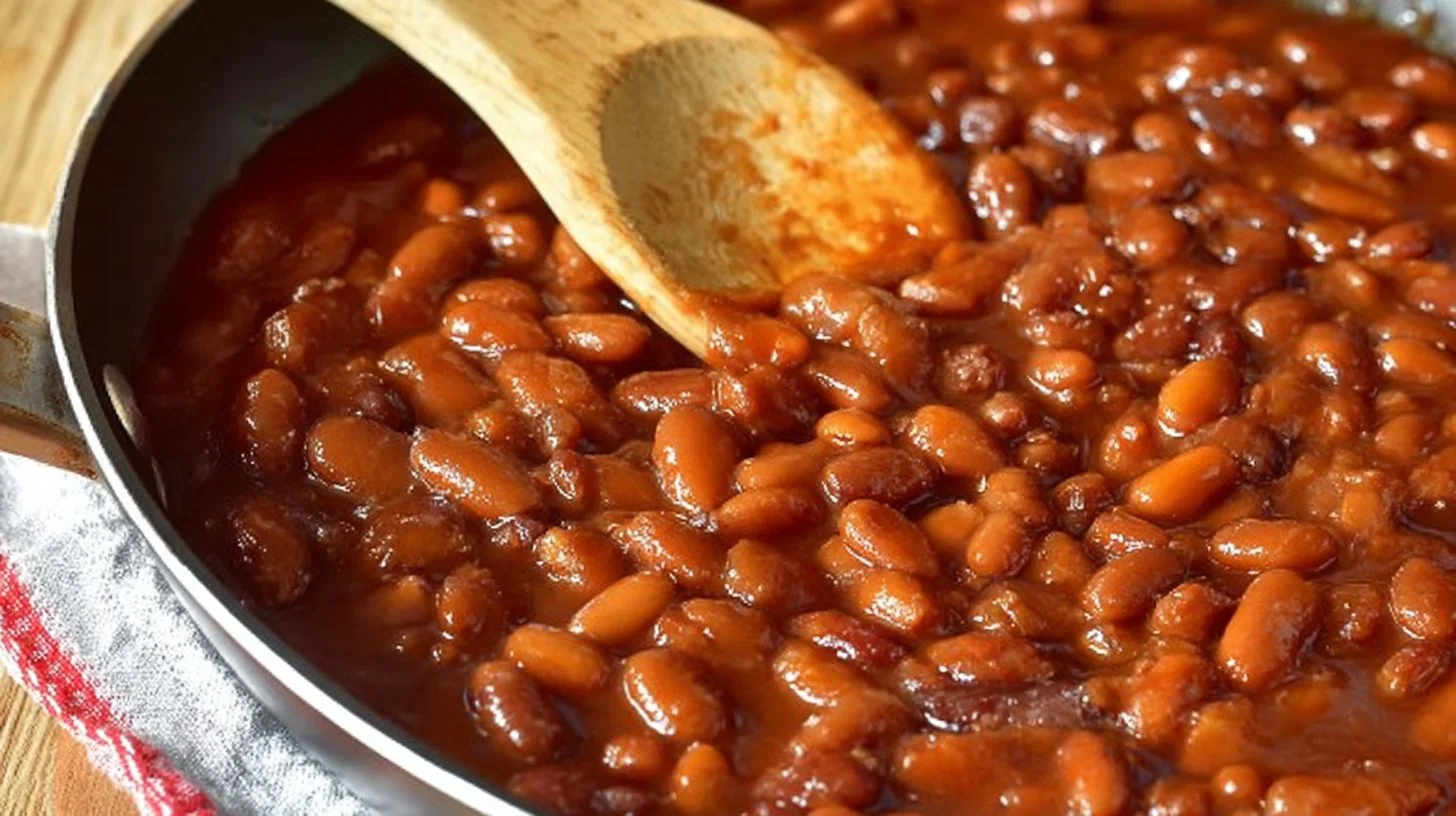
I still remember the first time I made baked beans from scratch: a rainy afternoon, the house smelling of caramelized onions and molasses, and every guest asking for seconds before the main course even arrived. Slow-simmered and deeply flavored, homemade baked beans are comforting, budget-friendly, and far more layered than anything from a can.
Why you’ll love this dish
This recipe turns inexpensive pantry staples into something rich and smoky. It’s ideal for backyard barbecues, potlucks, or a cozy weeknight when you want a low-effort main or hearty side. Cooking dried beans yourself gives a creamier texture and lets you control salt and sweetness—plus, the long simmer melts flavors together in a way shortcuts can’t match.
“We served these at our family picnic and everyone asked for the recipe. The balance of smoky bacon and molasses is perfect.” — a quick reader review
Benefits at a glance:
- Economical and makes a big batch.
- Customizable sweetness and smoke level.
- Easy to make ahead and reheat.
- Works on stovetop, slow cooker, or pressure cooker.
How to make Baked Beans From Scratch
Step-by-step overview
- Soak and cook dried beans until tender (or use a pressure cooker to speed this up). Reserve some cooking liquid.
- Render diced bacon, then caramelize onions and garlic in the same pot to build flavor.
- Add cooked beans, liquid (water or broth), and the sauce ingredients (ketchup, brown sugar, molasses, vinegar, spices).
- Simmer gently, uncovered or partially covered, until the sauce is thick and glossy—several hours on the stovetop or low in a slow cooker.
- Finish with a splash of vinegar and adjust seasoning before serving.
This gives you a clear roadmap before the ingredients and full directions below.
What you’ll need
- 5 slices bacon, diced fine (sub: pancetta or smoked salt if you want no pork)
- 1/2 large onion, diced
- 2 cloves garlic, minced
- 1 lb (about 450 g) dried Great Northern beans, soaked overnight and cooked in water until tender (substitutes: navy beans or cannellini)
- 3 cups water or chicken/vegetable broth (start with less if you prefer thicker beans)
- 1 cup ketchup
- 1/3 cup brown sugar, or to taste (light or dark; maple syrup can substitute)
- 2 tbsp molasses
- 1 tbsp apple cider vinegar
- 2 tsp smoked paprika
- 1/2 tsp Dijon mustard
- 1/2 tsp salt, or to taste
- 1/2 tsp granulated garlic (or 1 tsp garlic powder)
Notes: - If you’re short on time, canned beans can be used (see FAQs). Reduce added liquid when using canned beans.
- For vegetarian beans, omit bacon and use 2 tbsp olive oil + 1 tsp smoked paprika and 1–2 tbsp soy sauce or liquid smoke.
Directions
- Prepare the beans: Drain soaked beans. Put them in a pot, cover with fresh water by 2 inches, bring to a boil, skim foam, then simmer until tender (45–90 minutes depending on age of beans). Alternatively, cook in a pressure cooker/Instant Pot: high pressure 25–30 minutes, natural release. Reserve 1–2 cups of the bean cooking liquid.
- Heat a large, heavy pot over medium heat. Add the diced bacon and render until it starts to brown and the fat is released, about 6–8 minutes.
- Add the diced onion to the bacon and cook, stirring, until the onion has softened and turned golden (8–12 minutes). Add the minced garlic in the last 1–2 minutes and stir until fragrant.
- Add the cooked beans to the pot. Pour in 3 cups water or broth (or start with 2 cups and add more if needed). If you reserved bean cooking liquid, substitute up to 1–2 cups to boost bean flavor.
- Stir in ketchup, brown sugar, molasses, apple cider vinegar, smoked paprika, Dijon mustard, salt, and granulated garlic. Mix until everything is combined.
- Bring the mixture to a gentle simmer. Reduce heat to low, cover partially, and cook slowly for 3–4 hours, stirring occasionally and scraping the bottom. The sauce should thicken and coat the beans. If it becomes too thick, add a little water or reserved bean liquid.
- Taste and adjust: add more salt, a pinch more sugar, or a splash more vinegar to balance flavors. If you prefer a smoother, slightly mashed texture, use the back of a spoon to mash a handful of beans against the side of the pot and stir.
- Alternative slow-cooker method: After step 3, transfer everything to a slow cooker. Cook on low for 6–8 hours until thick and saucy.
- Alternative oven method: Transfer to a covered Dutch oven and bake at 300°F (150°C) for 2–3 hours, stirring occasionally.
- Finish and serve: Remove from heat, let sit 10–15 minutes to thicken further, then serve warm.
How to serve Baked Beans From Scratch
- Classic: Serve alongside grilled hot dogs, pulled pork, or baked ham.
- Comfort bowl: Spoon over mashed potatoes or toast and top with pickled jalapeños for contrast.
- Brunch: Add a fried egg on top and serve with crusty bread.
- Garnishes: Chopped parsley, thinly sliced scallions, or crumbled bacon add freshness and texture.
- For parties: Keep warm in a slow cooker on low and provide a ladle so guests can help themselves.
How to store
- Cool quickly: Transfer to shallow containers within 2 hours of cooking.
- Refrigerate: Store in an airtight container for up to 3–4 days.
- Freeze: Freeze in portions for up to 3 months. Use freezer-safe containers or bags; leave some headspace if using liquid-filled containers.
- Reheating: Thaw overnight in the fridge or reheat from frozen over low heat, stirring frequently. Add a splash of water or broth if the sauce thickens too much. Reheat on the stovetop or in a 350°F (175°C) oven until warmed through.
- Food safety: Reheat leftovers until steaming (165°F / 74°C internal temp). Do not leave hot food at room temperature for more than two hours.
Tips to make
- Use the bacon fat: Rendered bacon fat is flavor gold—use it to caramelize the onions rather than switching to oil.
- Caramelize slowly: Low-and-slow onion cooking builds sweetness; don’t rush it with high heat.
- Control sweetness: Add sugar and molasses gradually. Taste after the beans have simmered—sugars become more pronounced with time.
- Thickness trick: Mash a cup of beans or simmer uncovered toward the end to thicken the sauce naturally.
- Beans age matters: Older dried beans take longer to soften. If beans remain hard after long cooking, add a small pinch of baking soda (1/8 tsp) to the cooking water to help soften them.
- Reserve bean liquid: The cooking liquid contains starch and flavor—use it to adjust consistency and depth.
- Acid last: Add vinegar or other acids at the end of cooking to avoid toughening bean skins.
- If using canned beans: Rinse to reduce sodium, and reduce added liquid and simmer time since they’re already tender.
Variations
- Vegetarian / Vegan: Skip bacon; sauté smoked mushrooms or tempeh in olive oil. Add 1–2 tsp liquid smoke and 1–2 tbsp soy sauce for umami.
- Boston-style: Increase molasses, add a little dry mustard, and use salt pork if available.
- Spicy: Add chipotle in adobo or cayenne to taste; smoked jalapeños work well too.
- Maple & Bacon: Substitute maple syrup for part of the brown sugar for a maple-smoke twist.
- Tomato-forward: Use crushed tomatoes (1/2 cup) along with ketchup for a chunkier sauce.
- Regional swap: Use navy beans for classic New England texture or pinto beans for a Southwestern take with cumin and chili powder.
FAQs — Your questions answered
Q: Can I use canned beans?
A: Yes. Use two 15-ounce cans (drained and rinsed) in place of 1 lb dried. Reduce added liquid (start with 1 cup) and simmer only 20–30 minutes to meld flavors and thicken.
Q: How long do the beans take if I use an Instant Pot?
A: For dried, soaked beans: 8–10 minutes at high pressure plus natural release usually works. For unsoaked dried beans: 25–30 minutes high pressure, but I recommend soaking for even cooking. Finish the sauce in sauté mode after pressure cooking.
Q: Why are my beans grainy or not softening?
A: Older beans can take much longer; soaking helps. Hard water can slow softening—use bottled water or add a pinch of baking soda to the soaking/cooking water to help. Also ensure you didn’t add acidic ingredients (tomato, vinegar) until beans are tender.
Q: Can I make this ahead?
A: Absolutely. These beans taste even better the next day after flavors meld. Cool, refrigerate, then reheat gently. For parties, reheat in a slow cooker and stir occasionally.
Q: How do I thicken the sauce quickly?
A: Simmer uncovered to reduce liquids, mash a portion of the beans, or stir in a small cornstarch slurry (1 tsp cornstarch + 1 tbsp cold water) and simmer until glossy.
Q: Is it safe to freeze?
A: Yes. Freeze in airtight containers for up to 3 months. Thaw overnight in the refrigerator before reheating.
If you’d like, I can convert the ingredient measurements to metric-only, provide a printable card, or adapt this recipe for a vegetarian or Instant Pot method step-by-step. Which would help you most?