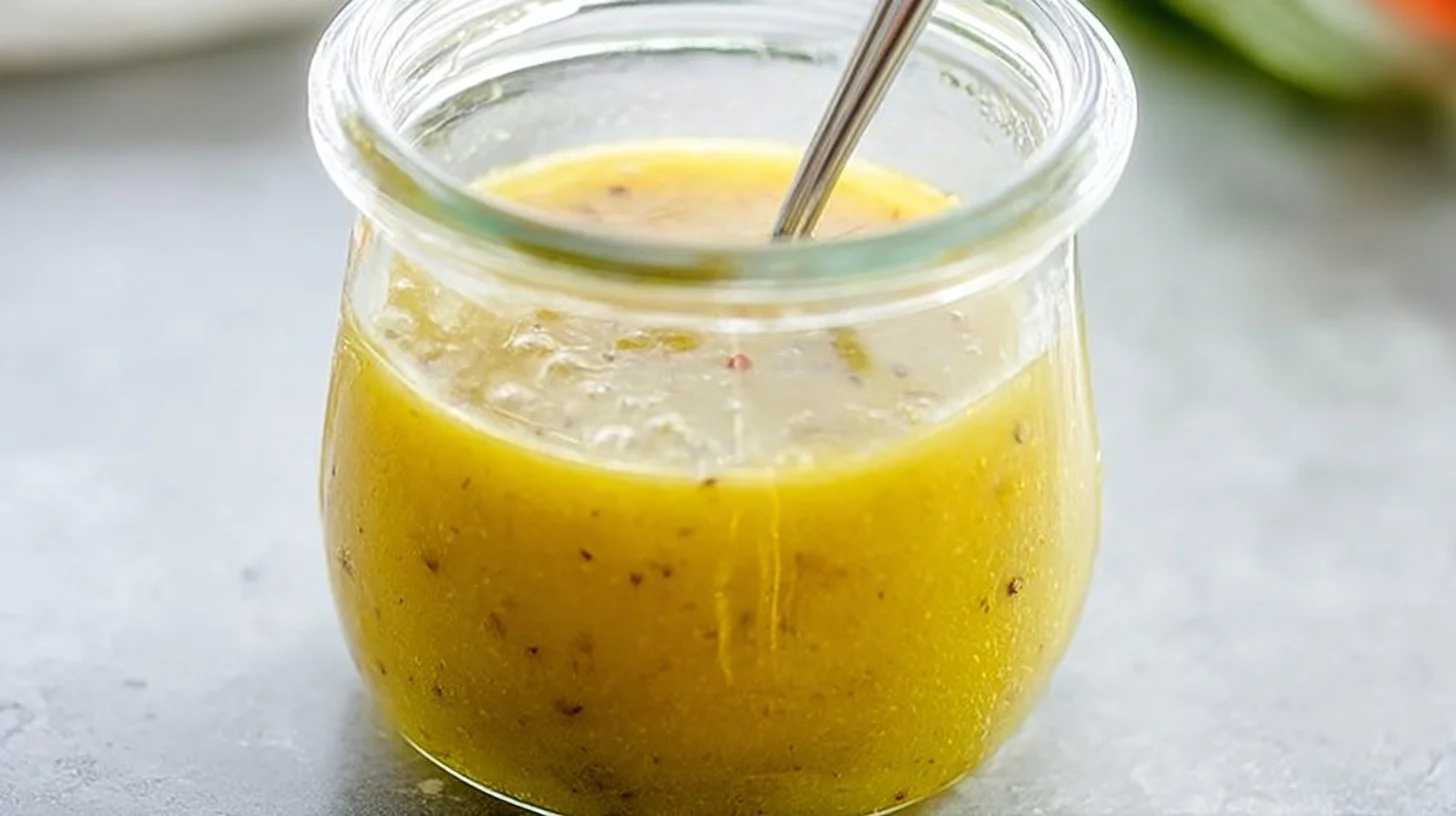
Vinaigrette is the kind of kitchen shortcut that makes simple salads sing. This classic vinaigrette—bright vinegar, smooth olive oil, a touch of Dijon and a hit of garlic—takes five minutes to whisk together and instantly dresses greens, grains, roasted vegetables and sandwiches. It’s the basic building block for countless variations and a must-know for everyday cooking.
Why you’ll love this vinaigrette
This dressing is versatile, fast, and adaptable. Use it to enliven a plain romaine, finish warm roasted beets, or turn cold chickpeas into a lively lunch. It’s also easy to scale, keeps well in the fridge, and can be adjusted to suit sweet, savory, or tangy preferences.
“I always keep a jar in the fridge—one drizzle makes a weekday salad taste like a restaurant dish.” — home cook review
Reasons to try it
- Quick: ready in under 10 minutes.
- Budget-friendly: pantry staples only.
- Customizable: swap vinegars, add herbs, or sweeten to taste.
- Reliable: Dijon acts as an emulsifier so the dressing holds together better.
Step-by-step overview
- Measure your acid (vinegar) and flavorings.
- Whisk together the vinegar, Dijon and garlic.
- Slowly stream in the oil while whisking to create an emulsion.
- Season, taste, and adjust.
- Serve immediately or store in the fridge and shake before using.
Yields: about 1/2 cup (approx. 8 tablespoons). Prep time: 5 minutes. Active cook time: 5 minutes.
Ingredients
- 1/4 cup olive oil (extra-virgin or light olive oil; substitute avocado, walnut, or neutral oil)
- 1/4 cup vinegar (red wine or balsamic; substitute white wine vinegar, apple cider vinegar, or lemon juice)
- 1 teaspoon Dijon mustard (helps emulsify; can use whole-grain or yellow mustard)
- 1 clove garlic, minced (or 1/2 teaspoon garlic paste; omit if raw garlic is a concern)
- Salt and freshly ground black pepper, to taste
Optional small additions (choose any):
- 1 teaspoon honey or maple syrup (for sweetness)
- 1 teaspoon finely minced shallot or 1 tablespoon chopped fresh herbs (parsley, tarragon, basil)
- Pinch of red pepper flakes for heat
Notes: Classic French ratio is roughly 3 parts oil to 1 part acid. This recipe uses equal parts for a brighter, more tang-forward dressing—adjust to preference.
Directions
- In a small bowl or measuring cup, combine the vinegar, Dijon mustard and minced garlic. Whisk until smooth.
- Season the acid mixture lightly with salt and pepper. Taste; the acid should be slightly more assertive than you want the finished dressing, because oil will mellow it.
- Begin whisking vigorously. While whisking, slowly pour in the olive oil in a thin, steady stream. Continue whisking until the mixture looks combined and slightly thickened (emulsified).
- If you prefer a quicker method, put all ingredients in a jar with a tight lid and shake vigorously for 20–30 seconds.
- Or blend briefly with an immersion blender for a fully emulsified result.
- Taste and adjust: add a pinch more salt, pepper, or a small drizzle of honey if it’s too sharp. If it’s too thick, whisk in a teaspoon of warm water.
- Use immediately, or transfer to a clean jar and refrigerate. Shake or whisk before using if separation occurs.
How to serve this vinaigrette
- Drizzle over mixed greens with thinly sliced shallot and toasted nuts for a simple starter.
- Toss with warm roasted vegetables (beets, carrots, Brussels sprouts) just before serving.
- Use as a finishing splash on grilled fish or chicken.
- Mix into grain bowls (quinoa, farro) along with chopped herbs and crumbled cheese.
- Spread a little on sandwiches or wraps as a bright, acidic contrast to creamy fillings.
Plating tip: dress salad components lightly—add just enough so leaves glisten but aren’t soggy. Start with half the dressing, toss, then add more as needed.
How to store
- Refrigerate: keep vinaigrette in a sealed jar in the refrigerator. It will keep 7–14 days.
- If your dressing contains fresh garlic, shallot, or herbs, use within 3–7 days for best flavor and safety.
- Do not store at room temperature for extended periods—oil plus fresh produce can develop off-flavors or safety issues.
- Freezing: not recommended. Olive oil can change texture when frozen and emulsions separate. If you must freeze a base (acid + mustard), it’s better to freeze vinegar/mustard separately and add oil after thawing.
- To use after storage: dressing will separate; shake, whisk, or blend briefly to re-emulsify.
Food-safety note: garlic stored in oil at room temperature can pose a risk; always refrigerate garlic-containing oil or dressings and consume within a week.
Helpful cooking tips
- Room-temperature ingredients emulsify more easily. Let cold oil sit briefly at room temp before whisking.
- For a thicker, creamier dressing, add 1 tablespoon mayonnaise or a pasteurized egg yolk (be mindful of raw egg safety). Vegan option: use aquafaba or extra Dijon.
- To mellow sharp vinegar quickly, stir in a small pinch of sugar or 1 teaspoon honey.
- If the dressing splits, whisk in 1 teaspoon warm water or a small spoonful of Dijon to bring it back together.
- Use a dry bowl and whisk—water can make emulsification harder.
- Scale quantities up in a jar: add all ingredients, close tightly, and shake vigorously for convenience and easy storage.
Variations
- Honey-Dijon Vinaigrette: add 1 teaspoon honey. Great on bitter greens.
- Lemon-Herb Vinaigrette: replace vinegar with 2 tablespoons lemon juice + 2 tablespoons white wine vinegar, add chopped herbs. Bright with seafood and grain salads.
- Balsamic Vinaigrette: use balsamic vinegar instead of red wine vinegar; add 1/2 teaspoon brown sugar if you like it sweeter.
- Shallot Vinaigrette: substitute minced shallot for garlic for a subtler, oniony note.
- Creamy Vinaigrette: blend 2 tablespoons plain yogurt or sour cream into the finished dressing for a creamier texture.
- Nutty Vinaigrette: swap part of the olive oil for walnut or sesame oil and add toasted seeds for depth.
FAQs
Q: How long does this vinaigrette last in the fridge?
A: Typically 7–14 days. If you add fresh garlic, shallots, or herbs, aim to use it within 3–7 days for best flavor and safety. Always store in a sealed container and discard if it smells off.
Q: Can I make this without Dijon mustard?
A: Yes. Dijon helps emulsify and adds flavor, but you can substitute whole-grain mustard, yellow mustard, or 1 tablespoon mayonnaise. Without an emulsifier the oil and vinegar will separate more quickly.
Q: Can I use lemon juice instead of vinegar?
A: Absolutely. Lemon juice gives a brighter, more citrusy note. Because citrus acidity differs from vinegars, taste and adjust—start with less and add to preference.
Q: Why does my vinaigrette separate?
A: Oil and water-based components naturally separate. To keep them combined longer, whisk vigorously while slowly adding oil, or use an emulsifier like Dijon, mayonnaise, or egg yolk. Shake or whisk before using if separation occurs.
Q: Is it safe to put raw garlic in vinaigrette?
A: In a refrigerated vinaigrette with sufficient acid (vinegar or lemon), raw garlic is generally safe for short-term use. However, garlic stored in oil at room temperature can allow bacterial growth. Refrigerate dressings containing garlic and use within a week.
Q: Can I use a blender or food processor?
A: Yes—an immersion blender or food processor makes a stable emulsion quickly and is useful for larger batches.
If you want, I can convert this into a printable recipe card or create a few ready-to-use variations (lemon-herb, balsamic, honey-Dijon) with exact ingredient amounts.
Print
Classic Vinaigrette
- Total Time: 10 minutes
- Yield: 1/2 cup (approx. 8 tablespoons)
- Diet: Vegan
Description
A quick and versatile vinaigrette made with vinegar, olive oil, Dijon mustard, and garlic. Perfect for salads, grains, and roasted vegetables.
Ingredients
- 1/4 cup olive oil (extra-virgin or light)
- 1/4 cup vinegar (red wine or balsamic)
- 1 teaspoon Dijon mustard
- 1 clove garlic, minced
- Salt and freshly ground black pepper, to taste
- 1 teaspoon honey or maple syrup (optional)
- 1 teaspoon finely minced shallot or 1 tablespoon chopped fresh herbs (optional)
- Pinch of red pepper flakes (optional)
Instructions
- Measure your acid (vinegar) and flavorings.
- Whisk together the vinegar, Dijon, and garlic.
- Slowly stream in the oil while whisking to create an emulsion.
- Season, taste, and adjust.
- Serve immediately or store in the fridge and shake before using.
Notes
Classic French ratio is roughly 3 parts oil to 1 part acid. This recipe uses equal parts for a brighter, more tang-forward dressing. Store in the fridge for 7–14 days.
- Prep Time: 5 minutes
- Cook Time: 5 minutes
- Category: Condiment
- Method: Whisking
- Cuisine: French