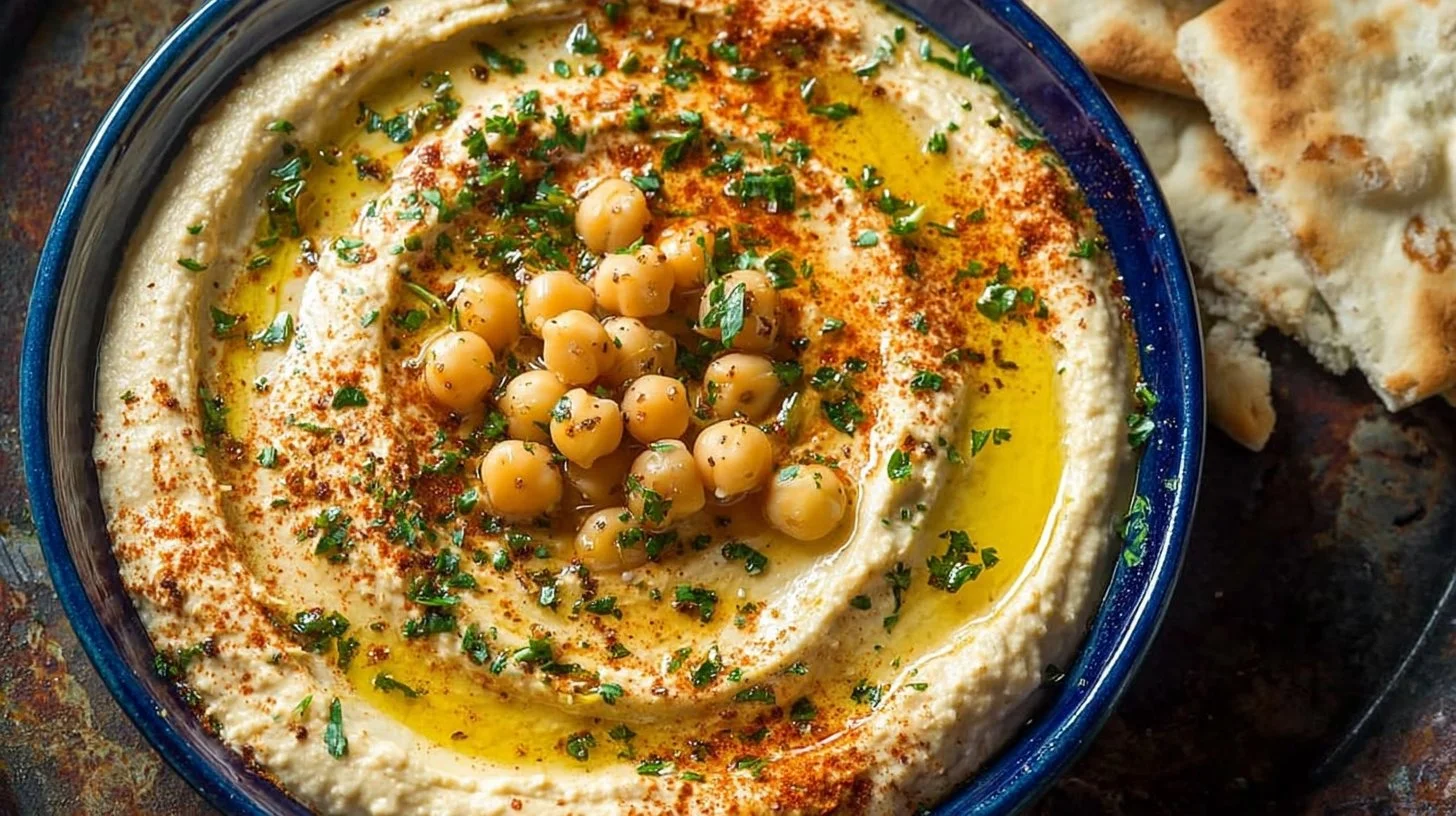
I still remember the first time I made hummus from scratch: the kitchen smelled bright with lemon and garlic, and a rough, gritty dip transformed into anything-but-basic creaminess after a few pulses. Homemade hummus is a surprisingly quick way to elevate snacks, lunches, and party platters with little fuss and big flavor.
Why you’ll love this dish
This hummus is creamy, tangy, and adaptable. It’s great for weeknight dips, lunchbox spreads, or a healthy appetizer at gatherings. Compared with store-bought tubs, homemade hummus lets you control salt, garlic intensity, oil quality, and texture.
“Simple to make, endlessly versatile — the best hummus I’ve made at home. Smooth, bright, and perfect with warm pita.”
Benefits at a glance:
- Quick: about 10–15 minutes active time using canned chickpeas.
- Budget-friendly: pantry staples deliver big flavor.
- Customizable: easy to make milder, smokier, or herb-forward.
- Vegan and naturally gluten-free.
How this recipe comes together
Step-by-step overview before you cook:
- Prep the chickpeas (drain canned, or cook dried until very soft).
- Lightly emulsify tahini, lemon, and garlic to build a creamy base.
- Add chickpeas and blend, scraping down the bowl as needed.
- Adjust texture with water or reserved aquafaba, and season to taste.
- Finish with olive oil and toppings for serving.
What you’ll need
- 1 can chickpeas (15 oz) — drained and rinsed (see note about reserved liquid/aquafaba)
- 1/4 cup tahini — well-stirred before measuring
- 2 tablespoons garlic, minced (use less if sensitive)
- 2 tablespoons lemon juice (fresh is best)
- 2 tablespoons extra virgin olive oil, plus more for serving
- Salt to taste
- Water as needed (or reserved chickpea liquid/aquafaba)
Optional notes/substitutions:
- Tahini substitute: natural peanut or almond butter (changes flavor).
- Lemon: lime can substitute for a different brightness.
- Garlic: roast whole cloves for a mellower, sweeter hummus.
Step-by-step instructions
- Drain and rinse the canned chickpeas. Reserve 1–2 tablespoons of the liquid (aquafaba) if you like — it helps loosen texture without watering down flavor.
- In a food processor, combine tahini, lemon juice, and minced garlic. Pulse 30–45 seconds until the mixture becomes glossy. This step helps emulsify the tahini and gives a silkier result.
- Add half the chickpeas and 1 tablespoon of olive oil. Process until roughly chopped.
- Add the remaining chickpeas. Blend until mostly smooth, stopping to scrape down the sides.
- With the motor running, add water or reserved aquafaba a tablespoon at a time until you reach your preferred consistency. For very silky hummus, use 2–4 tablespoons.
- Taste and season with salt. If it needs more brightness, add a little more lemon juice. Blend briefly to incorporate.
- Transfer to a bowl. Drizzle with olive oil and top with paprika, za’atar, chopped parsley, or pine nuts if desired. Serve with warm pita or crunchy vegetables.
Best ways to enjoy it
- As a dip: warm pita wedges, pita chips, or raw veggies (carrot sticks, cucumber, bell pepper).
- In sandwiches and wraps: spread inside flatbreads with roasted vegetables or deli proteins.
- In bowls: spoon over grain bowls with roasted veggies and a sprinkle of seeds.
- As a breakfast toast: thin slightly and spread on toast, top with sliced tomato, za’atar, and a pinch of salt.
- Party platter: place in a shallow bowl, create a swirl, drizzle EVOO, and scatter toppings (chili oil, whole chickpeas, toasted pine nuts, or herbs).
Storage and reheating tips
- Refrigerate: store hummus in an airtight container for up to 4–5 days. Press a thin layer of olive oil on top before sealing to limit oxidation and discoloration.
- Room temperature: don’t leave hummus out longer than 2 hours (1 hour if ambient temperature >90°F / 32°C).
- Freeze: hummus freezes well for up to 3 months. Freeze in portions in airtight containers or resealable bags. Thaw overnight in the fridge. Texture can slightly change; stir in a little olive oil or lemon juice to refresh creaminess.
- Food safety: always use clean utensils to scoop hummus to avoid introducing bacteria. Keep refrigerated when not serving.
Helpful cooking tips
- For the smoothest hummus: remove chickpea skins by rubbing rinsed chickpeas between your fingers or simmering canned chickpeas briefly and then slipping skins off. It’s extra work but makes a marked difference.
- Use high-quality tahini and stir it before measuring—the oil separates in jars.
- Emulsify tahini and lemon first. This creates a creamier emulsion than adding everything at once.
- If you prefer less garlic bite, start with 1/2–1 teaspoon minced garlic or roast the garlic first.
- For lighter, fluffier hummus, use ice-cold water while processing (or a few ice cubes).
- If using dried chickpeas, soak overnight and simmer with 1/2 teaspoon baking soda until very tender; this softens skins and improves texture.
Creative twists and variations
- Roasted red pepper hummus: add 1 small roasted red pepper while processing.
- Smoky chipotle: add 1 chipotle in adobo or 1/2 tsp smoked paprika.
- Herb hummus: add a big handful of parsley, cilantro, or basil for a green, fresh version.
- Beet hummus: add one roasted beet for color and sweetness.
- White bean or black bean swap: use cannellini or black beans instead of chickpeas for different flavor profiles.
- Low-sodium: omit added salt; enhance flavor with herbs, lemon, or roasted garlic.
FAQs — Your questions answered
Q: Can I make hummus without a food processor?
A: Yes. Use a high-speed blender, but you may need to add more liquid and stop often to scrape. A sturdy hand masher yields a chunkier texture.
Q: Are canned chickpeas as good as cooked dried chickpeas?
A: Canned chickpeas are fast and fine for most uses. For the absolute creamiest hummus, cooked dried chickpeas that’ve been simmered until very soft often perform best. Reserve some cooking liquid like aquafaba for thinning.
Q: How can I make hummus ultra-smooth?
A: Remove skins from chickpeas, use very soft cooked chickpeas, emulsify tahini with lemon first, and add small amounts of ice-cold water or aquafaba while processing.
Q: How long does homemade hummus last in the fridge?
A: Up to 4–5 days in an airtight container. Use clean utensils and keep it chilled below 40°F (4°C).
Q: Can kids eat hummus with raw garlic?
A: Raw garlic can be pungent for young children. Start with a small amount (or use roasted garlic) and adjust to taste.
If you want, I can provide a short printable version of the recipe card with times and a shopping list. Which format would you prefer?
Print
Creamy Homemade Hummus
- Total Time: 10 minutes
- Yield: 4 servings
- Diet: Vegan
Description
This creamy and tangy homemade hummus is a quick, budget-friendly dip that elevates snacks and parties with its big flavor.
Ingredients
- 1 can chickpeas (15 oz) — drained and rinsed
- 1/4 cup tahini — well-stirred before measuring
- 2 tablespoons garlic, minced
- 2 tablespoons lemon juice (fresh is best)
- 2 tablespoons extra virgin olive oil, plus more for serving
- Salt to taste
- Water as needed (or reserved chickpea liquid/aquafaba)
Instructions
- Drain and rinse the canned chickpeas. Reserve 1–2 tablespoons of the liquid (aquafaba) if you like.
- Combine tahini, lemon juice, and minced garlic in a food processor. Pulse for 30–45 seconds until glossy.
- Add half the chickpeas and 1 tablespoon of olive oil. Process until roughly chopped.
- Add the remaining chickpeas and blend until mostly smooth, scraping down the sides as needed.
- With the motor running, add water or reserved aquafaba a tablespoon at a time until you reach your preferred consistency.
- Taste and season with salt, adding more lemon juice for brightness if desired. Blend briefly to incorporate.
- Transfer to a bowl, drizzle with olive oil, and top with options like paprika, za’atar, or pine nuts. Serve with warm pita or crunchy vegetables.
Notes
For a smoother texture, remove chickpea skins or use high-quality tahini. Adjust garlic level as necessary for personal preference.
- Prep Time: 10 minutes
- Cook Time: 0 minutes
- Category: Dip
- Method: Blending
- Cuisine: Middle Eastern