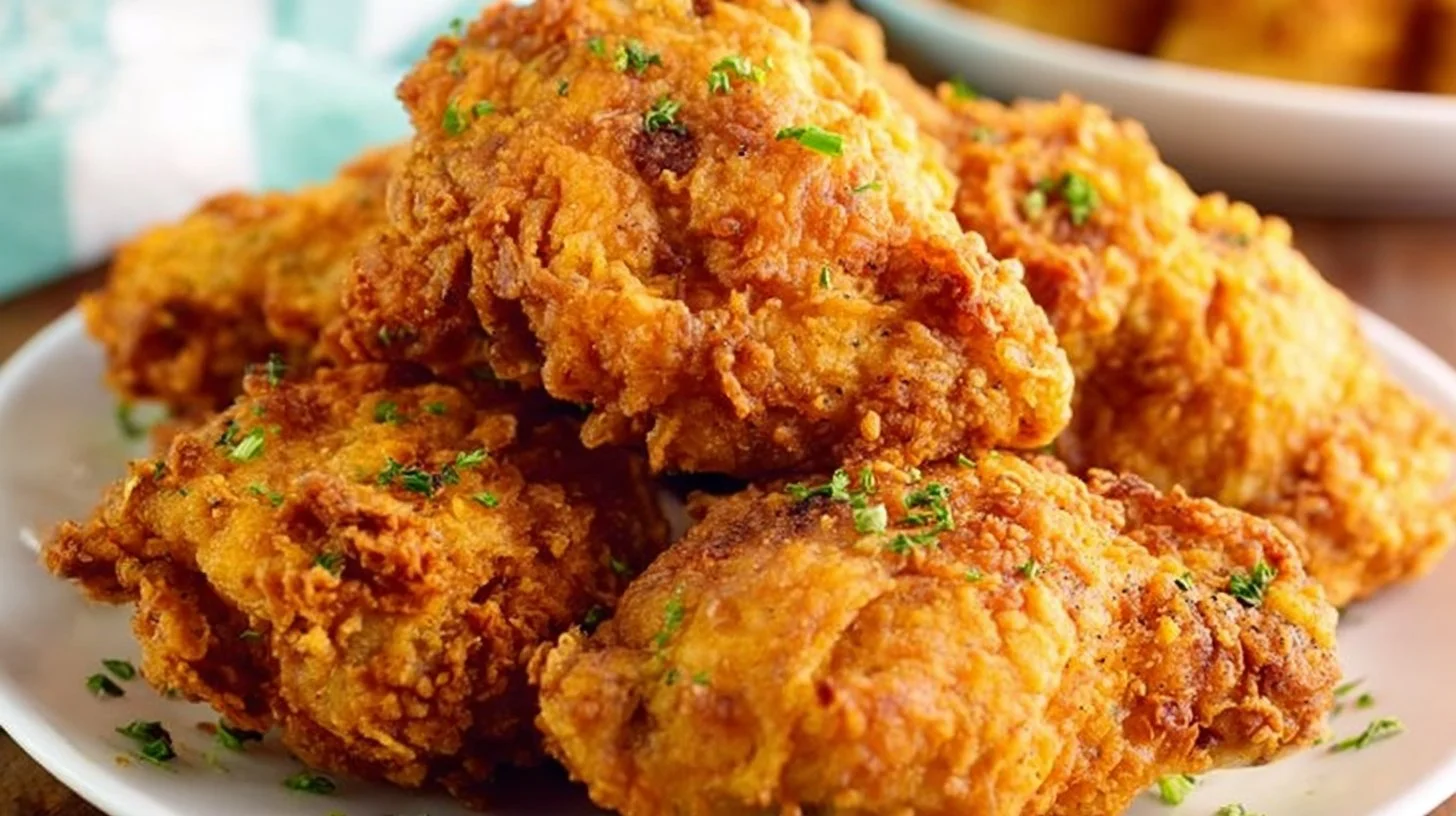
The first time I made buttermilk fried chicken at home, the kitchen smelled like a Southern diner and the first bite was all tender meat and crackly, seasoned crust. This recipe delivers that contrast every time: juicy, tangy chicken tempered by a highly seasoned, deeply golden fry.
Why you’ll love this dish
Buttermilk fried chicken is comfort food at its most dependable. The tang of the buttermilk tenderizes the meat and adds a subtle acidity that brightens the rich fried crust. It’s perfect for a relaxed weekend supper, a picnic-style meal, or a crowd-pleasing dinner for friends.
“Crisp outside, juicy inside — like restaurant chicken but better. I made a double batch and everyone asked for seconds.” — a quick family-review
Reasons to try it:
- Great make-ahead marinade: marinate overnight for deeper flavor.
- Flexible for pieces: thighs, drumsticks, breasts or wings all work.
- Kid-friendly while easy to spice up for adults.
How to make Buttermilk Fried Chicken
Step-by-step overview:
- Marinate chicken in a spiced buttermilk overnight (or at least 4 hours).
- Dredge pieces in seasoned flour (single or double-dredge for extra crunch).
- Fry in oil at a controlled temperature until golden and cooked through.
- Drain briefly on a rack and rest before serving.
This sequence keeps the meat juicy and the crust crisp. Now gather the ingredients.
Ingredients
- 4 pieces of chicken (legs, thighs, breasts, or a mix), bone-in recommended for juiciness
- 2 cups buttermilk (or 2 cups milk + 2 tbsp lemon juice/vinegar, let sit 5 minutes)
- 1 teaspoon paprika
- 1 teaspoon garlic powder
- 1 teaspoon onion powder
- 1 teaspoon salt, plus more for seasoning after frying
- 1 teaspoon black pepper
- 1 cup all-purpose flour (see notes for substitutions)
- Oil for frying (vegetable, peanut, or canola oil work well; enough for ~1 inch depth)
Optional extras / substitutions:
- For extra crunch, add 1/4 cup cornstarch to the flour.
- For gluten-free: use a 1:1 gluten-free flour blend and cornstarch.
- Add 1–2 teaspoons cayenne or hot sauce to the buttermilk for heat.
Directions
- Make the marinade. In a large bowl, whisk buttermilk with paprika, garlic powder, onion powder, salt, and pepper.
- Marinate the chicken. Submerge the chicken in the buttermilk. Cover and refrigerate at least 4 hours, preferably overnight.
- Prep the dredge. In another bowl or shallow dish, mix the flour with a pinch of salt and pepper. Add cornstarch if using.
- Heat the oil. Pour oil into a large heavy skillet or Dutch oven to about 1 inch deep. Heat to approximately 350°F (175°C) then be ready to adjust (see tips).
- Dredge the chicken. Remove a piece from the buttermilk. Let excess drip off, then coat evenly in the flour mixture. Shake off light excess. For a thicker crust, dip back into buttermilk briefly and recoat in flour. Let coated pieces rest 10–15 minutes on a rack — this helps the crust adhere.
- Fry carefully. Add a few pieces to the hot oil without crowding. Maintain oil temperature around 325–350°F (160–175°C). Fry bone-in pieces about 12–18 minutes per side depending on size (total 25–40 minutes) until deep golden and the internal temperature reads 165°F (75°C). For boneless breasts or smaller pieces, cooking time will be shorter—check temperature earlier.
- Drain and rest. Transfer cooked chicken to a wire rack over a baking sheet to drain and keep the crust crisp. Tent loosely with foil and rest a few minutes before serving.
Always check internal temperature with an instant-read thermometer in the thickest part without touching bone. 165°F (75°C) is the safe target.
How to serve Buttermilk Fried Chicken
Best pairings:
- Classic sides: mashed potatoes, coleslaw, buttermilk biscuits, or cornbread.
- For a Southern spread: collard greens, mac and cheese, and pickles.
- Sauces: honey, hot honey, or a tangy vinegar-based sauce. Serve with lemon wedges and extra hot sauce for those who want heat.
Plating ideas:
- Arrange pieces on a large platter with small bowls of pickles and sauces.
- For a picnic vibe, stack pieces with warm biscuits and a jar of sweet tea.
How to store
- Short term: Refrigerate leftovers in an airtight container within 2 hours of cooking. Use within 3–4 days.
- Freezing: Cooked chicken freezes well for up to 2 months. Cool completely, flash-freeze on a tray, then transfer to freezer bags. Raw marinated chicken can be frozen, but cook within 1 month for best texture.
- Reheating: Reheat in a 375°F (190°C) oven on a wire rack for 10–15 minutes (cover foil-free so crust stays crisp) until 165°F (75°C) inside. For frozen cooked pieces, thaw overnight in the fridge then reheat. Avoid microwaving if you want the crust crisp.
Food safety note: discard used marinade or boil it if you plan to use it as sauce; do not reuse raw marinade directly.
Tips to make
- Dry the skin slightly before dredging; excess moisture causes oil to spit and thins the crust.
- Use an instant-read thermometer for accuracy—color alone isn’t reliable.
- Keep oil temperature steady. If it drops too low, the crust will absorb oil; if too high, the outside will burn before the inside cooks.
- Don’t overcrowd the pan. Fry in batches to maintain temperature and crispness.
- Let coated pieces rest before frying: a 10–15 minute rest sets the coating so it won’t fall off in the oil.
- Finish with flaky sea salt right after frying to enhance flavor.
- For extra-crispy chicken, try a double dredge (buttermilk → flour → buttermilk → flour) or add 1/4 cup cornstarch to the flour.
Variations
- Nashville Hot: Toss fried pieces in a hot cayenne butter oil mixture and top with pickles.
- Spicy Buttermilk: Add 1–2 tsp cayenne or 2 tbsp hot sauce to the buttermilk.
- Oven “fried”: Bake at 425°F (220°C) on a rack for 25–35 minutes, flipping halfway, for a lower-fat option.
- Air fryer: Use 375°F (190°C) and cook 12–20 minutes depending on piece size, turning once.
- Asian twist (karaage-style): Use soy sauce and ginger in the marinade and coat with potato starch for a lighter, crispier crust.
- Gluten-free: Replace flour with a GF 1:1 blend plus cornstarch or rice flour for extra crisp.
FAQs
Q: Can I marinate the chicken for less than 4 hours?
A: Yes. A 1–2 hour marinade will impart some flavor and tenderizing, but 8–24 hours gives the best texture and depth. Avoid marinating more than 48 hours to prevent overly soft meat.
Q: What oil should I use for frying?
A: Use a neutral high-smoke-point oil like peanut, canola, sunflower, or refined avocado oil. Olive oil has too low a smoke point and an off flavor for deep frying.
Q: Is it safe to eat if the crust is dark but internal temp is 165°F?
A: Yes—safety depends on internal temperature. If the outside is darker than you like, reduce heat next batch so the inside finishes without over-browning.
Q: Can I reuse frying oil?
A: Yes, strain the cooled oil through a fine sieve or cheesecloth and store in a sealed container. Use it for savory frying within a month. Discard if it smells rancid or has off flavors.
Q: What if I don’t have buttermilk?
A: Make a quick substitute by stirring 1–2 tablespoons lemon juice or white vinegar into 1 cup milk and letting it sit 5 minutes. It won’t be identical but works well for tenderizing.
Q: How do I know when the oil is at the right temperature without a thermometer?
A: Drop a small pinch of flour into the oil. If it sizzles and browns slowly, it’s roughly in range. This is less reliable than a thermometer; using one is strongly recommended.
If you want, I can tailor this recipe for boneless chicken breasts, create a spice blend for Nashville hot, or give a step-by-step photo guide. Which would help you most?