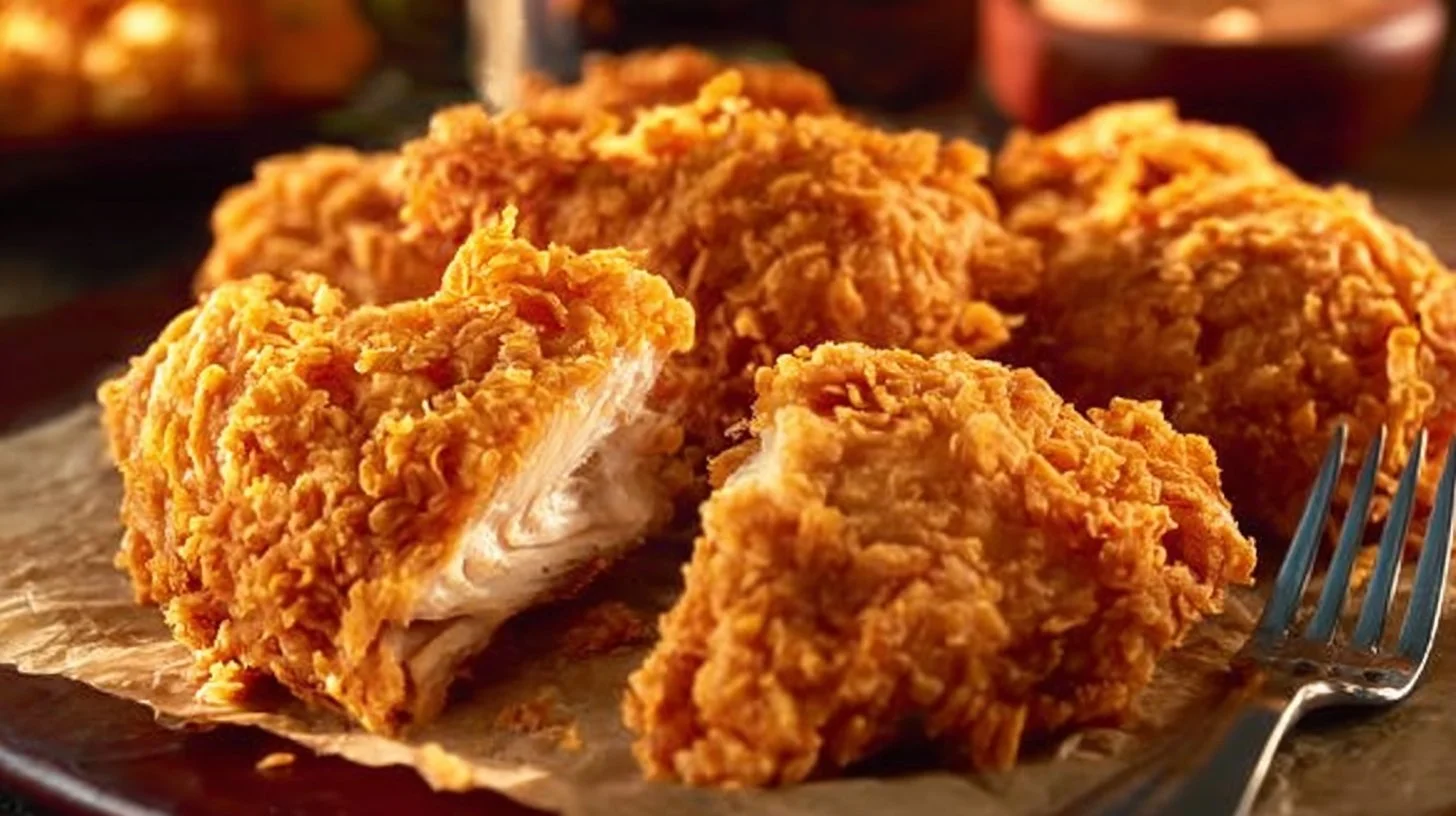
The first time I tried to recreate Popeyes at home, I expected soggy breading and underseasoned chicken. Instead I got a crisp, spicy crust and juicy meat—thanks to a tangy buttermilk soak, a double-dredge, and careful frying temperature. This recipe aims to give you that same restaurant-style crunch at home, using simple ingredients and a few reliable techniques.
Why you’ll love this dish
This version of Popeyes-style fried chicken balances a tangy, well-seasoned buttermilk marinade with a crisp, double-coated crust. It’s perfect for weeknight dinners, game-day spreads, or when you want a nostalgic takeout night without the drive-through.
- Quick-ish: active work is mostly dredging and frying; marinating can be short or overnight.
- Crowd-pleasing: spicy, savory, and crisp—kids and adults usually agree.
- Budget-friendly: basic pantry spices and a whole chicken cut into pieces stretch a pound or two into several servings.
"The best homemade fried chicken I’ve had—crispy, juicy, and just the right heat. The buttermilk soak makes all the difference." — a satisfied home cook
How to make Popeyes Fried Chicken Recipe
Step-by-step overview:
- Marinate chicken in buttermilk, hot sauce, and salt to tenderize and season.
- Prepare a seasoned flour mixture. Set up a dredge station with flour, eggs, and double-coating.
- Fry in hot oil (about 325°F / 163°C) until golden and the internal temperature reaches 165°F (74°C).
- Drain briefly on a rack, rest, then serve.
This overview keeps the process clear so each step feels manageable. Below are the exact ingredients and the full, user-friendly directions.
Ingredients
- 1 pound whole chicken, cut into pieces (or about 6–8 pieces; you can use bone-in thighs/legs for juicier results)
- Substitute: 2–3 pounds if cooking for a crowd; adjust frying in batches.
- 3 cups whole buttermilk (substitute: 3 cups milk + 3 tbsp lemon juice or vinegar, rest 10 minutes)
- 1 tablespoon hot sauce (Tabasco recommended) — adjust to taste
- 1/3 cup water (to loosen marinade if needed)
- 3 large eggs (for egg wash)
- 1 teaspoon kosher salt (plus extra for seasoning)
- 1 cup all-purpose flour
- 1 teaspoon paprika
- 1 teaspoon black pepper
- 1/2 teaspoon cayenne pepper (reduce for milder heat)
- 1 1/2 teaspoons garlic powder
- Peanut oil (or vegetable/canola oil) for frying — enough for a 2½-inch oil depth in your pot
Notes:
- You can scale ingredients proportionally for more chicken.
- For a gluten-free version, substitute the AP flour with a 1:1 gluten-free blend or a mix of rice flour + cornstarch; texture will differ slightly.
Directions
- Make the marinade. In a large bowl, whisk together buttermilk, hot sauce, 1/2 teaspoon kosher salt, and 1/3 cup water.
- Submerge the chicken. Add chicken pieces to the buttermilk mixture. Turn to coat, then cover and refrigerate at least 45 minutes, ideally 4 hours or overnight.
- Set up the dredge station. In a shallow bowl or plate, mix flour, paprika, black pepper, cayenne, garlic powder, and 1/2 teaspoon kosher salt. In a second shallow bowl, beat the eggs until smooth.
- Drain excess marinade. Remove a piece of chicken from the buttermilk, letting extra drip back into the bowl.
- First coat. Dredge the chicken in the seasoned flour, pressing lightly so the flour adheres. Shake off excess.
- Egg wash. Dip the floured piece into the beaten eggs, letting excess drip off.
- Second coat. Return the chicken to the flour mixture for a second, even coating. Place coated pieces on a tray and repeat with remaining chicken.
- Heat the oil. Pour oil into a large Dutch oven or deep pot to a depth of about 2½ inches. Heat to 325°F (163°C). Use a deep-fry or instant-read thermometer for accuracy.
- Fry in batches. Add 3–4 pieces at a time without overcrowding. Fry 8–12 minutes, turning occasionally so all sides brown evenly. Bone-in pieces usually need toward the upper end of that time.
- Check doneness. The internal temperature should read 165°F (74°C) at the thickest part (use an instant-read thermometer). The crust should be deep golden brown.
- Drain and rest. Transfer chicken to a cooling rack set over a baking sheet (or paper towels). Rest 5–10 minutes before serving—this helps juices redistribute and keeps the crust crisp.
Safety tip: never leave fried food unattended and watch oil temperature—too high burns the crust; too low makes greasy chicken.
How to serve Popeyes Fried Chicken Recipe
- Classic: Serve with flaky buttermilk biscuits, coleslaw, and mashed potatoes.
- Sandwich: Pile a piece onto a toasted brioche bun with pickles and spicy mayo.
- Family-style: Arrange pieces on a platter with lemon wedges, extra hot sauce, and a side of pickles.
- For a picnic: Let chicken cool to warm, then wrap in parchment for portable servings.
Pair with sweet tea, lemonade, or a crisp lager to cut through the richness.
How to store
- Refrigerate: Cool chicken to room temperature, then store in an airtight container in the fridge within 2 hours. Eat within 3–4 days.
- Freeze: Place cooled chicken on a tray to flash-freeze, then transfer to a freezer bag or container. Freeze up to 2 months. Thaw overnight in the fridge before reheating.
- Reheating: Re-crisp in a 375°F (190°C) oven for 10–15 minutes on a wire rack. For quicker reheating, use a 350°F (175°C) air fryer for 6–8 minutes. Avoid microwave reheating if you want crispness.
Food safety: always use a thermometer to confirm 165°F (74°C) internal temp for cooked chicken.
Tips to make it like the pros
- Use a thermometer for oil and chicken. Visual cues aren’t reliable.
- Double-dredge for extra crunch. Press the flour into the meat so it adheres.
- Keep oil temperature steady. If it drops too low, food absorbs oil and gets greasy. Between batches, let the oil return to 325°F before adding more.
- Fry in small batches to avoid crowding. This keeps oil temperature stable and produces even browning.
- Drain on a rack, not just paper towels. Paper towels trap steam and soften the crust. A rack keeps air flowing.
- Marinate longer for deeper flavor and better tenderness—overnight is ideal.
- For extra flavor, add 1–2 teaspoons of onion powder or 1 teaspoon dried thyme to the flour mix.
Variations
- Spicy Cajun: Add 1 teaspoon Cajun seasoning and increase cayenne to 1 teaspoon.
- Honey-chile glaze: Brush cooked pieces with a warm honey + sriracha glaze for sweet-spicy contrast.
- Buttermilk-brined boneless: Use boneless chicken thighs for faster cooking (6–8 minutes per batch).
- Oven-fried (lower oil): Spray coated chicken with oil and bake at 425°F (220°C) for 25–30 minutes, flipping halfway—crispiness will be slightly less than deep-fried.
- Gluten-free: Use a gluten-free 1:1 flour blend or rice flour + cornstarch for the dredge. Add xanthan gum if needed for binding.
FAQs
Q: How long does the chicken need to marinate?
A: Minimum 45 minutes will tenderize and flavor the meat. Four hours to overnight is best for deeper flavor and tenderness.
Q: Can I use boneless chicken breasts?
A: Yes. Boneless breasts cook faster—about 6–8 minutes per batch depending on size. Use an instant-read thermometer and watch for 165°F (74°C). Consider pounding to even thickness for consistent cooking.
Q: What oil is best for frying?
A: Use oils with high smoke points: peanut, vegetable, canola, or sunflower. Peanut oil gives a pleasant flavor but avoid if you have nut allergies.
Q: How do I keep the coating from falling off?
A: Pat excess buttermilk off before dredging, press flour into the surface firmly, use the egg wash between coats, and avoid flipping excessively while frying.
Q: Is it safe to fry at home?
A: Yes, with care. Use a heavy pot, keep an eye on oil temperature, never overfill, and keep a lid nearby in case of flare-ups. Do not pour water on an oil fire—use a fire extinguisher rated for grease fires.
Q: Can I make this ahead?
A: You can marinate overnight and do the dredging/frying the next day. Fully cooked chicken freezes well for up to 2 months.
If you want, I can scale the ingredient amounts for 2–4 pounds of chicken or provide a printable shopping list. Which would you prefer?