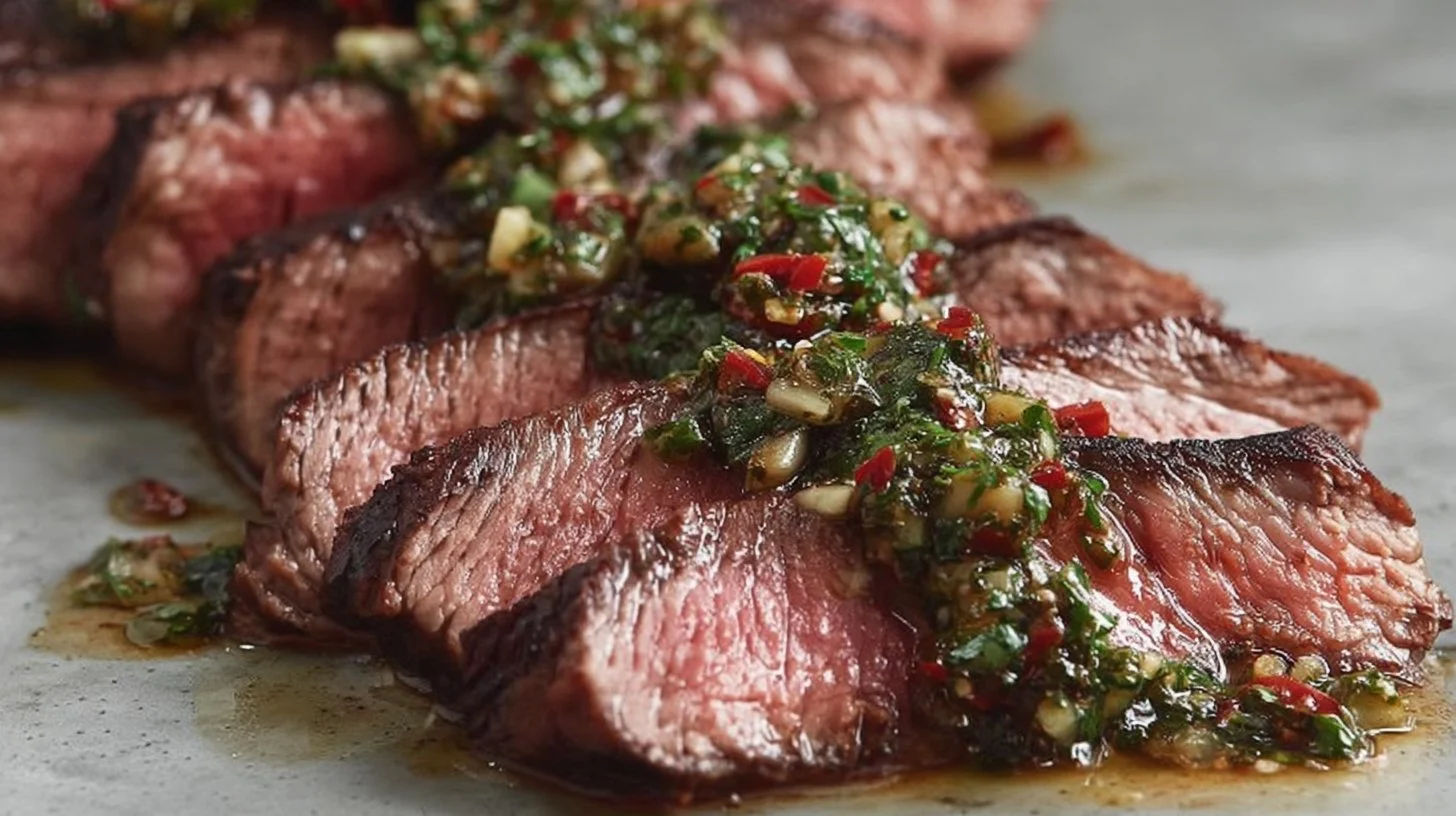
I still remember my first summer barbecue when a neighbor slid a jar of bright green chimichurri across the picnic table. One bite of that garlicky, herby sauce over a charred steak and I was sold — its fresh, slightly tangy punch can turn simple grilled meat into something memorable. Chimichurri is an uncooked Argentine sauce traditionally served with beef, but it’s equally good on chicken, fish, roasted vegetables, or stirred into grains.
Why you’ll love this dish
Chimichurri is fast to make, roommate-friendly, and endlessly adaptable. It brings fresh herb flavor without fuss. Make a batch to finish weeknight steaks, brighten a grain bowl, or use as a marinade for a weekend cookout.
“Bright, garlicky, and addictive. I always double the recipe — one jar for dinner and one to keep in the fridge for the week.” — home cook review
Beyond flavor, chimichurri is budget-friendly (parsley and garlic go far), quick (10–15 minutes active time), and naturally vegan and gluten-free.
How this recipe comes together
Overview: You’ll finely chop herbs and garlic, season them with salt and red pepper flakes, and marry everything with red wine vinegar and olive oil. The acid wakes up the herbs; the oil carries and smooths the flavors. Letting the sauce rest for at least 15 minutes (or ideally a few hours) lets the flavors meld and soften the raw garlic’s edge.
At a glance:
- Chop herbs and garlic finely (or pulse lightly in a food processor).
- Mix herbs, garlic, red pepper flakes, vinegar, and oil.
- Season with salt and black pepper; taste and adjust.
- Let rest at room temperature briefly, then refrigerate if not using right away.
What you’ll need (Ingredients)
- 1 cup fresh flat-leaf parsley, finely chopped (about 25–30 g; 240 ml)
- 1/4 cup fresh oregano, finely chopped (about 4–6 g; 60 ml)
- 4 cloves garlic, minced (or 1–2 teaspoons minced garlic)
- 1/2 teaspoon red pepper flakes (adjust to heat preference)
- 1/2 cup extra-virgin olive oil (about 120 ml)
- 1/4 cup red wine vinegar (about 60 ml)
- Salt and freshly ground black pepper to taste
Notes and substitutions:
- Metric approximations: 1 cup ≈ 240 ml. Weights vary by herb density.
- Substitute 1/4 cup cilantro for half the parsley for a cilantro-forward chimichurri.
- Use lemon juice (2–3 tbsp) instead of some or all vinegar for a brighter citrus note.
- If fresh oregano is unavailable, use 1–2 teaspoons dried oregano (add less dry herb).
Directions (Step-by-step instructions)
- Wash and thoroughly dry herbs. Remove thick parsley stems and discard or mince very finely.
- Finely chop parsley and oregano by hand, or pulse 2–3 short pulses in a food processor (avoid over-processing).
- Mince garlic and add to a mixing bowl with the herbs.
- Stir in red pepper flakes and a generous pinch of salt and black pepper.
- Pour in red wine vinegar and mix to combine.
- Slowly whisk in the olive oil until blended. Taste and adjust salt, pepper, or acidity.
- Let the chimichurri sit at room temperature for at least 15 minutes before serving. For best flavor, refrigerate for 1–4 hours and bring back to room temperature to serve.
Serving note: If using as a condiment for hot grilled meats, spoon it over the meat straight from the fridge — the contrast of hot-and-cool is classic.
Best ways to enjoy it (How to serve Chimichurri)
- Classic: Spoon over grilled skirt, flank, or ribeye steak.
- Poultry & fish: Use as a finishing sauce for roasted chicken, pan-seared salmon, or grilled shrimp.
- Veg-forward: Drizzle over roasted cauliflower, grilled zucchini, or baked sweet potatoes.
- Sandwiches & bowls: Mix into grain bowls, spread on toasted bread, or use as a sandwich condiment.
- Marinade: Reserve a small portion before mixing with raw meat and use the rest as a finishing sauce.
Presentation ideas:
- Serve in a small jar so guests can spoon as desired.
- Drizzle artistically across sliced meat with a sprinkle of flaky sea salt.
- Place a shallow pool beside empanadas or roasted vegetables as a dipping sauce.
Storage and reheating tips
- Refrigerate: Store chimichurri in an airtight container in the refrigerator at or below 40°F (4°C). It keeps best for 5–7 days.
- Oil layer: Press a thin layer of oil on top before sealing to help slow oxidation and maintain color.
- Freezing: Freeze in an ice-cube tray for 2–3 months. Transfer cubes to a freezer bag. Thaw in the fridge overnight.
- Reheating: Chimichurri is typically served cold or at room temperature. Do not microwave; if you prefer it warm, spoon over hot food so it warms naturally.
- Food safety: Because chimichurri contains raw garlic in oil, never leave it at room temperature for more than 2 hours (1 hour above 90°F/32°C). Keep refrigerated and discard if it develops off smells, mold, or an unusual appearance.
Helpful cooking tips
- Use flat-leaf parsley: It has a cleaner, herbaceous flavor compared with curly parsley.
- Dry herbs thoroughly: Excess water dilutes flavor and shortens shelf life.
- Chop by hand for texture: A rough chop gives classic rustic texture. A short food-processor pulse gives a smoother, faster result; avoid turning it into a paste.
- Balance acidity: If too sharp, add a splash more oil or a pinch of sugar to round it out.
- Salt early: Salt helps extract flavor from the herbs; taste and adjust at the end.
- Garlic mellows with time: If raw garlic is too pungent, let the chimichurri rest in the fridge overnight.
- Scale easily: The ratio of parsley to oregano can be adjusted — more parsley for a milder green sauce, more oregano for a savory, herb-forward punch.
Creative twists (Variations)
- Chimichurri rojo (red): Add 2–3 roasted red peppers and 1 teaspoon smoked paprika; blend for a red version that pairs beautifully with pork.
- Cilantro chimichurri: Replace half the parsley with cilantro and add lime juice for Mexican-inspired brightness.
- Spicy chimichurri: Add 1 fresh serrano or 1 teaspoon crushed red chili to turn up the heat.
- Low-oil version: Reduce oil by 25–50% and add a splash of water or extra vinegar to keep it saucy.
- Creamy chimichurri: Stir in 2 tablespoons Greek yogurt or labneh for a creamier finish (serve cold).
- Herb swaps: Try basil, tarragon, or mint for fresh seasonal variations.
FAQs — Your questions answered
Q: Can I make chimichurri ahead of time?
A: Yes. It actually improves if made a few hours ahead and refrigerated. Make up to 24 hours in advance for best flavor; it will still be fine for 5–7 days refrigerated.
Q: Can I use dried herbs instead of fresh?
A: Fresh herbs are preferred for brightness and texture. If you must use dried oregano, use smaller amounts (1–2 teaspoons) and add it directly to the oil and vinegar so it rehydrates.
Q: Is it safe to store chimichurri in oil with garlic?
A: Garlic in oil can pose a botulism risk if left at room temperature. Always refrigerate chimichurri promptly and follow the storage guidance above. Do not store garlic-in-oil at room temp.
Q: Can I freeze chimichurri?
A: Yes. Freeze in ice-cube trays for 2–3 months. Thaw in the fridge and use within a day or two after thawing.
Q: My chimichurri tastes too sharp/acidy. How do I fix it?
A: Add a little more olive oil to mellow the acidity, or a small pinch of sugar. A touch of honey can also round flavors. Adjust salt last.
Q: Should I pulse everything in a blender to save time?
A: You can, but pulsing briefly is key. Over-blending produces a paste rather than a sauce. Hand-chopping yields the classic texture most people prefer.
Chimichurri is low-effort with high impact. With basic pantry staples and a few minutes of hands-on time, you can add bright, garlicky flavor to countless dishes. Try the classic once, then experiment with cilantro, roasted peppers, or extra heat to make it your own.
Print
Chimichurri Sauce
- Total Time: 15 minutes
- Yield: 4 servings
- Diet: Vegan, Gluten-Free
Description
A vibrant, garlicky sauce perfect for grilled meats, vegetables, and more.
Ingredients
- 1 cup fresh flat-leaf parsley, finely chopped (about 25–30 g; 240 ml)
- 1/4 cup fresh oregano, finely chopped (about 4–6 g; 60 ml)
- 4 cloves garlic, minced
- 1/2 teaspoon red pepper flakes
- 1/2 cup extra-virgin olive oil (about 120 ml)
- 1/4 cup red wine vinegar (about 60 ml)
- Salt and freshly ground black pepper to taste
Instructions
- Wash and thoroughly dry herbs. Remove thick parsley stems and discard or mince very finely.
- Finely chop parsley and oregano by hand, or pulse 2–3 short pulses in a food processor.
- Mince garlic and add to a mixing bowl with the herbs.
- Stir in red pepper flakes and a pinch of salt and black pepper.
- Pour in red wine vinegar and mix to combine.
- Slowly whisk in the olive oil until blended. Taste and adjust salt, pepper, or acidity.
- Let the chimichurri sit at room temperature for at least 15 minutes before serving. For best flavor, refrigerate for 1–4 hours.
Notes
Use flat-leaf parsley for the best flavor. Can substitute half the parsley with cilantro for a variation.
- Prep Time: 15 minutes
- Cook Time: 0 minutes
- Category: Condiment
- Method: No Cook
- Cuisine: Argentinian