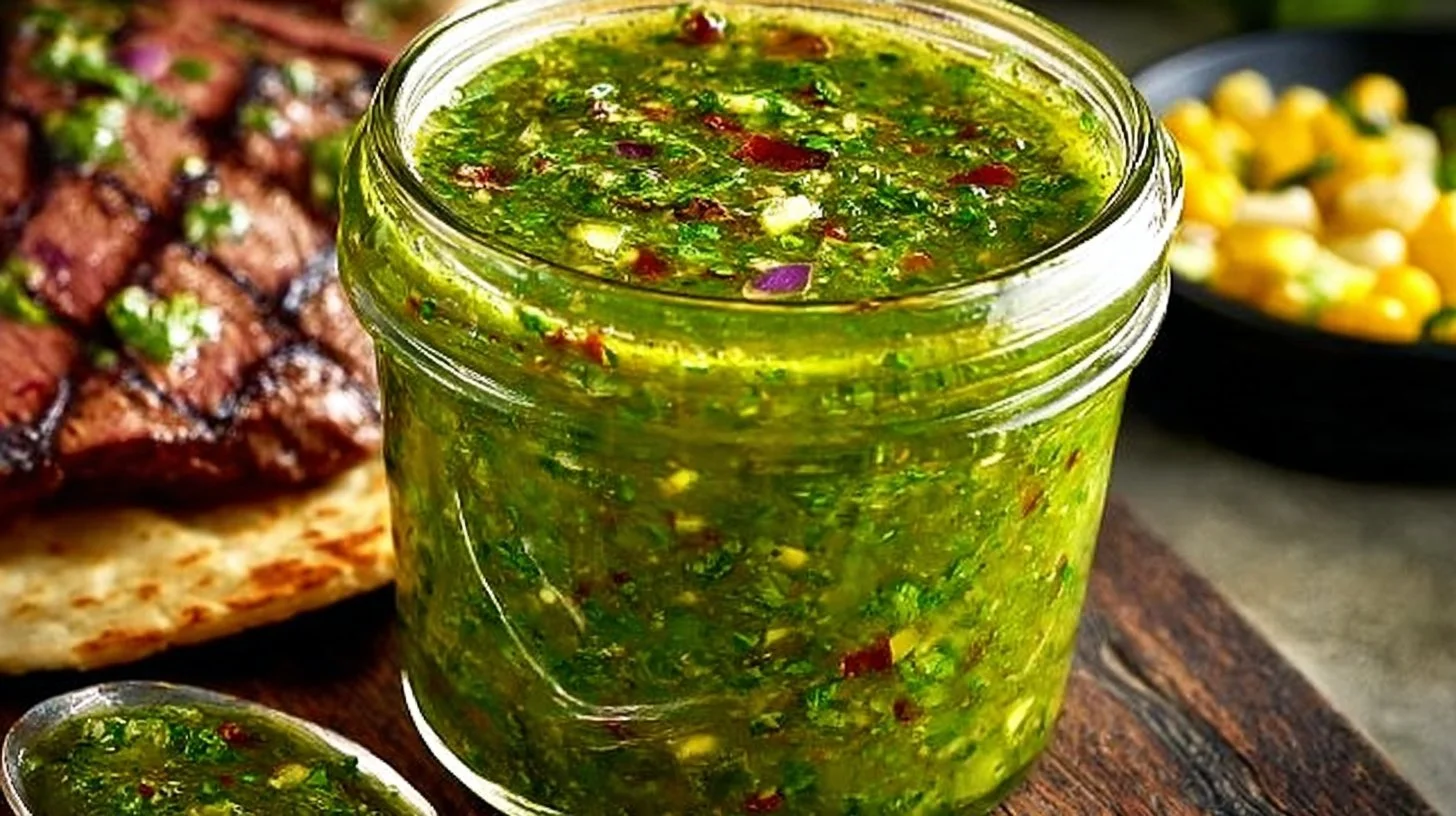
I still remember the first summer I swapped parsley for extra basil in chimichurri — the grill smoke mixed with bright, sweet basil and it felt like a new sauce entirely. Basil chimichurri marries the herbaceous bite of traditional chimichurri with basil’s aromatic sweetness. It’s vibrant, no-cook, and perfect for slathering on grilled steak, roasted vegetables, or simply tossed with warm potatoes.
Why you’ll love this dish
This basil-forward chimichurri is quick to make, intensely fresh, and versatile. It brightens rich proteins, cuts through fatty meats, and adds an herbaceous lift to vegetarian dishes. Because it’s uncooked and oil-based, you can finish a meal in minutes and give leftovers a fresh pop for lunches.
“Bright, herb-forward, and addictive — this basil chimichurri turned a simple weeknight chicken into a dish my whole family asked for again the next night.” — home cook review
Reasons to try it:
- Fast prep: ready in 10–15 minutes (plus resting time).
- Flexible: works as sauce, marinade, or dressing.
- Kid-friendly when you skip the chilies.
- Makes a small batch that keeps well and won’t overwhelm other flavors.
How to make Basil Chimichurri Sauce
Step-by-step overview
- Roughly chop the fresh herbs and garlic so they’re easy to pulse.
- Combine basil, parsley, garlic, oil, vinegar, salt, and pepper in a bowl or pulse briefly in a food processor.
- Adjust seasoning and texture — add more oil for looseness or a splash more vinegar for brightness.
- Let the sauce rest for at least 20–30 minutes to let flavors marry.
Ingredients
What you’ll need (makes about 1 cup)
- 1 cup packed fresh basil leaves (tightly packed)
- 1/2 cup packed fresh flat-leaf parsley leaves
- 3 large garlic cloves, peeled (use 2 if you prefer milder garlic)
- 1/2 teaspoon flaky sea salt (adjust to taste)
- 1/4 teaspoon freshly ground black pepper
- 1/2 teaspoon red pepper flakes (optional, or substitute 1 small fresh chili)
- 2 tablespoons red wine vinegar (or white wine vinegar)
- 1/2 to 3/4 cup extra-virgin olive oil (start with 1/2 cup and add to reach desired consistency)
- Zest of 1/2 lemon (optional, brightens the sauce)
Quick substitution notes:
- Swap some basil for more parsley if you want a greener, more traditional chimichurri.
- Lemon juice can replace or supplement vinegar for a fresher acidity.
- Use less garlic or roast it first for a gentler flavor.
Directions
Step-by-step instructions
- Wash and dry the basil and parsley thoroughly. Remove any thick stems.
- Roughly chop the basil and parsley so they’re easier to process or chop by hand.
- Mince the garlic finely (or smash in a mortar and pestle).
- In a medium bowl combine the chopped herbs, garlic, salt, pepper, and red pepper flakes.
- Add the red wine vinegar and lemon zest if using. Stir to distribute the acid evenly.
- Slowly whisk in 1/2 cup olive oil until combined. If you prefer a looser sauce, add up to 1/4 cup more oil.
- Taste and adjust: add more salt, a splash more vinegar, or more pepper flakes if you want heat.
- Let the chimichurri rest at room temperature for 20–30 minutes before serving so the flavors meld.
- If you used a food processor, pulse briefly (3–6 short pulses). Do not purée — you want a slightly chunky texture.
Notes on methods:
- By hand: finely chop herbs and garlic for a rustic texture and more pronounced herb bites.
- Food processor: pulse in short bursts to avoid a smooth pesto-like consistency.
How to serve Basil Chimichurri Sauce
Best ways to enjoy it
- Spoon over sliced grilled steak or skirt steak as a finishing sauce.
- Serve with grilled or pan-seared chicken breasts and thighs.
- Drizzle on roasted or grilled vegetables (eggplant, zucchini, peppers).
- Toss with warm new potatoes or roasted fingerlings.
- Use as a condiment for sandwiches, grain bowls, or to finish fish like salmon or cod.
- Offer in a small bowl alongside bread for dipping as part of a mezze-style spread.
Plating ideas:
- For steak: slice the meat, fan it on the plate, and spoon chimichurri down the center for contrast.
- For vegetables: arrange roasted veg and drizzle, then scatter microgreens or extra basil for color.
- For a sharing board: place chimichurri in a ramekin with grilled bread, olives, and cheeses.
How to store
Storage and reheating tips
- Refrigerator: Transfer chimichurri to an airtight container and press a piece of plastic wrap directly onto the surface to minimize air contact. Keep refrigerated up to 4–5 days.
- Freezing: Spoon into an ice cube tray and freeze until solid. Transfer cubes to a labeled freezer bag and keep up to 3 months. Thaw in the refrigerator overnight and stir before using.
- Serving from cold: If refrigerated, let the sauce sit at room temperature for 15–20 minutes or stir in a tablespoon of olive oil to loosen before serving. Do not heat on the stove — chimichurri is best fresh or at room temperature.
- Food safety: Refrigerate within 2 hours of making. Discard if the sauce smells sour, has visible mold, or changes color/texture significantly.
Tips to make
Helpful cooking tips
- Taste as you go: flavors mellow as they rest. Season lightly at first and recheck after 20–30 minutes.
- Maintain texture: pulse briefly in a food processor rather than blending continuously to keep flecks of herb.
- Balance acidity: start with a 1:4 vinegar-to-oil ratio and adjust. Basil is sweeter than parsley, so you may prefer a touch more vinegar than with classic chimichurri.
- Garlic intensity: mince very finely for a quick burst, or smash and let sit for 10+ minutes to mellow the bite.
- Avoid bruising: wash and spin-dry herbs gently. Over-handling bruises leaves and introduces bitterness.
- Make-ahead: flavors improve after a day in the fridge, but keep in mind color will darken slightly.
Pro chef trick:
- If you want a silkier finish without losing herb texture, pulse the oil with the herbs and then fold in a small extra drizzle of cold oil right before serving.
Variations
Creative twists
- Lemon-Basil Chimichurri: replace half the vinegar with fresh lemon juice for a brighter finish.
- Smoky Charred Pepper: add 1/4 cup charred red bell pepper or 1 roasted red pepper for sweetness and color.
- Nutty Chimichurri: stir in 2 tablespoons toasted pine nuts or almonds for body and a pesto-like note.
- Spicy Argentinian: increase red pepper flakes or add 1 small diced fresh jalapeño.
- Anchovy boost: blend in 1 anchovy fillet for umami depth (skip for vegetarian/vegan).
- Cilantro-Basil: swap half the parsley for cilantro for Latin-Asian fusion flavors.
- Oil-light vinaigrette: reduce oil to 1/3 cup and add 2 tablespoons extra vinegar for a lighter, more dressing-like chimichurri.
FAQs
Your questions answered
Q: How long does basil chimichurri last?
A: Stored airtight in the fridge, it lasts 4–5 days. Color and brightness fade with time, so use within that window for best flavor.
Q: Can I freeze chimichurri?
A: Yes. Freeze in ice cube trays and transfer cubes to a freezer bag for up to 3 months. Thaw in the fridge and stir before using.
Q: Can I use dried herbs instead of fresh?
A: Fresh herbs are essential for the bright, fresh flavor and texture of chimichurri. Dried herbs will not replicate the same result. If necessary, use a small amount (1–2 teaspoons) of dried herbs, but expect a different taste.
Q: Is this sauce safe to leave out at room temperature during a meal?
A: For a short meal, yes — up to 2 hours total at room temperature. Beyond that, refrigerate leftovers promptly to avoid bacterial growth.
Q: Can I use lemon juice instead of red wine vinegar?
A: Yes. Lemon adds a brighter, more citrusy note. Start with half the amount and adjust to taste.
Q: How can I make the chimichurri milder for kids?
A: Reduce or omit red pepper flakes and use fewer garlic cloves. You can also add a tablespoon of honey or more olive oil to tame sharpness.
If you want, I can scale this recipe (double or halve), create a printable card, or give a quick marinating schedule for different proteins. Which would you like next?
Print
Basil Chimichurri Sauce
- Total Time: 15 minutes
- Yield: 1 cup
- Diet: Vegetarian
Description
A vibrant, no-cook basil chimichurri sauce that brightens rich proteins and adds a fresh pop to various dishes.
Ingredients
- 1 cup packed fresh basil leaves
- 1/2 cup packed fresh flat-leaf parsley leaves
- 3 large garlic cloves, peeled
- 1/2 teaspoon flaky sea salt
- 1/4 teaspoon freshly ground black pepper
- 1/2 teaspoon red pepper flakes (optional)
- 2 tablespoons red wine vinegar
- 1/2 to 3/4 cup extra-virgin olive oil
- Zest of 1/2 lemon (optional)
Instructions
- Wash and dry the basil and parsley thoroughly.
- Roughly chop the basil and parsley.
- Mince the garlic finely.
- Combine the chopped herbs, garlic, salt, pepper, and red pepper flakes in a medium bowl.
- Add the red wine vinegar and lemon zest if using.
- Slowly whisk in 1/2 cup olive oil until combined.
- Taste and adjust seasoning as needed.
- Let the chimichurri rest at room temperature for 20–30 minutes before serving.
- Pulse briefly in a food processor if used, to achieve a slightly chunky texture.
Notes
Chimichurri can be stored in an airtight container in the refrigerator for 4–5 days. The flavors improve after a day in the fridge.
- Prep Time: 15 minutes
- Cook Time: 0 minutes
- Category: Sauce
- Method: No-Cook
- Cuisine: Argentinian