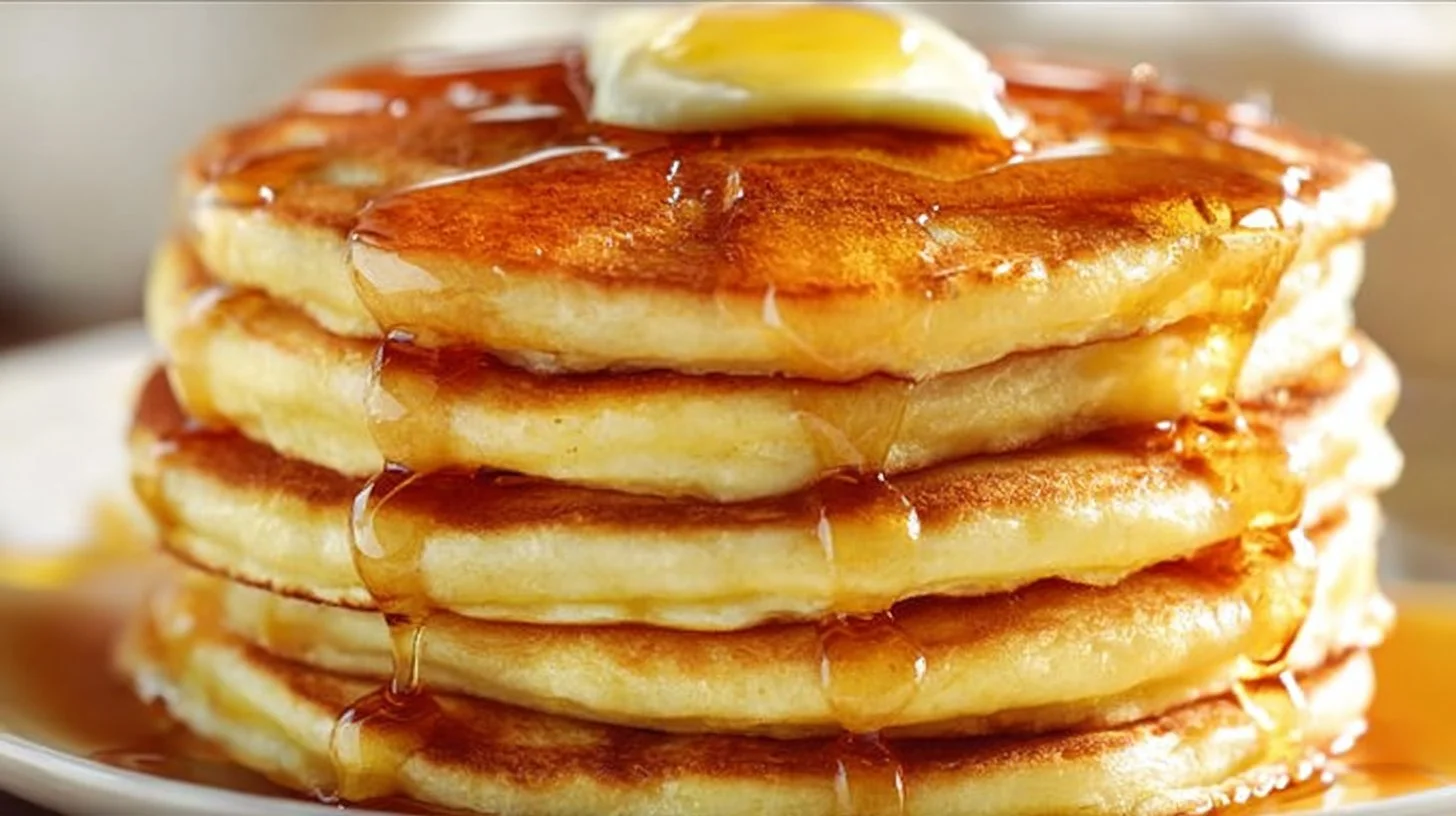
These pancakes are the kind you remember from cozy weekend mornings: pillowy, tender, and lightly tangy from buttermilk. They brown up on the outside while staying soft inside — perfect for a leisurely brunch or a quick family breakfast that feels special without fuss.
Why you’ll love this dish
Buttermilk pancakes deliver shelter-from-the-rain comfort with a simple ingredient list. They rise well, have a delicate crumb, and the slight acidity of buttermilk reacts with baking soda to give a springy texture that regular milk can’t match. Make them for sleepy weekend breakfasts, for feeding a crowd, or when you want an everyday recipe that turns out consistently.
“These pancakes are the go-to in my house — quick batter, no-fail flip, and gone within minutes. Fluffy every time.” — a happy morning cook
Benefits at a glance:
- Quick: about 20–25 minutes from start to table.
- Budget-friendly: pantry staples.
- Kid-approved: soft texture and mild sweetness.
- Versatile: plain, studded with blueberries, or turned into savory stacks.
How this recipe comes together
Step-by-step overview
- Whisk wet ingredients together (buttermilk, oil, eggs, sugar, vanilla, salt).
- Stir dry ingredients (flour, baking powder, baking soda) and fold into the wet mix until just combined.
- Let the batter rest briefly while you preheat the pan or griddle.
- Cook by the scoop on a preheated, lightly greased surface until bubbles form; flip and finish.
- Keep warm and serve with butter, syrup, or your favorite toppings.
This is a straightforward batter-whisk-and-cook recipe. The key moments: don’t overmix the batter and ensure the cooking surface is properly preheated.
What you’ll need (Ingredients)
- 1 3/4 cups low-fat buttermilk (about 420 ml) — room temperature is best
- 3 tbsp neutral oil (canola, vegetable, or light-tasting olive oil) (45 ml)
- 2 large eggs — room temperature
- 1/4 cup light brown sugar (about 50 g)
- 1 tsp vanilla extract (5 ml)
- 2 cups all-purpose flour (about 240 g)
- 1 tbsp baking powder (about 12 g)
- 1/2 tsp baking soda (about 2.5 g)
- 1/4 tsp salt (about 1.5 g)
Substitutions and quick notes:
- Use full-fat buttermilk for richer pancakes. For a dairy substitute, see the Variations section.
- If you only have granulated sugar, use the same volume but expect slightly less moisture.
- For crisp edges, use a small amount of butter in the pan instead of oil.
Yields: about 10–12 pancakes using a 1/3-cup scoop (serves 3–4).
Step-by-step instructions (Directions)
- Whisk the wet: In a large bowl, combine buttermilk, oil, eggs, brown sugar, vanilla, and salt. Whisk until smooth.
- Mix the dry: In a separate bowl, whisk together the flour, baking powder, and baking soda so they’re evenly distributed.
- Combine gently: Add the dry ingredients to the wet and fold with a spatula until the flour is incorporated. Stop when you see just a few streaks of flour; a few small lumps are fine. Overmixing develops gluten and makes pancakes tough.
- Rest the batter: Let the batter sit for 5–10 minutes while you preheat your skillet or griddle. This short rest lets the leaveners start working and yields airier pancakes.
- Preheat the pan: Heat a cast-iron skillet or griddle over medium heat (about 375°F / 190°C if using an electric griddle) until hot. Reduce the heat slightly if the surface is smoking or if pancakes brown too quickly.
- Grease lightly: Add a teaspoon of oil or a small pat of butter and spread it around with a paper towel or spatula.
- Cook: Use a 1/3-cup scoop to portion the batter onto the hot surface. Cook until bubbles appear across the top and the edges look set, about 2–3 minutes. Flip with a thin spatula and cook the other side 1–2 minutes until golden and cooked through.
- Keep warm: Transfer finished pancakes to a baking sheet and keep them in a 200°F (95°C) oven while you finish the rest. Avoid stacking heavily while hot; it can steam them and soften crisp edges.
- Serve: Top as desired and serve immediately.
Timing: total cook time depends on batch size; plan 2–3 minutes per pancake side. For 10–12 pancakes, allow roughly 15–20 minutes of active cooking.
Best ways to enjoy it (How to serve)
- Classic: a knob of butter and pure maple syrup.
- Fruity: fold fresh blueberries into the batter, or top with sliced bananas and caramelized pecans.
- Decadent: serve with whipped cream and a drizzle of caramel.
- Savory brunch: top with crispy bacon and a dollop of Greek yogurt, or make a stacked pancake sandwich with eggs and cheese.
- Plating tip: stack 3–4 pancakes, add a small pat of butter, warm syrup across the stack, and finish with a fresh herb (mint) or citrus zest for color.
Storage and reheating tips
- Refrigerator: Cool completely, then store in an airtight container or sealed bag for up to 3 days.
- Freezing: Lay pancakes in a single layer on a baking sheet and freeze until solid, then transfer to a freezer bag. Frozen pancakes keep well for up to 2 months.
- Reheating:
- Oven: spread pancakes on a baking sheet and bake at 350°F (175°C) for 8–12 minutes or until heated through.
- Toaster: frozen or refrigerated pancakes reheat nicely in a toaster (use lower heat if very thin).
- Microwave: place pancakes on a microwave-safe plate, cover with a damp paper towel, and heat in 20–30 second bursts until warm (works fastest but can make edges softer).
Food safety: refrigerate leftovers within 2 hours of cooking. Thaw frozen pancakes in the fridge overnight or reheat directly from frozen.
Helpful cooking tips
- Room temperature ingredients: Eggs and buttermilk at room temp mix more evenly and trap more air.
- Don’t overmix: Stir until combined; small lumps are okay. Overworking the batter causes dense pancakes.
- Let it rest: A 5–10 minute rest helps bubbles form in the batter for loftier pancakes.
- Pan temperature: Too hot gives dark outsides and raw centers; too cool makes pale, flat pancakes. Adjust heat after the first test pancake.
- Use a measuring scoop: A 1/3-cup scoop creates uniform pancakes that cook evenly.
- Flip once: Wait for bubbles that pop and set edges before flipping; flipping prematurely deflates the cake.
- For extra lift: Separate the eggs, beat the whites to soft peaks, fold them in last for cloud-like pancakes.
Creative twists (Variations)
- Blueberry or chocolate chip: Fold 1 cup fresh berries or 1/2–3/4 cup chocolate chips into the batter.
- Banana pancakes: Mash a ripe banana and fold it into the wet ingredients; reduce sugar slightly if banana is very sweet.
- Whole-wheat: Substitute up to half the flour with whole-wheat pastry flour for nuttier flavor.
- Gluten-free: Use a 1:1 gluten-free flour blend and add 1 tsp extra baking powder for lift.
- Vegan: Use 2 cups plant-based milk mixed with 2 tbsp lemon juice or 2 tbsp plain dairy-free yogurt in place of buttermilk; replace eggs with 2 flax eggs (2 tbsp ground flax + 6 tbsp water, sit 5 minutes). Use vegan butter/oil for cooking.
- Lemon ricotta: Fold 1/2 cup ricotta and 1 tbsp lemon zest into the batter for a tender, slightly tangy pancake.
FAQ — Your questions answered
Q: Can I use regular milk instead of buttermilk?
A: Yes. To mimic buttermilk’s acidity, add 1 tbsp white vinegar or lemon juice to 1 3/4 cups milk and let it sit 5 minutes. The result won’t be identical but works well.
Q: My pancakes turn out flat and dense. What went wrong?
A: Common causes: overmixing, old baking powder/baking soda, batter too thin, or cold ingredients. Use fresh leaveners, don’t overmix, let batter rest, and make sure pan temperature is correct.
Q: How do I freeze pancakes so they don’t stick together?
A: Freeze in a single layer on a baking sheet until solid (1–2 hours), then stack and store in a sealed freezer bag with parchment between layers if desired.
Q: Can I make the batter the night before?
A: You can, but the leavening action begins once wet and dry are combined. Batter stored overnight will still make pancakes, but they may be a bit flatter. For best lift, mix dry and wet separately and combine right before cooking.
Q: How do I get perfectly round pancakes?
A: Use a lipped measuring cup or an approved pancake batter dispenser and pour from about 2–3 inches above the pan. A 1/3-cup scoop gives consistent size.
If you want, I can convert the recipe into metric-only measurements, create a printable recipe card, or suggest a shopping list for feeding a crowd. Which would you prefer?
Print
Buttermilk Pancakes
- Total Time: 25 minutes
- Yield: 4 servings
- Diet: Vegetarian
Description
Pillowy and tender buttermilk pancakes perfect for a cozy breakfast or brunch.
Ingredients
- 1 3/4 cups low-fat buttermilk (about 420 ml)
- 3 tbsp neutral oil (canola, vegetable, or light-tasting olive oil) (45 ml)
- 2 large eggs
- 1/4 cup light brown sugar (about 50 g)
- 1 tsp vanilla extract (5 ml)
- 2 cups all-purpose flour (about 240 g)
- 1 tbsp baking powder (about 12 g)
- 1/2 tsp baking soda (about 2.5 g)
- 1/4 tsp salt (about 1.5 g)
Instructions
- Whisk the buttermilk, oil, eggs, brown sugar, vanilla, and salt in a large bowl until smooth.
- Mix the flour, baking powder, and baking soda in a separate bowl until evenly combined.
- Combine the dry ingredients with the wet mix and fold gently until just combined; small lumps are fine.
- Rest the batter for 5-10 minutes while preheating your skillet or griddle.
- Preheat a skillet over medium heat until hot, adjusting temperature if necessary.
- Grease the hot surface lightly with oil or butter.
- Cook portions of batter (1/3-cup each) until bubbles appear; then flip and cook until golden.
- Keep warm in a low oven until ready to serve.
- Serve warm with your favorite toppings.
Notes
For fluffier pancakes, let the batter rest and avoid overmixing. Use room temperature ingredients for best results.
- Prep Time: 10 minutes
- Cook Time: 15 minutes
- Category: Breakfast
- Method: Grilling
- Cuisine: American