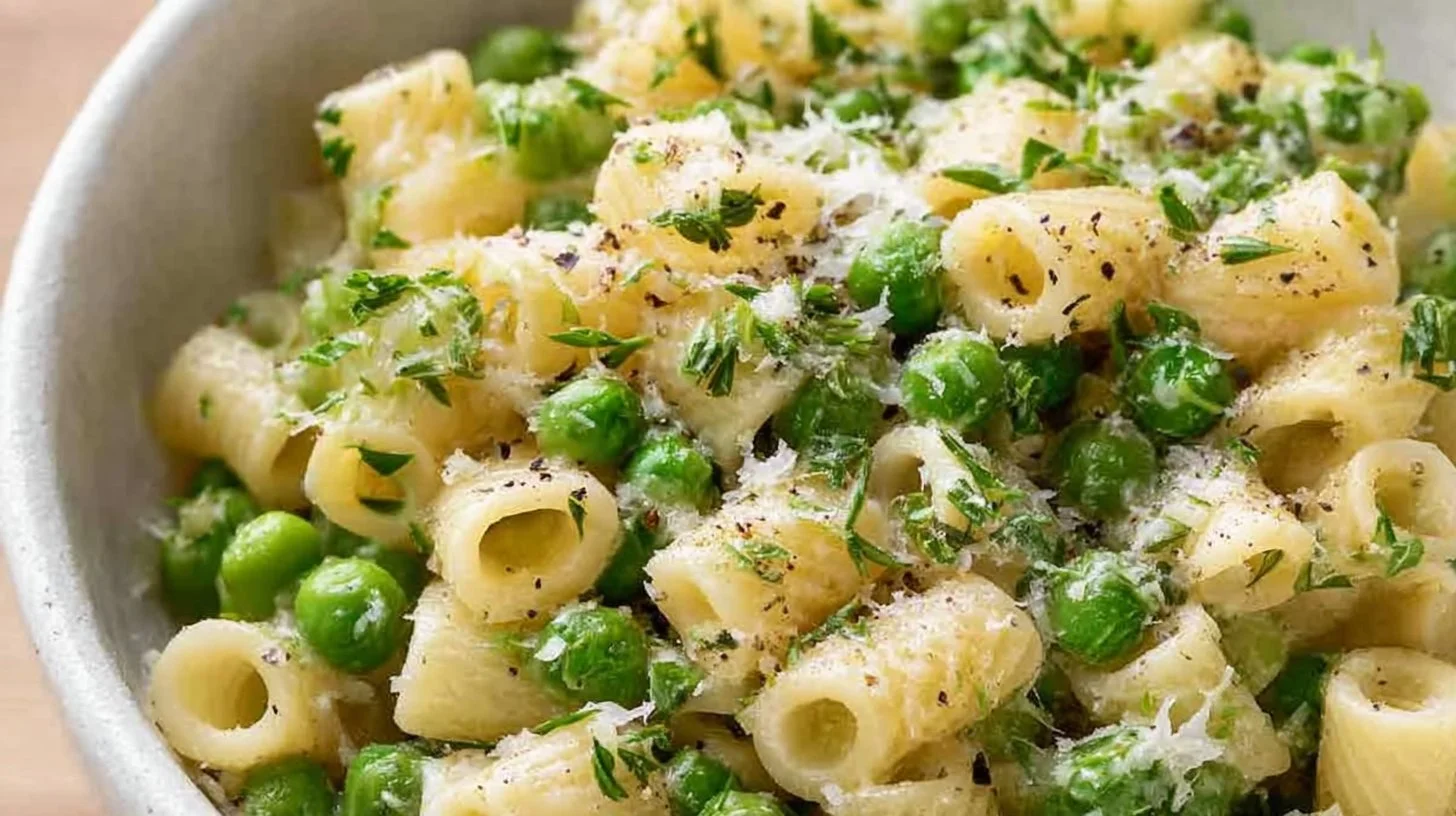
A quick, cozy bowl that tastes like spring in a spoon: pasta and peas combines small pasta, sweet peas, and sharp grated Romano for a bright, comforting dish that comes together in about 20 minutes. I first made it on a busy weeknight when the fridge held nothing more exciting than a box of ditalini and a bag of peas — the result was so forgiving and satisfying that it became a staple for simple dinners and last-minute guests.
Why you’ll love this dish
This recipe is fast, forgiving, and flexible. Cooking the pasta directly in broth adds flavor without extra steps; the peas give sweetness and color; and grated Romano melts into a silky coating that makes the whole dish feel a little indulgent without heavy cream.
- Perfect for weeknights when you want a warm but light meal.
- Budget-friendly: pantry pasta + frozen peas + stock = big flavor for little money.
- Kid-friendly and easy to adapt (add protein, swap cheeses, or make it vegan).
“So simple yet so satisfying — the peas brighten every bite and the cheese makes it feel special.” — a regular weeknight convert
How to make Pasta and Peas
Step-by-step overview:
- Heat seasoned broth to a simmer and add the ditalini.
- Cook pasta until just shy of al dente.
- Add peas near the end so they stay bright and tender.
- Drain only if there’s excess liquid; otherwise use the cooking liquid for a saucy finish.
- Off the heat, stir in grated Romano with a splash of pasta water to form a creamy coating.
- Finish with olive oil and fresh herbs, then serve.
Knowing this flow will help you manage timing and get a glossy, well-seasoned result.
Ingredients
- 1 cup ditalini pasta (substitute: elbow macaroni, orzo, small shells)
- 1 cup sweet baby peas (fresh or frozen)
- 2 cups vegetable or chicken broth (use low-sodium if preferred)
- 1/2 cup grated Romano cheese (substitute: Parmesan or Pecorino Romano)
- Salt and freshly ground black pepper, to taste
- 1–2 tbsp olive oil
- Optional: fresh herbs (parsley, mint, basil) for garnish
Notes: If your broth is already salty, add less additional salt. Freshly grated cheese melts and integrates better than pre-grated.
Directions
- Pour the broth into a medium pot and bring it to a gentle boil.
- Add the ditalini and stir. Cook according to package instructions minus 1–2 minutes so the pasta is just shy of al dente.
- With about 2–3 minutes left, stir in the peas (if using frozen, add them directly; no need to thaw).
- Check the liquid when the pasta is done. If there’s only a few tablespoons left, don’t drain. If there’s a lot, reserve 1/4 cup of the cooking liquid and drain the rest.
- Remove the pot from the heat. Stir in the grated Romano a little at a time. Add reserved cooking liquid as needed to create a creamy coating.
- Season with salt and freshly ground black pepper to taste. Drizzle with olive oil and toss.
- Transfer to bowls and garnish with chopped fresh herbs and an extra sprinkle of cheese if desired. Serve warm.
Tips in action: removing the pot from heat before adding cheese prevents graininess. Using starchy cooking liquid helps form a silky sauce.
How to serve Pasta and Peas
- Serve as a light main with a crisp green salad and crusty bread.
- For a heartier meal, top with grilled chicken, sautéed shrimp, or crispy pancetta.
- Plate it simply: a shallow bowl, a drizzle of olive oil, and a scattering of herbs and cheese. For a little crunch, add toasted breadcrumbs or chopped toasted almonds.
- Wine pairing: a crisp Pinot Grigio or a light, unoaked Chardonnay pairs nicely.
How to store
- Refrigerate: Cool the leftovers to room temperature (within 2 hours) and store in an airtight container for 3–4 days.
- Reheat: Warm gently on the stovetop over low heat with a splash of broth or water to loosen the sauce, or microwave covered in 30-second bursts. Reheat until steaming hot (internal temperature 165°F / 74°C).
- Freeze: Not ideal because peas and cheese change texture, but you can freeze for up to 1 month. Use a shallow freezer-safe container, thaw overnight in the fridge, then reheat with added liquid. Expect some loss of texture.
Food safety: refrigerate promptly and discard if kept more than four days.
Helpful cooking tips
- Salt cautiously: broth is often salted; taste before adding extra.
- Reserve pasta water: keep 1/4–1/2 cup before draining to loosen the sauce and make it glossy.
- Timing peas: add frozen peas when the pasta has 2–3 minutes left so they stay bright; fresh peas can be added a little earlier.
- Cheese technique: add Romano off the heat and stir quickly to avoid oil separation or a grainy texture.
- Use small pasta shapes: they trap peas and sauce better than long pasta for this dish.
Variations
- Creamy version: stir in 2–3 tbsp heavy cream or mascarpone at the end for a richer sauce.
- Pancetta & onion: sauté diced pancetta and thinly sliced shallot, then proceed with the recipe and fold them in at the end.
- Lemon & herb: add 1 tsp lemon zest and extra lemon juice for brightness; use basil or mint for freshness.
- Vegan swap: use vegetable broth and replace cheese with 2 tbsp nutritional yeast plus a splash of olive oil or a vegan parmesan.
- Mediterranean twist: fold in halved cherry tomatoes, olives, and feta at the end.
FAQs
Q: Can I use frozen peas?
A: Yes. Add them directly to the pot when the pasta has 2–3 minutes left. They thaw and cook through quickly, staying bright and sweet.
Q: Do I have to cook the pasta in broth?
A: No — you can cook pasta in salted water and drain, then add warmed broth or a splash of stock when finishing. Cooking in broth infuses more flavor and reduces extra steps.
Q: How long will leftovers keep?
A: Stored in the refrigerator in an airtight container, leftovers are best within 3–4 days. Freeze only if necessary; texture will change.
Q: Can I make this ahead for a crowd?
A: For gatherings, cook pasta slightly underdone, cool quickly, toss with a little olive oil, and keep covered in the fridge. Reheat gently with warm broth before serving and finish with cheese and herbs.
Q: What’s the best cheese substitute for Romano?
A: Parmesan (Parmigiano-Reggiano) or Pecorino Romano both work well. Pecorino is saltier and sharper; adjust salt accordingly.
If you want, I can convert this to a printable recipe card with exact timing lines (prep/cook times) or give a version scaled for 6–8 people.
Print
Pasta and Peas
- Total Time: 20 minutes
- Yield: 4 servings
- Diet: Vegetarian
Description
A quick and cozy bowl of pasta and peas, featuring ditalini pasta, sweet peas, and sharp Romano cheese. Perfect for a comforting weeknight meal.
Ingredients
- 1 cup ditalini pasta
- 1 cup sweet baby peas (fresh or frozen)
- 2 cups vegetable or chicken broth
- 1/2 cup grated Romano cheese
- Salt and freshly ground black pepper, to taste
- 1–2 tbsp olive oil
- Optional: fresh herbs (parsley, mint, basil) for garnish
Instructions
- Pour the broth into a medium pot and bring it to a gentle boil.
- Add the ditalini and stir. Cook according to package instructions minus 1–2 minutes so the pasta is just shy of al dente.
- With about 2–3 minutes left, stir in the peas.
- Check the liquid when the pasta is done. If there’s only a few tablespoons left, don’t drain. If there’s a lot, reserve 1/4 cup of the cooking liquid and drain the rest.
- Remove the pot from the heat. Stir in the grated Romano a little at a time.
- Add reserved cooking liquid as needed to create a creamy coating.
- Season with salt and pepper to taste. Drizzle with olive oil and toss.
- Transfer to bowls and garnish with chopped fresh herbs and an extra sprinkle of cheese if desired. Serve warm.
Notes
If your broth is already salty, add less additional salt. Freshly grated cheese melts and integrates better than pre-grated.
- Prep Time: 5 minutes
- Cook Time: 15 minutes
- Category: Main Course
- Method: Stovetop cooking
- Cuisine: Italian