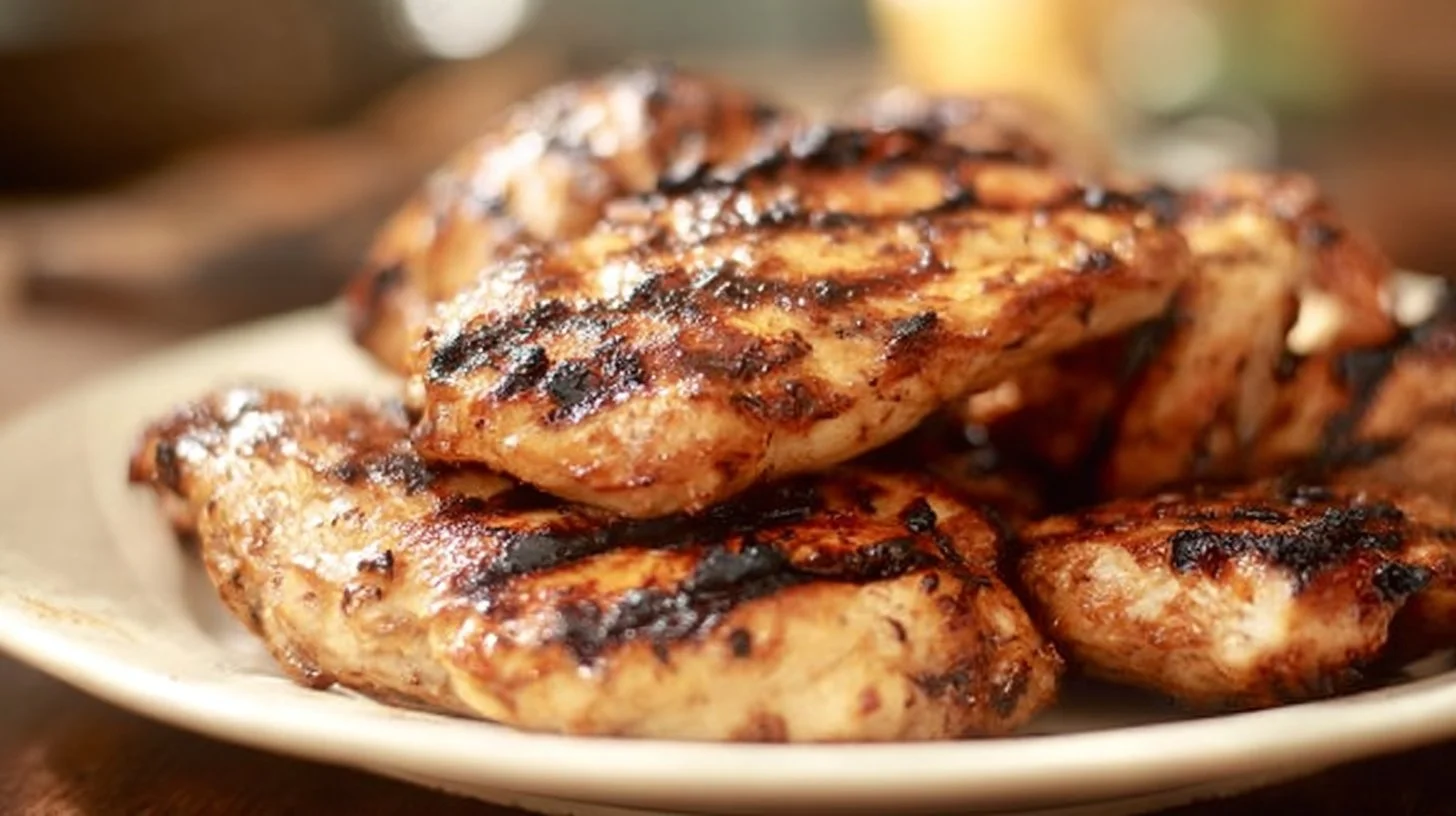
Juicy, well-seasoned grilled chicken breasts are one of those “back pocket” recipes you’ll make all summer—and then keep making long after grilling season ends. When the outside is lightly charred and the inside stays tender (not dry and stringy), you’ve got a protein that works for everything: salads, sandwiches, grain bowls, meal prep, or a simple dinner plate with veggies.
Why you’ll love this dish
Grilled chicken breasts can be hit-or-miss, but this version is built for reliable results—flavorful, moist, and fast.
- Quick and weeknight-friendly: Minimal prep, straightforward cook time.
- Budget-conscious: A few pantry spices turn basic chicken into something you’ll actually crave.
- Versatile: Serve it hot off the grill, chilled on salads, or tucked into wraps.
- Bright, balanced flavor: Lemon juice adds freshness while paprika and garlic give savory depth.
“I’ve overcooked chicken breast so many times, but letting it marinate and rest made a huge difference. This came off the grill juicy and flavorful—and it was great cold the next day, too.”
How to make Grilled Chicken Breasts (step-by-step overview)
Before you start measuring anything, here’s the flow so you know exactly what to expect:
- Preheat the grill to medium-high so the chicken sears instead of steaming.
- Mix a quick marinade with olive oil, spices, and lemon juice.
- Coat and rest the chicken for at least 30 minutes (this seasons it and helps it stay juicy).
- Grill until nicely browned and cooked through.
- Rest before slicing so the juices redistribute (this is key for tenderness).
Ingredients (what you’ll need)
- Chicken breasts – Boneless, skinless. If they’re very thick, consider pounding to an even thickness for more even cooking.
- Olive oil – Helps the seasoning stick and promotes browning. Avocado oil also works well for grilling.
- Salt – Essential for flavor and moisture retention.
- Black pepper – Adds gentle heat and bite.
- Garlic powder – Even garlic flavor without burning like fresh garlic can on high heat.
- Paprika – Adds color and a mild smoky-sweet note (smoked paprika is a great swap).
- Lemon juice – Brightens the marinade. Lime juice can substitute in a pinch.
Directions (step-by-step instructions)
- Preheat the grill. Heat it to medium-high. Clean the grates, then lightly oil them to help prevent sticking.
- Make the marinade. In a bowl, stir together the olive oil, salt, black pepper, garlic powder, paprika, and lemon juice until combined.
- Marinate the chicken. Coat the chicken breasts all over. Let them sit for at least 30 minutes (refrigerate if marinating longer than 30 minutes).
- Grill. Place chicken on the grill. Cook for 6–8 minutes per side, keeping the lid closed as much as possible for steady heat.
- Check doneness. The safest, most accurate method is a thermometer: chicken is done at 165°F (75°C) in the thickest part.
- Rest, then slice. Remove from the grill and rest for 3–5 minutes before slicing and serving.
How to serve Grilled Chicken Breasts (serving suggestions)
- Classic plate: Serve with grilled corn, a green salad, or roasted potatoes.
- Meal prep bowls: Slice and add to rice or quinoa with cucumbers, tomatoes, and a drizzle of tahini or yogurt sauce.
- Sandwiches & wraps: Layer into a pita with lettuce and tzatziki, or build a wrap with avocado and salsa.
- Salad upgrade: Cool slightly, slice thin, and add to Caesar, Greek salad, or a simple arugula-lemon salad.
- Plating tip: Slice against the grain on a slight diagonal—looks better and feels more tender when you bite.
How to store (storage and reheating tips)
- Refrigerate: Store leftovers in an airtight container for 3–4 days.
- Reheat gently: Warm in a covered skillet over low heat with a splash of water or broth, or microwave in short bursts to avoid drying out.
- Freeze: Freeze cooked chicken (whole or sliced) for up to 2–3 months in a freezer-safe bag/container. Remove as much air as possible to reduce freezer burn.
- Food safety note: Don’t leave cooked chicken at room temperature for more than 2 hours (or 1 hour if it’s very hot out).
Tips to make it (helpful cooking tips)
- Even thickness matters. If one end is much thicker, pound gently or butterfly so it cooks evenly.
- Don’t skip the rest. Resting is where juiciness happens—slice too soon and the juices run out onto the plate.
- Use a thermometer. Grilled chicken goes from perfect to dry quickly. Pull it right at 165°F (75°C).
- Keep the lid closed. This holds heat steady and helps the chicken cook through without burning outside.
- Avoid constant flipping. Let it sear, then flip once for better browning and less sticking.
Variations (creative twists)
- Smoky BBQ style: Add a pinch of smoked paprika and brush with BBQ sauce during the last 1–2 minutes.
- Herb-lemon: Add dried oregano or thyme and a little lemon zest for a brighter, Mediterranean vibe.
- Spicy version: Mix in cayenne or chili powder for heat.
- Honey-citrus: Add 1–2 teaspoons honey to the marinade for a subtle sweet char (watch the grill closely to prevent burning).
- Garlic-lovers’ upgrade: Add minced fresh garlic—but only if grilling at slightly lower heat, since garlic can burn fast.
FAQs (your questions answered)
How long should I marinate chicken breasts?
At least 30 minutes helps a lot. For deeper flavor, you can marinate up to 8 hours in the refrigerator. If you go much longer with acidic marinades (like lemon juice), the texture can start to turn slightly mushy.
How do I keep grilled chicken breasts from drying out?
Three big things help: even thickness, not overcooking (use a thermometer), and resting before slicing. Also, medium-high heat is ideal—too low can dry the chicken out before it browns.
Can I make this without a grill?
Yes. Use a grill pan or a regular skillet over medium-high heat. Cook similarly (about 6–8 minutes per side, depending on thickness) and still aim for 165°F (75°C) internal temperature.
Is it okay if the chicken is slightly pink inside?
Color isn’t a reliable indicator. Chicken is safe to eat when it reaches 165°F (75°C) in the thickest part. Some chicken can remain a little pink even when fully cooked, especially near the bone (though these are boneless) or depending on marinade and lighting.
Can I freeze the chicken after grilling?
Yes. Cool it quickly, store in airtight packaging, and freeze up to 2–3 months. Thaw overnight in the fridge for best texture, then reheat gently to avoid drying it out.